Before you trust a financial company, here’s what TrustFinance says you should check

Finding a financial service has never been easier. A broker, crypto platform, bank, payment app, insurer, or wealth manager can be only a few taps away. The harder part is working out who is behind the service, what other customers have experienced, and whether the information you are seeing tells the whole story.
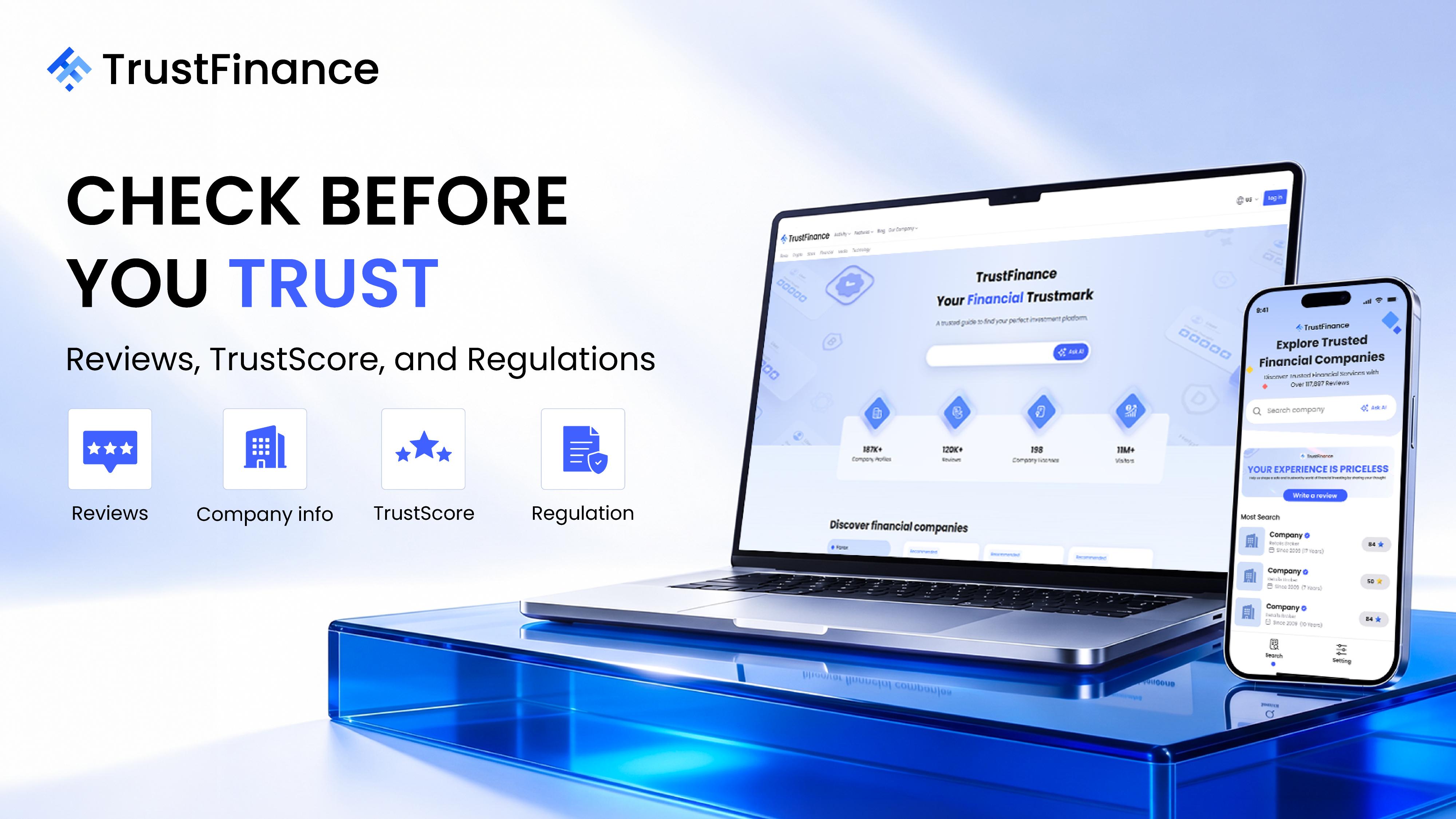
That is the gap TrustFinance is trying to close. TrustFinance is a financial review and trust information platform that brings together customer reviews, TrustScore, company information, regulatory and licensing-related context, and comparison tools in one place.
A five-star rating is only the beginning
Reviews matter because they show what happens after the marketing ends. They can reveal patterns around customer support, account access, withdrawals, service quality, or platform usability. But a rating by itself cannot explain everything.
A financial company may operate through several legal entities, serve customers in different countries, or work under different regulatory frameworks. The experience of one customer may also be very different from another depending on product, location, or account type.
TrustFinance is built around a simple idea: users should be able to look at more than one signal before making up their minds.
Six industries, one place to start the research
The platform covers six financial industries: Forex, Crypto, Banking, Insurance, Payments, and Wealth Management.
Each category comes with different questions. A Forex user may care about regulation, trading conditions, and the experiences of other traders. Someone choosing a crypto service may look more closely at the company's background, security-related information, and how the business operates. Banking and payments users may focus on reliability and service, while insurance and wealth management often involve longer-term relationships where company credibility matters even more.
Instead of treating these industries as separate research journeys, TrustFinance brings them into one ecosystem so users can start with a broader view of the company they are considering.
What trust intelligence means in practice
TrustFinance describes its direction as trust intelligence: organising different trust-related signals so users can understand a company from more than one angle.
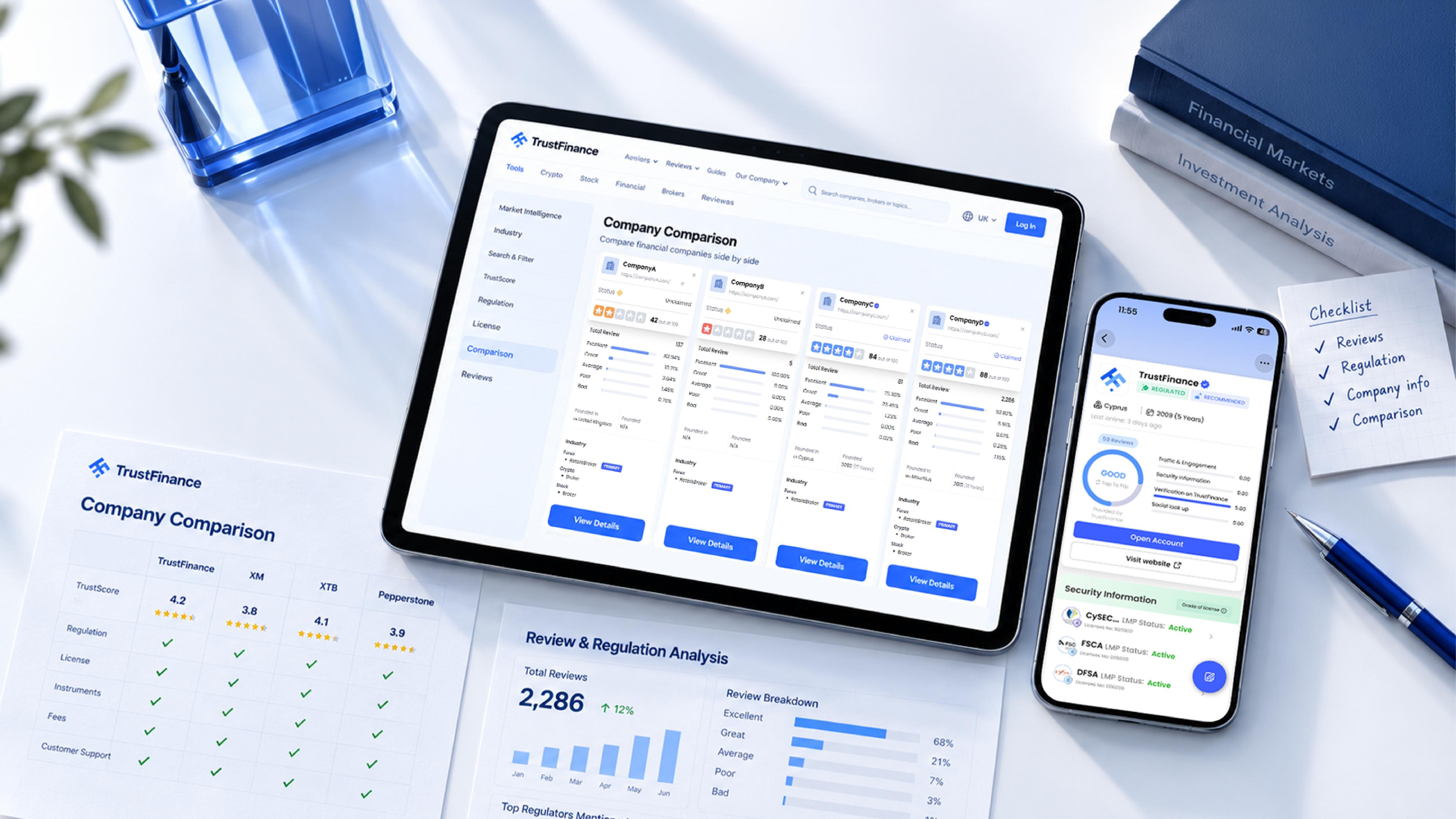
Customer reviews show lived experience. TrustScore provides an aggregated signal within the TrustFinance ecosystem. Company information adds context about the business itself. Regulatory and licensing-related information can help users understand which entities and frameworks are connected to a provider, while comparison tools make it easier to look at companies side by side.
None of these signals is meant to replace independent research. The value comes from seeing them together.
The goal is better questions, not endorsements
TrustFinance does not aim to tell people which financial company they should choose. The platform is designed to help users ask better questions before they commit: Who operates this company? What do customers repeatedly say? Which entity would I be dealing with? Is there anything I should investigate further?
As more financial decisions move online, these questions are becoming relevant far beyond trading. They matter when people decide where to hold money, send payments, buy insurance, access investment services, or manage long-term wealth.
For TrustFinance, that is the bigger opportunity: make financial companies easier to research before trust is given.
About TrustFinance
TrustFinance is a financial review and trust information platform covering Forex, crypto, banking, insurance, payments, and wealth management. It brings together customer reviews, TrustScore, company information, regulatory and licensing-related context, comparison tools, and other trust signals to support independent research.
Disclaimer: This article is for general informational purposes only and does not constitute financial, investment, or trading advice. Users should conduct their own research and consider the relevant risks before making financial decisions.