What will flip the US Dollar's trajectory as inflation cools toward the Fed's 2% target in 2027?

The US Dollar (USD) is facing a shifting macroeconomic narrative as market focus rotates between near-term Federal Reserve (Fed) policy expectations, energy price dynamics, and equity market underperformance. While the Greenback continues to draw underlying support from resilient domestic activity and an attractive yield-carry profile, its status as an effortless haven currency is being challenged alongside declining US Treasury yields and falling crude Oil prices toward $90/bbl. As investors weigh incoming inflation metrics against a December Fed rate hike that remains largely priced in, institutional strategists at ING, TD Securities, and MUFG are debating whether current US Dollar softness represents a minor year-end consolidation or a prelude to a broader cyclical turning point in 2027.
ING expects hawkish Fed to support US Dollar into Q1 2027 before Q2 inflation drop
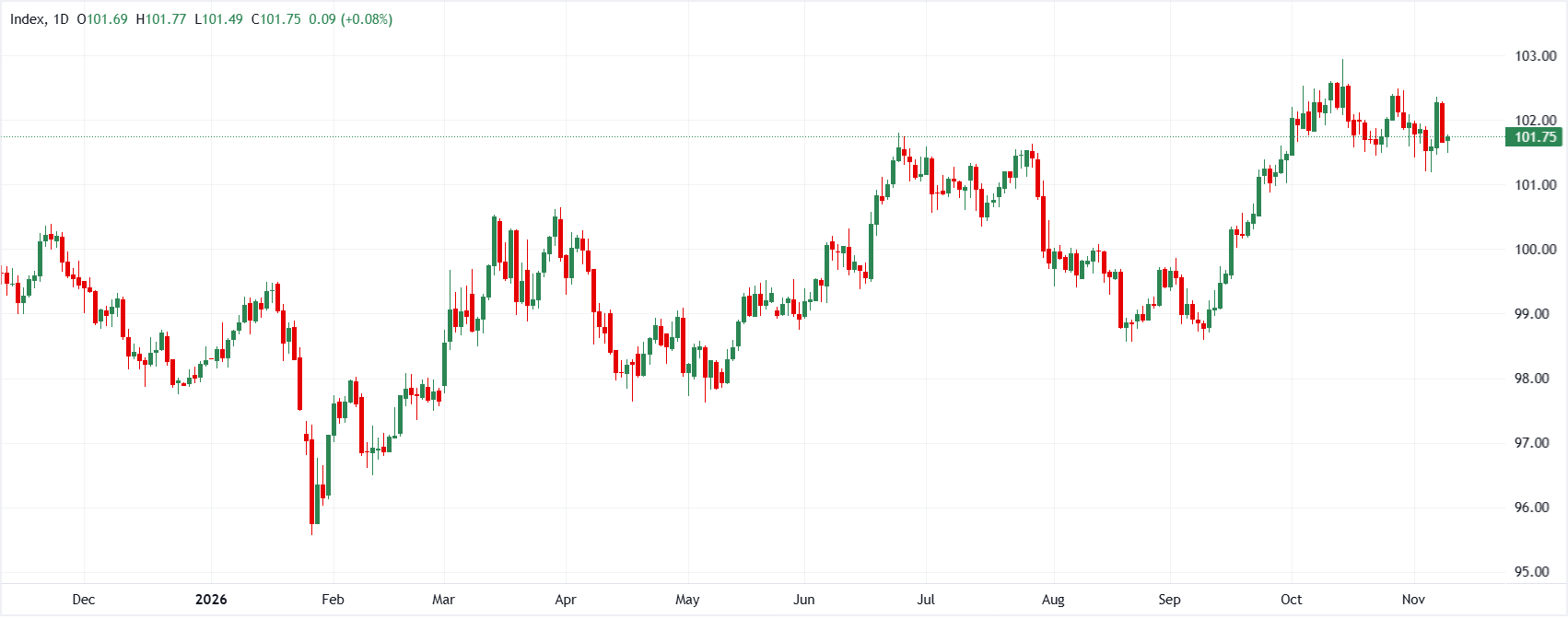
Chris Turner at ING maintains a supportive near-term outlook for the US Dollar, anticipating that strong US growth and sticky inflation above 3% will keep the Federal Reserve threatening further tightening through the first quarter of 2027. However, ING forecasts a clear turning point in the second quarter as base effects pull headline inflation back toward the Fed's 2% target, driving short-dated US rates lower.
"The dollar should stay supported by strong US growth, high inflation and a Fed threatening to tighten before weakening next spring as inflation falls... Our base call assumes that the Federal Reserve stays hawkish in the first quarter, as decent US growth and above-3% inflation keep money markets pricing in the threat of an extended tightening cycle... That turns in the second quarter, when energy-driven base effects drop out of headline inflation and a return to the Fed’s 2% inflation target sees short-dated US rates move meaningfully lower."
TD Securities sees muted US Dollar haven appeal as equity factors turn bearish
Jayati Bharadwaj and the macro strategy team at TD Securities argue that the US Dollar is no longer acting as an effortless safe-haven asset, pointing to muted gains during recent global equity risk-off episodes. While resilient US economic growth and attractive carry offer underlying support, relative US equity underperformance and priced-in Fed hawkishness imply modest downside for the Greenback into year-end, though Euro weakness linked to French debt risks will limit overall USD losses.
"We continue to see US vs RoW relative equity performance as the main driver for the broad USD. Muted USD upside despite equity risk-off last week confirms our view that the USD is no longer the effortless haven currency it used to be... While we expect some modest USD downside into year-end, the magnitude will likely be muted as the EUR remains impaired by the French debt fragility... USD still benefits from a supportive external balance backdrop, a US economy that remains resilient, and its attractive carry profile. However, Equity factor has turned bearish USD."
MUFG notes US Dollar softness as falling yields and lower Oil ease Fed pressure
Lee Hardman at MUFG observes that the US Dollar has given back its post-payrolls gains as lower Brent crude prices and declining US Treasury yields take pressure off the Federal Reserve. Although financial markets continue to price in a December rate hike, traders are actively paring back expectations for additional policy tightening in 2027 ahead of critical CPI inflation data.
"The US dollar has continued to trade at weaker levels overnight after giving back all of its gains yesterday following the release of the stronger NFP report on Friday... The move lower in energy prices is also helping to bring down government borrowing costs... If there is further progress towards a US-Iran deal to end the conflict it would help to sustain lower energy prices and ease pressure on major central banks including the Fed to keep hiking rates... The US rate market still expects the Fed to hike rates again as planned at the end of this year in December but has been scaling back expectations for further hikes in 2027."
Key Takeaway
The US Dollar's trajectory reflects an ongoing tension between resilient domestic economic performance and fading monetary policy momentum for 2027. While ING projects that above-3% inflation and a hawkish Federal Reserve stance will keep the Greenback firmly supported through the first quarter, TD Securities and MUFG demonstrate that muted safe-haven demand, falling energy-driven yield pressures, and trimmed 2027 rate hike expectations are capping upside potential, leaving the US Dollar poised for a broader deceleration as inflation cools toward target.
(This article was created with the help of an Artificial Intelligence tool and reviewed by an editor. Know more.)
Author

FXStreet Insights Team
FXStreet
The FXStreet Insights Team is a group of journalists that handpicks selected market observations published by renowned experts. The content includes notes by commercial as well as additional insights by internal and external analysts.