USD/CHF attracts some sellers to near 0.8850 as traders await US PCE inflation data
- USD/CHF weaken to around 0.8855 in Wednesday’s early European session.
- Fed officials see interest rate cuts ahead, but only gradually, FOMC Minutes showed.
- The rising Middle East geopolitical tensions could boost the safe-haven currency like the Swiss Franc.
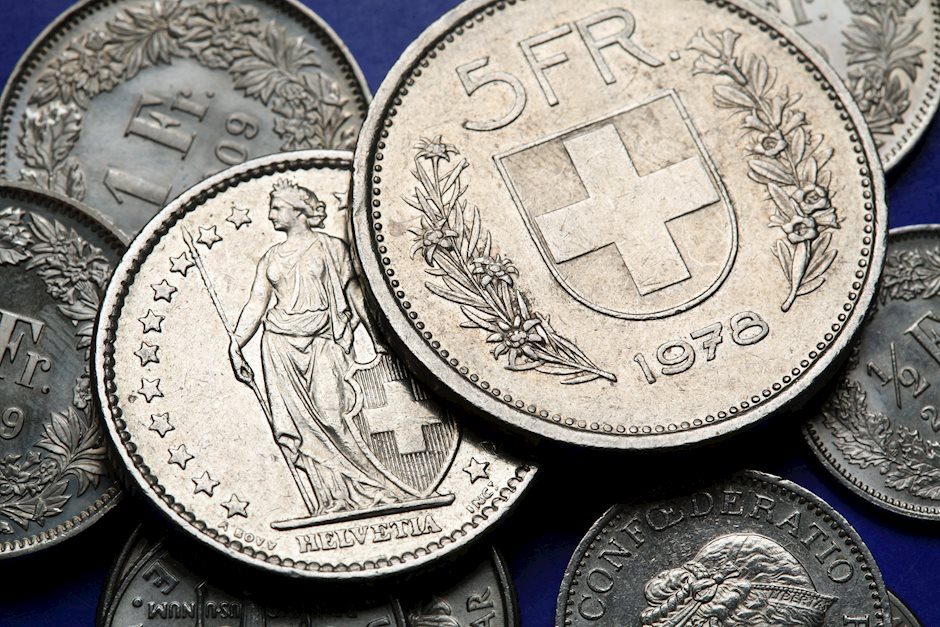

The USD/CHF pair softens to near 0.8855 during the early European session on Wednesday. The weakening of the US Dollar (USD) ahead of the US October inflation data weighs on the pair. Meanwhile, the US Dollar Index (DXY), which measures the value of the USD against a basket of currencies, edges lower to near the weekly low as profit-taking set in.
Traders prefer to wait on the sidelines ahead of US PCE data, which is due later on Wednesday. The US markets will be closed for the Thanksgiving holiday on Thursday. However, the strong US economic data and the cautious stance of the US Federal Reserve (Fed) are likely to cap the upside for the USD in the near term. The Federal Open Market Committee (FOMC) Minutes from the November meeting released Tuesday showed that Fed officials see interest rate cuts ahead but at a gradual pace.
Traders pared back their expectations for an interest rate cut in December. Futures traders are now pricing in a 57.7% possibility that the Fed will cut rates by a quarter point, down from around 69.5% a month ago, according to the CME FedWatch Tool.
On Tuesday, Israel approved a ceasefire agreement with Lebanon’s Hezbollah militants that would end nearly 14 months of fighting linked to the war in the Gaza Strip, per the AP News. US President Joe Biden said the deal between Israel and Hezbollah involves Israeli forces withdrawing from Lebanon over 60 days, with Lebanon’s military taking control of areas in the country's south to ensure Hezbollah does not rebuild forces.
Investors will closely monitor the development surrounding the geopolitical risks. Any signs of the escalating tension could boost the safe-haven flows, benefiting the Swiss Franc (CHF).
Swiss Franc FAQs
The Swiss Franc (CHF) is Switzerland’s official currency. It is among the top ten most traded currencies globally, reaching volumes that well exceed the size of the Swiss economy. Its value is determined by the broad market sentiment, the country’s economic health or action taken by the Swiss National Bank (SNB), among other factors. Between 2011 and 2015, the Swiss Franc was pegged to the Euro (EUR). The peg was abruptly removed, resulting in a more than 20% increase in the Franc’s value, causing a turmoil in markets. Even though the peg isn’t in force anymore, CHF fortunes tend to be highly correlated with the Euro ones due to the high dependency of the Swiss economy on the neighboring Eurozone.
The Swiss Franc (CHF) is considered a safe-haven asset, or a currency that investors tend to buy in times of market stress. This is due to the perceived status of Switzerland in the world: a stable economy, a strong export sector, big central bank reserves or a longstanding political stance towards neutrality in global conflicts make the country’s currency a good choice for investors fleeing from risks. Turbulent times are likely to strengthen CHF value against other currencies that are seen as more risky to invest in.
The Swiss National Bank (SNB) meets four times a year – once every quarter, less than other major central banks – to decide on monetary policy. The bank aims for an annual inflation rate of less than 2%. When inflation is above target or forecasted to be above target in the foreseeable future, the bank will attempt to tame price growth by raising its policy rate. Higher interest rates are generally positive for the Swiss Franc (CHF) as they lead to higher yields, making the country a more attractive place for investors. On the contrary, lower interest rates tend to weaken CHF.
Macroeconomic data releases in Switzerland are key to assessing the state of the economy and can impact the Swiss Franc’s (CHF) valuation. The Swiss economy is broadly stable, but any sudden change in economic growth, inflation, current account or the central bank’s currency reserves have the potential to trigger moves in CHF. Generally, high economic growth, low unemployment and high confidence are good for CHF. Conversely, if economic data points to weakening momentum, CHF is likely to depreciate.
As a small and open economy, Switzerland is heavily dependent on the health of the neighboring Eurozone economies. The broader European Union is Switzerland’s main economic partner and a key political ally, so macroeconomic and monetary policy stability in the Eurozone is essential for Switzerland and, thus, for the Swiss Franc (CHF). With such dependency, some models suggest that the correlation between the fortunes of the Euro (EUR) and the CHF is more than 90%, or close to perfect.
Author
Lallalit Srijandorn
FXStreet
Lallalit Srijandorn is a Parisian at heart. She has lived in France since 2019 and now becomes a digital entrepreneur based in Paris and Bangkok.

















