The Japanese Yen spikes on softer US inflation and gives the gain back
- USD/JPY dips below 156.50 on US inflation and closes back near 157.50.
- October Fed hike odds cut by about a third after the release.
- Tokyo core inflation due Thursday, forecast at 2.4% from 1.8%.

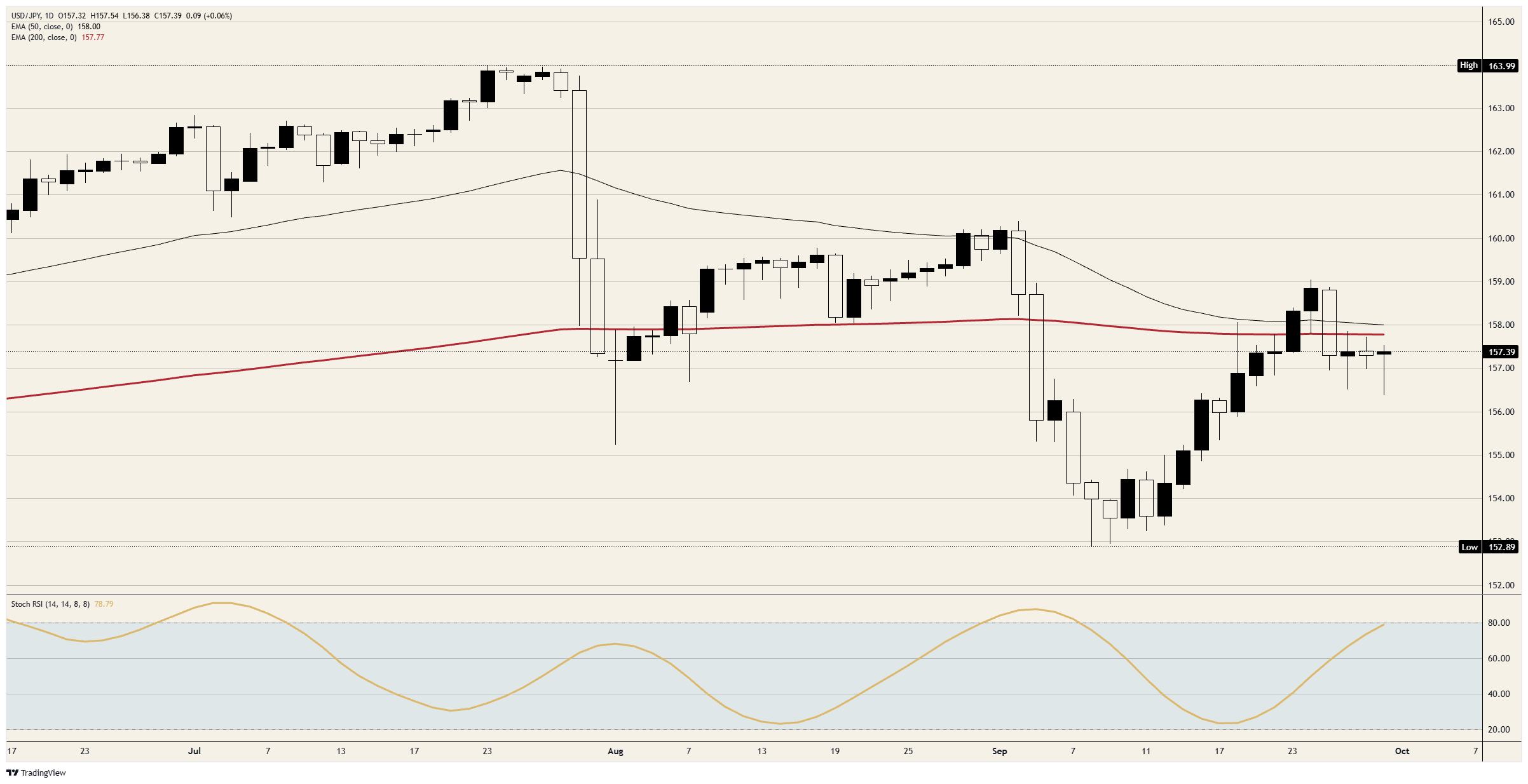
Softer US inflation pulled October Fed hike odds down to near 35%, and USD/JPY fell below 156.50 on the release. It finished back just under 157.50, its fourth straight close on the 157.00 handle. The Yen got the US number it needed and USD/JPY still closed a touch above where it opened.
The BoJ decides two days after the Fed
The Bank of Japan (BoJ) raised its rate to 1.25% on September 18, and swaps price about a 36% chance of another hike on October 30. The Fed's range is 3.75-4.00%, so the gap between the two policy rates is at least 2.5 points before either bank moves again. Markets now give the Fed and the BoJ the same rough one-in-three chance of hiking in October, from rates 2.5 points apart.
Japan's big manufacturers are forecast to feel a little better
The BoJ's Tankan survey of large manufacturers lands at 23:50 GMT on Wednesday, forecast at 25 from 22, along with the summary of opinions from the BoJ's September meeting. Tokyo's September Consumer Price Index (CPI) follows on Thursday at 23:30 GMT, with the measure that strips out fresh food forecast at 2.4% from 1.8%. The US jobs report is due on Friday at 12:30 GMT.
Firm Tokyo prices would lift the October odds for the BoJ, and a strong payroll count would lift them for the Fed, so USD/JPY gets both sides of the rate gap within two days. One-in-three odds on a BoJ hike translate to probably December, and sooner only if Tokyo's prices jump the way the forecast says.
USD/JPY levels under the 200-day average
Resistance: The 200-day average, an Exponential Moving Average (EMA) just under 158.00, has capped four straight closes since the September 25 drop. 159.00, the September 24 high, is above it.
Support: Wednesday's low below 156.50 is the first level, and 156.00 is next.
Bias: Short under 158.00 on a closing basis, with 156.00 as the first objective and 155.00 as the second. Daily momentum argues for patience, with the Stochastic Relative Strength Index (Stoch RSI) near 79 and still climbing, so a retest of the 200-day wouldn't be a surprise. A daily close above 159.00 ends the short.
USD/JPY daily chart
Japanese Yen FAQs
The Japanese Yen (JPY) is one of the world’s most traded currencies. Its value is broadly determined by the performance of the Japanese economy, but more specifically by the Bank of Japan’s policy, the differential between Japanese and US bond yields, or risk sentiment among traders, among other factors.
One of the Bank of Japan’s mandates is currency control, so its moves are key for the Yen. The BoJ has directly intervened in currency markets sometimes, generally to lower the value of the Yen, although it refrains from doing it often due to political concerns of its main trading partners. The BoJ ultra-loose monetary policy between 2013 and 2024 caused the Yen to depreciate against its main currency peers due to an increasing policy divergence between the Bank of Japan and other main central banks. More recently, the gradually unwinding of this ultra-loose policy has given some support to the Yen.
Over the last decade, the BoJ’s stance of sticking to ultra-loose monetary policy has led to a widening policy divergence with other central banks, particularly with the US Federal Reserve. This supported a widening of the differential between the 10-year US and Japanese bonds, which favored the US Dollar against the Japanese Yen. The BoJ decision in 2024 to gradually abandon the ultra-loose policy, coupled with interest-rate cuts in other major central banks, is narrowing this differential.
The Japanese Yen is often seen as a safe-haven investment. This means that in times of market stress, investors are more likely to put their money in the Japanese currency due to its supposed reliability and stability. Turbulent times are likely to strengthen the Yen’s value against other currencies seen as more risky to invest in.
Author

Joshua Gibson
FXStreet
Joshua joins the FXStreet team as an Economics and Finance double major from Vancouver Island University with twelve years' experience as an independent trader focusing on technical analysis.