Ranked: The world’s top Silver producers
- Half of the world’s production of Silver comes from Mexico, Peru and China.
- The American continent dominates Silver mining production and is expected to continue to do so.
- The Silver market posted its fifth consecutive deficit in 2025 and the gap is expected to widen to 46.3 million ounces in 2026.
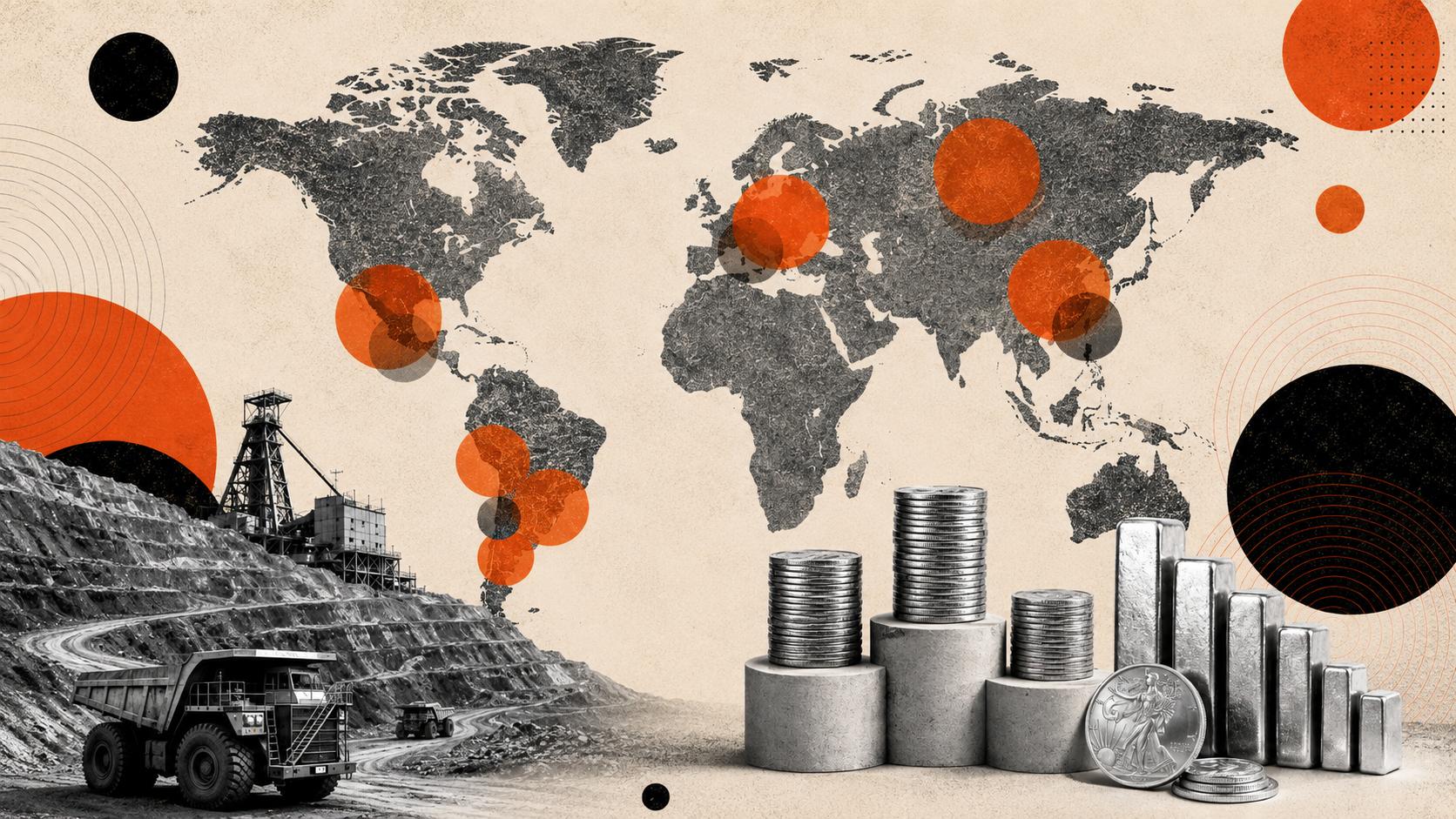
Half of the world’s mined Silver comes from only three countries: Mexico, Peru and China. In a market facing running structural deficits, the concentration in only a few countries leaves it subject to vulnerability in case there is any disruption in any of the core producers.
Data from The Silver Institute shows that Mexico produced around 173 million ounces of Silver in 2025, which is about one-fifth of the world’s total output. Peru and China followed, with 130 million ounces and 113 million ounces, respectively.
Mexico’s output fell 5% for a third consecutive year. Peru moved closer to Mexico after production rose 7%. China remained third, and Russia’s production jumped 23% to fourth place, data from the report shows.
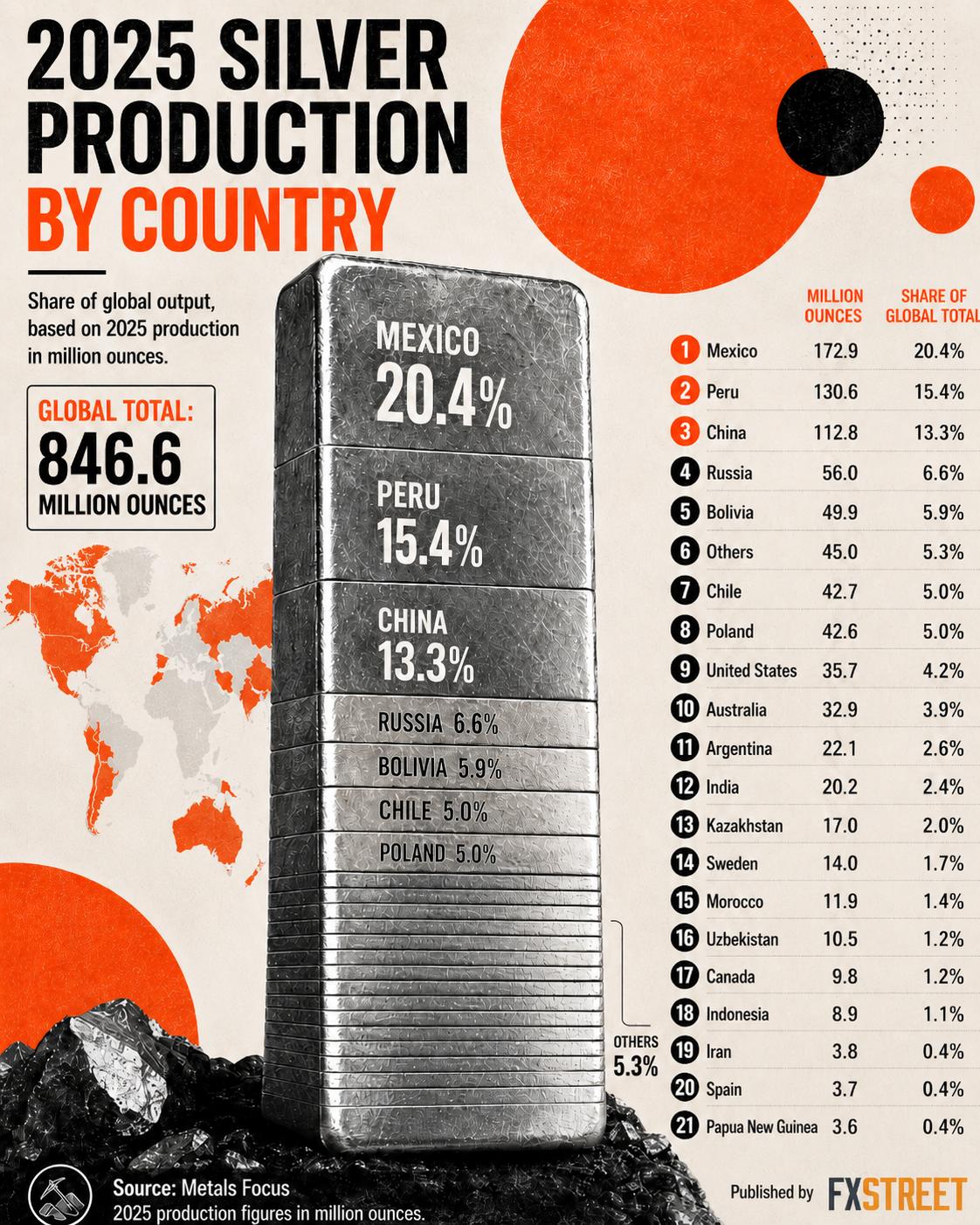
Regionally, North American output fell 3% to its lowest level in 10 years, while Central and South America rose 5%. This shows the supply center of gravity is still heavily tied to the Americas, especially Mexico and Peru.
Silver market faces structural deficit
This dependence occurs as the Silver market posted a deficit for a fifth consecutive year. The gap stood at 40.3 million ounces in 2025 and it is expected to widen to 46.3 million ounces in 2026 despite rising supply and a contraction in demand.
The Silver price surged to an all-time high above $120 at the end of January. The rally was followed by a sharp correction, with prices currently hovering at around $70.
“What made the January 2026 rally truly exceptional was the outsized impact that physical investment had on prices,” the Silver Institute said in its World Silver Survey 2026 report. The institute’s research confirmed strong coin and bar demand across most key markets, common product shortages and an explosion of funds into Exchange-Traded Products (ETPs).
Despite the sharp correction seen at the beginning of the year, the analysts said that their outlook over the metal remains constructive as a slight decline in demand will be accompanied by a mild decline in production. More importantly, the market is still projected to post a sixth consecutive deficit, leaving inventories under pressure.
“Taken together, these trends point to another silver-market deficit of 46.3 million ounces. This would be the sixth in a row and, combined with elevated ETP holdings and the possibility of metal flowing back to the CME if positioning recovers, the cumulative drawdown of stocks over these years makes the market vulnerable to liquidity squeezes,” the report said.
“Though these will not be constant, lower liquidity than the market has been used to in previous years means that volatility in prices and lease rates will continue,” it added.
Author

Dhwani Mehta
FXStreet
Residing in Mumbai (India), Dhwani is a Senior Analyst and Manager of the Asian session at FXStreet. She has over 10 years of experience in analyzing and covering the global financial markets, with specialization in Forex and commodities markets.