|

Pound Sterling Price News and Forecast: GBP dips to weekly lows following soft UK inflation figures

British Pound dips to weekly lows following soft UK inflation figures

The British Pound (GBP) extends losses against the US Dollar (USD) on Wednesday, with the GBP/USD pair hitting a weekly low of 1.3410 at the time of writing. Softer-than-expected UK Consumer Price Index (CPI) figures have provided further reasons for the Bank of England (BoE) to keep interest rates on hold in the coming months, which has hurt speculative demand for the Cable.

Data released by the UK Office for National Statistics earlier on Wednesday revealed that consumer prices grew at a 2.8% year-on-year (YoY) pace in May, unchanged from April, while monthly inflation eased to 0.2%, below the 0.4% expected and well below April’s 0.7% reading. The Core CPI ticked up to a 2.6% yearly growth, from 2.5% in the previous month, but also below the 2.7% anticipated by the market consensus. Read more...

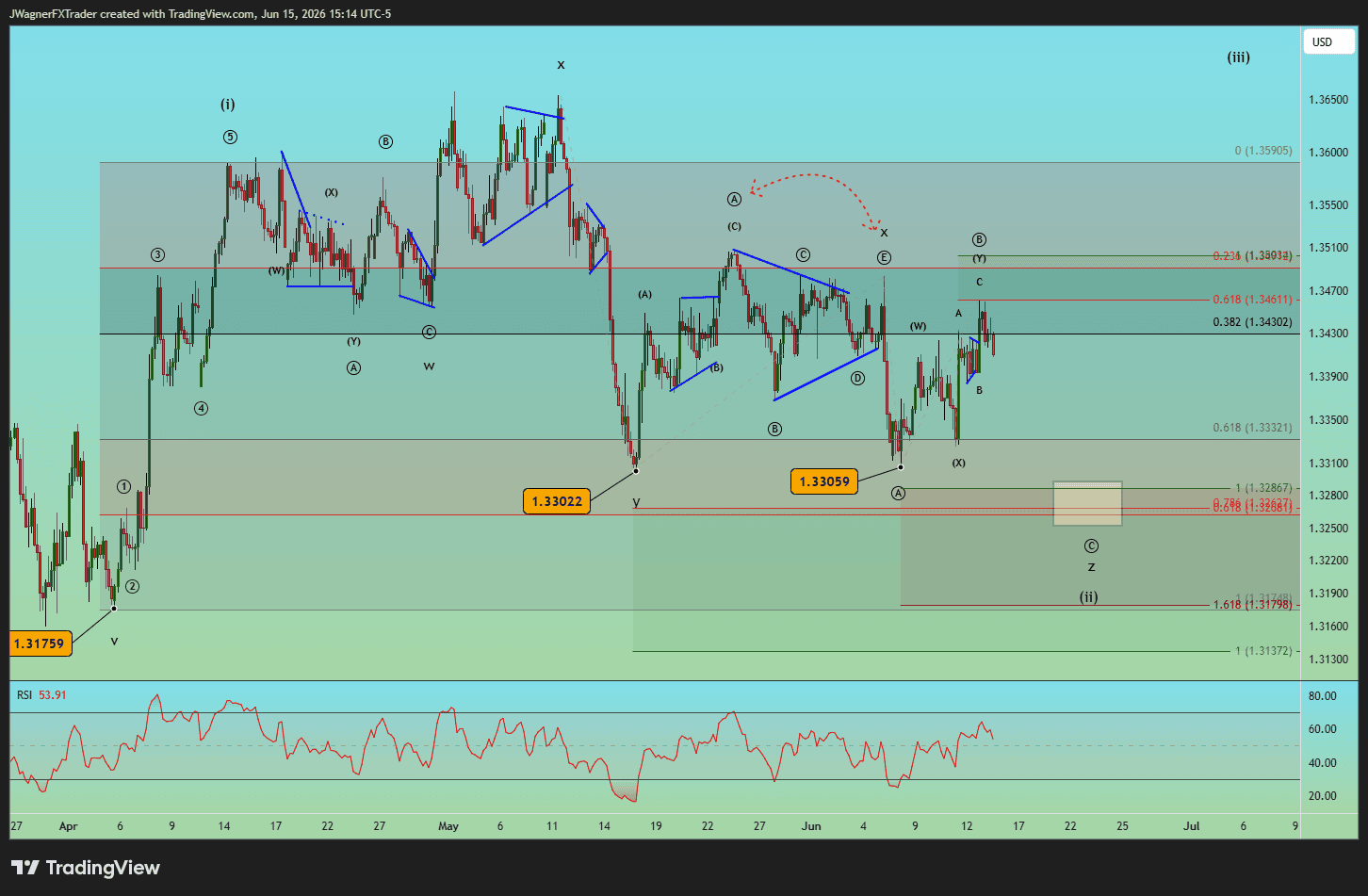
GBP/USD Elliott Wave: Cable finalizing its downtrend

Since topping at 1.3589 on April 14, GBP/USD has been grinding sideways to lower in an obvious corrective setback. We anticipate another dip is needed before the bulls are allowed to roam.

The current Elliott wave pattern suggests GBP/USD is nearing the end of a corrective wave (ii). Once complete, GBPUSD would accelerate higher multiple hundred pips in wave (iii). Read more...
GBPUSD

Author

FXStreet Team

Composed of a group of economic journalists and FX experts, the FXStreet content team produces and oversees all content published on FXStreet. It provides a purely journalistic approach to the Forex market.


More from FXStreet Team
Share:

Editor's Picks

AUD/USD sticks to positive bias above 0.7100; lacks bullish conviction

AUD/USD trades with a positive bias for the second straight day, holding above 0.7100 in the Asian session on Friday as softer US bond yields keep US Dollar bulls on the back foot. Furthermore, hawkish RBA Governor Bullock's comments boost rate hike bets and support the Aussie. However, the Fed's hawkish outlook, along with geopolitical uncertainties, limits USD losses and caps the pair.

USD/JPY retreats below 157.00 as Ueda speaks on outlook

USD/JPY reverses the uptick to two-week highs near 157.30 in the European session on Friday as the Japanese Yen finds some respite from BoJ Governor Ueda's comments at the post-monetary policy meeting press conference. Earlier in the day, the central bank hiked the interest rate to 1.25%, with a surprise 7-2 vote.

Gold advances to fresh weekly top; eyes $$4,400 as softer US bond yields cap USD gains

Gold attracts some follow-through buying for the second straight day, and touches a fresh weekly high heading into the European session. US bond yields retreat further from multi-year highs as the recent pullback in crude oil prices helped alleviate immediate fears of runaway inflation. This caps gains for the US Dollar and supports the bullion.

Bitcoin extends recovery, Ethereum eyes $2,500, XRP holds $1.30
Bitcoin (BTC), Ethereum (ETH) and Ripple (XRP) extend their recovery, trading above $76,700, $2,400 and $1.300, respectively, on Friday. These top three cryptocurrencies now face key technical levels that could determine whether their recoveries extend further or pull back.
Cardano extends gains on bullish derivatives
Cardano (ADA) extends its recovery, trading above $0.210 at the time of writing on Friday, after finding support around a key zone earlier this week. Improving derivatives positioning and supporting technical indicators indicate growing bullish sentiment among ADA traders. Derivatives data shows a bullish tilt among Cardano traders.
How Japan became the World's Banker and why that era may be ending

Japan's ultra-low interest rates helped finance trillions of dollars in global investments for more than a decade, making the Japanese Yen one of the world’s cheapest sources of funding. With the Bank of Japan expected to tighten policy again this week, that advantage may be entering a new phase. While most major economies raised interest rates, Japan remained the world's outlier.