Manufacturing reaccelerates as the S&P 500 breaks higher

US manufacturing data has given equity bulls another reason to stay constructive. The latest ISM Manufacturing report showed the headline index rising to 55.6 from 53.3, signalling that the factory sector expanded at a faster rate during July.
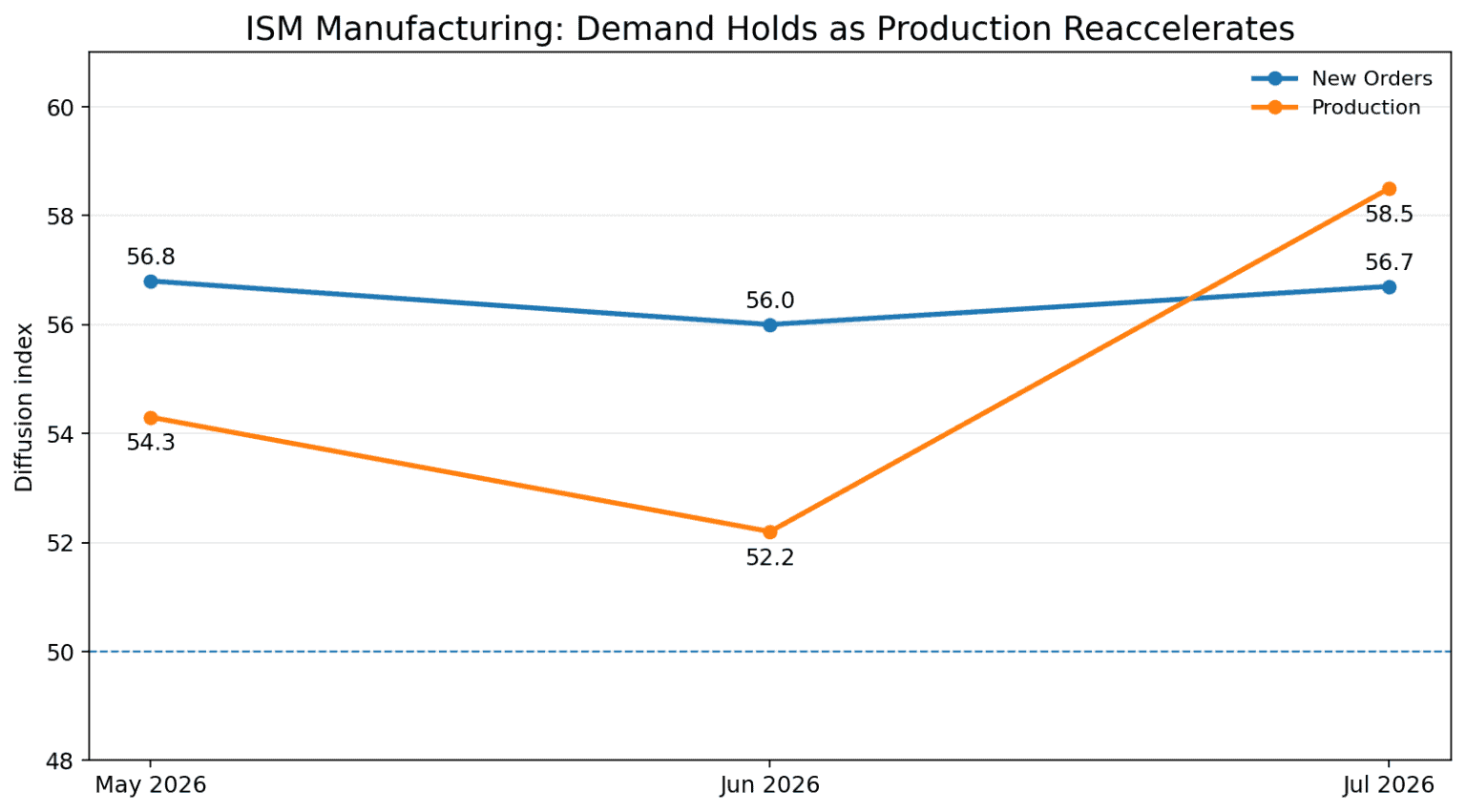
More importantly, the improvement broadened beneath the headline. Production jumped from 52.2 to 58.5, backlogs rose from 50.5 to 55.0, while manufacturing employment moved back into expansion at 52.8. New Orders remained healthy at 56.7, although their rate of improvement was more modest.
The developing chain is therefore:
Orders remain firm → factories increase production → backlogs continue building → manufacturers begin hiring.
That suggests businesses are not simply producing goods into unwanted inventories. Customer inventories remain unusually low, which may support further replenishment and production over the coming months.
Growth improves while inflation pressure eases
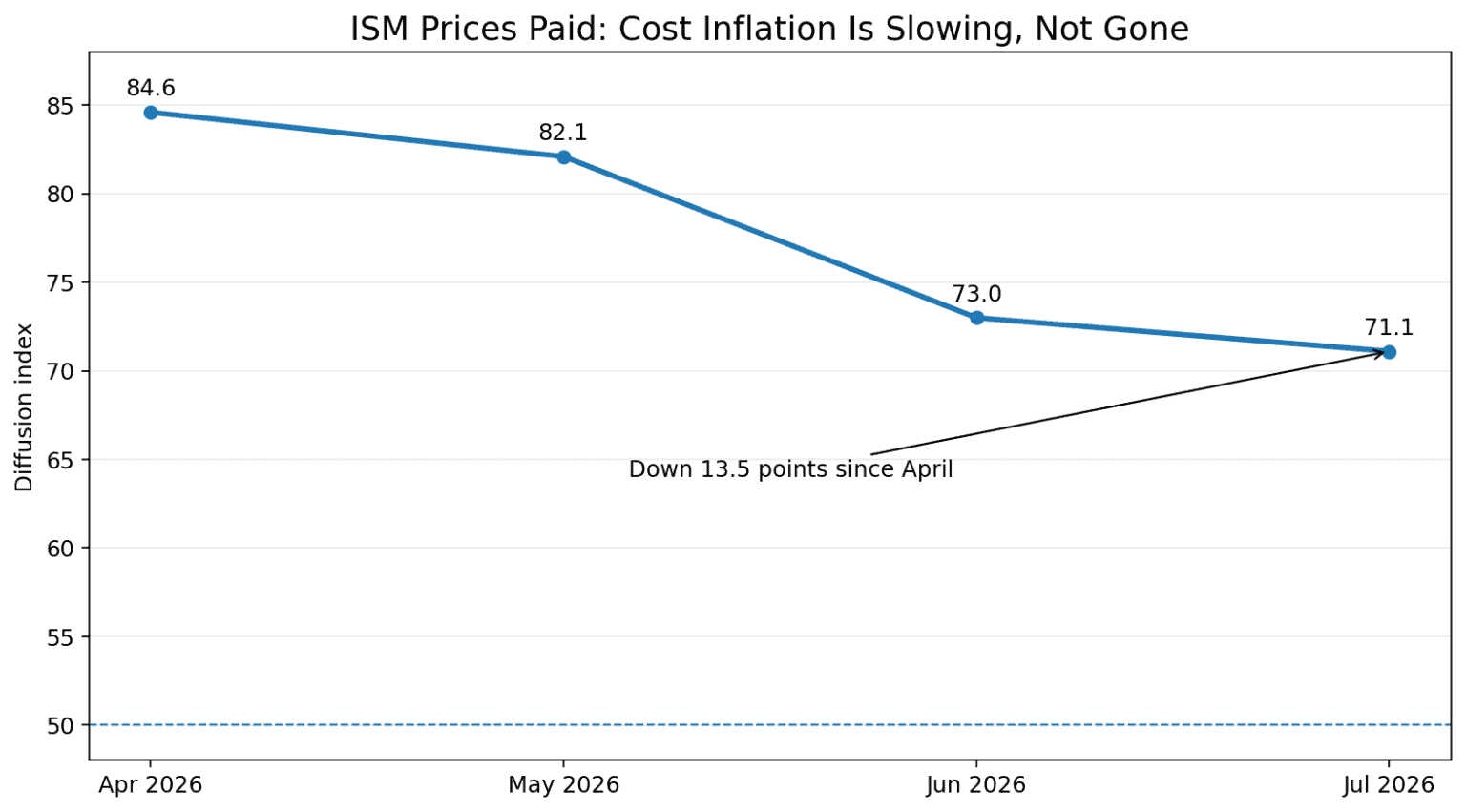
Prices Paid also declined from 73.0 to 71.1. The level remains high, meaning manufacturers are still facing considerable input-cost inflation, but the direction is improving.
Markets tend to respond to the rate of change rather than the absolute level. Stronger production alongside easing cost acceleration offers a more favourable mix for earnings: companies may benefit from improving volumes while the pressure on margins becomes less severe.
This may have helped support the equity-market reaction, although it would be too strong to claim ISM alone caused the advance. The wider interpretation is that manufacturing growth is strengthening without an additional acceleration in input inflation.
Attention now turns to Friday’s US employment report, scheduled for 7 August. Manufacturing employment expanding for the first time in an extended period offers an encouraging signal, while the previous Services ISM report also showed employment returning to expansion. However, manufacturing represents only one part of the labour market, so this should be viewed as a positive clue rather than a reliable forecast of Non-Farm Payrolls.
A healthy jobs report could reinforce expectations that economic growth remains firm. The risk is that an excessively strong print also pushes Treasury yields higher by reducing the urgency for monetary easing. The market may therefore prefer a report that confirms resilience without materially reviving inflation or rate concerns.
S&P 500 breaks the summer triangle
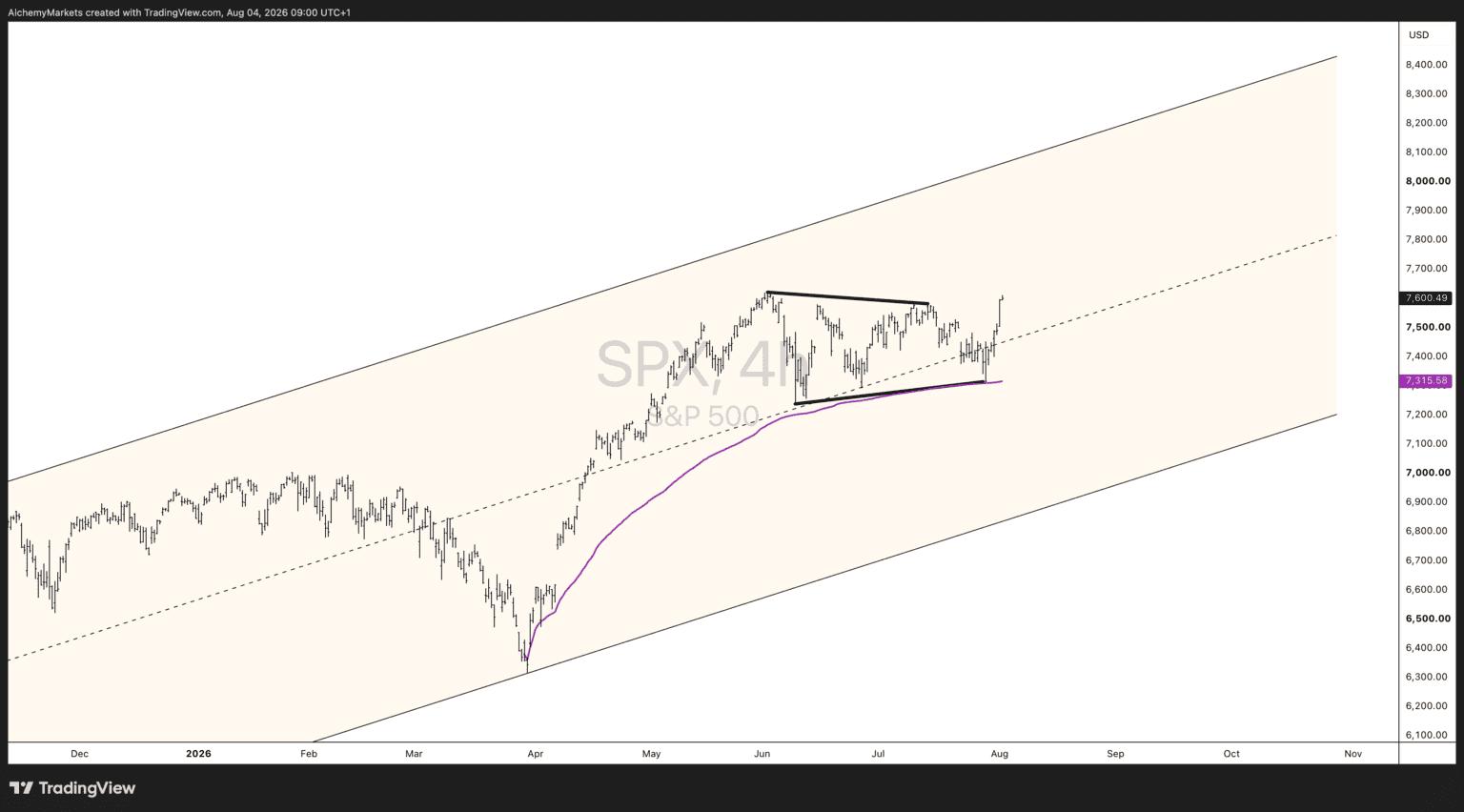
Technically, the S&P 500 has broken above the triangle pattern that contained price throughout much of the summer.
The index repeatedly found support around its rising trend line and anchored VWAP before pushing through the upper boundary near the 7,550–7,580 region. The breakout shifts the immediate structure back in favour of buyers, provided price can hold above the former resistance area rather than fall back inside the pattern.
The first major psychological objective is now 8,000. Beyond that, the upper boundary of the broader rising channel offers a more ambitious target if earnings, economic data and market breadth continue to support the move.
The bullish technical case would weaken if the index loses the breakout area and closes back inside the triangle. For now, however, improving manufacturing momentum and softer cost acceleration are supporting the fundamental backdrop as the S&P 500 attempts its next leg higher.
The main message: US manufacturing is no longer merely stabilising. Output, backlogs and employment are now broadening the recovery, while input-cost inflation is becoming less severe. The next test is whether Friday’s labour report confirms that strength without creating another sharp rise in yields.
Author

Zorrays Junaid
Alchemy Markets
Zorrays Junaid has extensive combined experience in the financial markets as a portfolio manager and trading coach. More recently, he is an Analyst with Alchemy Markets, and has contributed to DailyFX and Elliott Wave Forecast in the past.