Japanese Yen underperforms amid rising trade concerns
- The Japanese Yen trades lower against its peers as elevated energy prices hit foreign reserves.
- Japan’s Trade deficit widens to JPY 634.5 billion in July from JPY 409.9 billion.
- Lower US bond yields have weighed on the US Dollar.
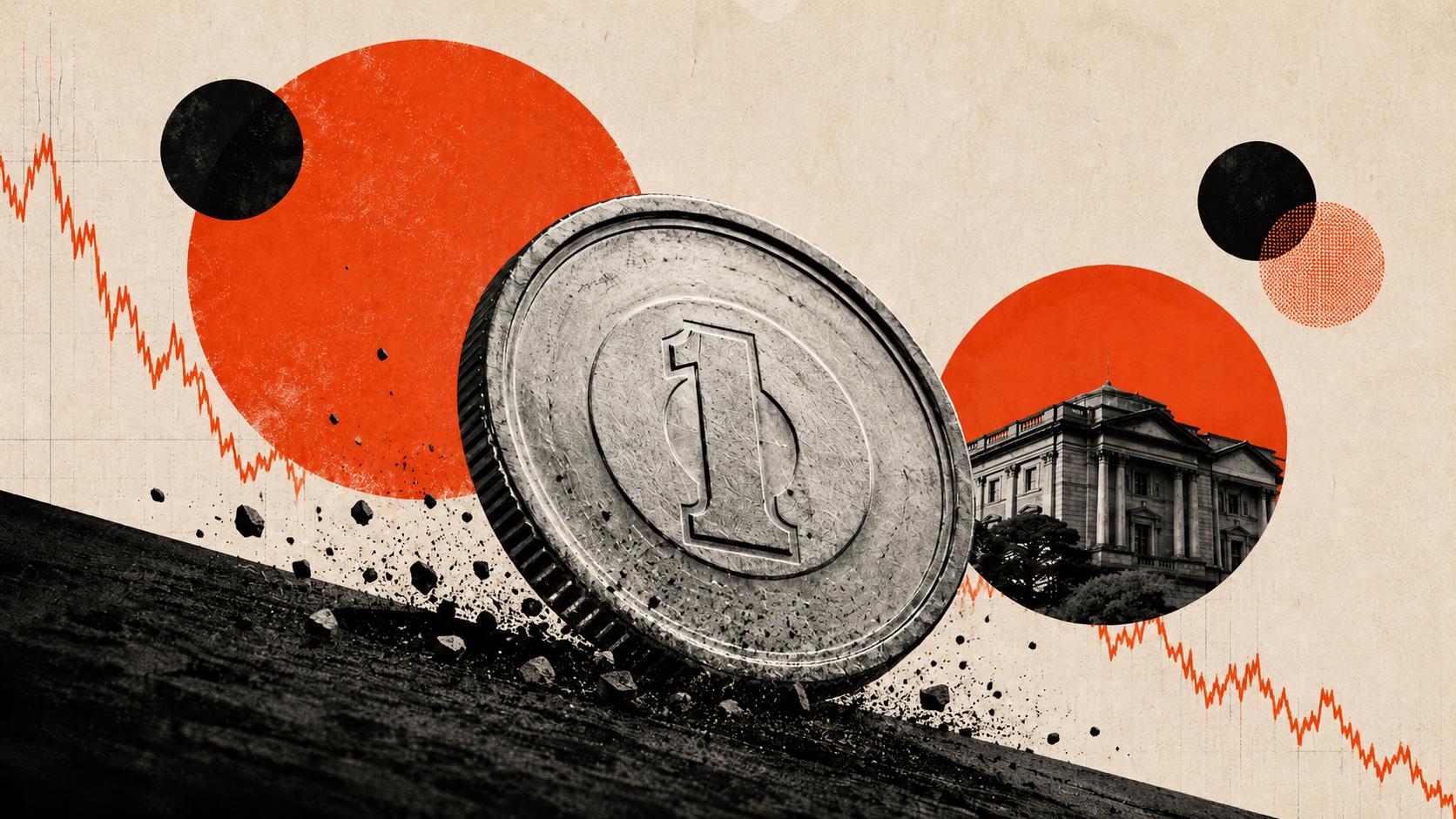
The Japanese Yen (JPY) is down against its major currency peers on Thursday, with USD/JPY trading 0.22% higher at around 158.50 during the European trading session. The Japanese currency underperforms as the Trade Deficit widens due to elevated energy prices.
Japanese Yen Price Today
The table below shows the percentage change of Japanese Yen (JPY) against listed major currencies today. Japanese Yen was the weakest against the New Zealand Dollar.
| USD | EUR | GBP | JPY | CAD | AUD | NZD | CHF | |
|---|---|---|---|---|---|---|---|---|
| USD | -0.07% | -0.05% | 0.17% | -0.12% | 0.04% | -0.31% | 0.19% | |
| EUR | 0.07% | 0.02% | 0.26% | -0.04% | 0.12% | -0.25% | 0.27% | |
| GBP | 0.05% | -0.02% | 0.26% | -0.07% | 0.10% | -0.25% | 0.24% | |
| JPY | -0.17% | -0.26% | -0.26% | -0.30% | -0.13% | -0.50% | 0.00% | |
| CAD | 0.12% | 0.04% | 0.07% | 0.30% | 0.18% | -0.18% | 0.31% | |
| AUD | -0.04% | -0.12% | -0.10% | 0.13% | -0.18% | -0.35% | 0.14% | |
| NZD | 0.31% | 0.25% | 0.25% | 0.50% | 0.18% | 0.35% | 0.52% | |
| CHF | -0.19% | -0.27% | -0.24% | -0.00% | -0.31% | -0.14% | -0.52% |
The heat map shows percentage changes of major currencies against each other. The base currency is picked from the left column, while the quote currency is picked from the top row. For example, if you pick the Japanese Yen from the left column and move along the horizontal line to the US Dollar, the percentage change displayed in the box will represent JPY (base)/USD (quote).
Earlier in the day, Japan’s Ministry of Finance (MoF) reported that the Trade deficit widened to JPY 634.5 billion from JPY 409.9 billion. Investors expect the fiscal deficit to widen further to JPY 680 billion.
The international trade report showed that Imports surged 27.8% from the same month a year ago to a seasonally adjusted JPY 12.15 trillion, AP News reported. Japan’s exports growth also remained robust at 23.2%, faster than estimates of 19.9%.
On the monetary policy front, financial markets remain confident that the Bank of Japan (BoJ) will raise interest rates in the September meeting.
BoJ tightening path pulled forward as Standard Chartered adds extra hike to cycle
Analysts at Standard Chartered have brought forward their expectations for Bank of Japan policy tightening, now looking for the BoJ “to hike by 25bps on 18 September from October previously.” They also revise the subsequent path, stating that they “now expect two more 25bps hikes after September, in Q1- and Q3-2027, from 25bps hikes in October and Q2-2027,” implying an additional move this cycle and a steeper overall normalization trajectory.
Meanwhile, the US Dollar is under pressure against its other currency peers due to a sharp decline in United States (US) Treasury Yields. At press time, the US Dollar Index (DXY), which gauges the Greenback’s value against six major currencies, trades cautiously near its fresh seven-week low of 98.77 posted on Wednesday.
US bond yields decline significantly as the US Treasury Department unveils plans to double its long-maturity bond-buying to curb high borrowing costs.
USD/JPY Technical Analysis
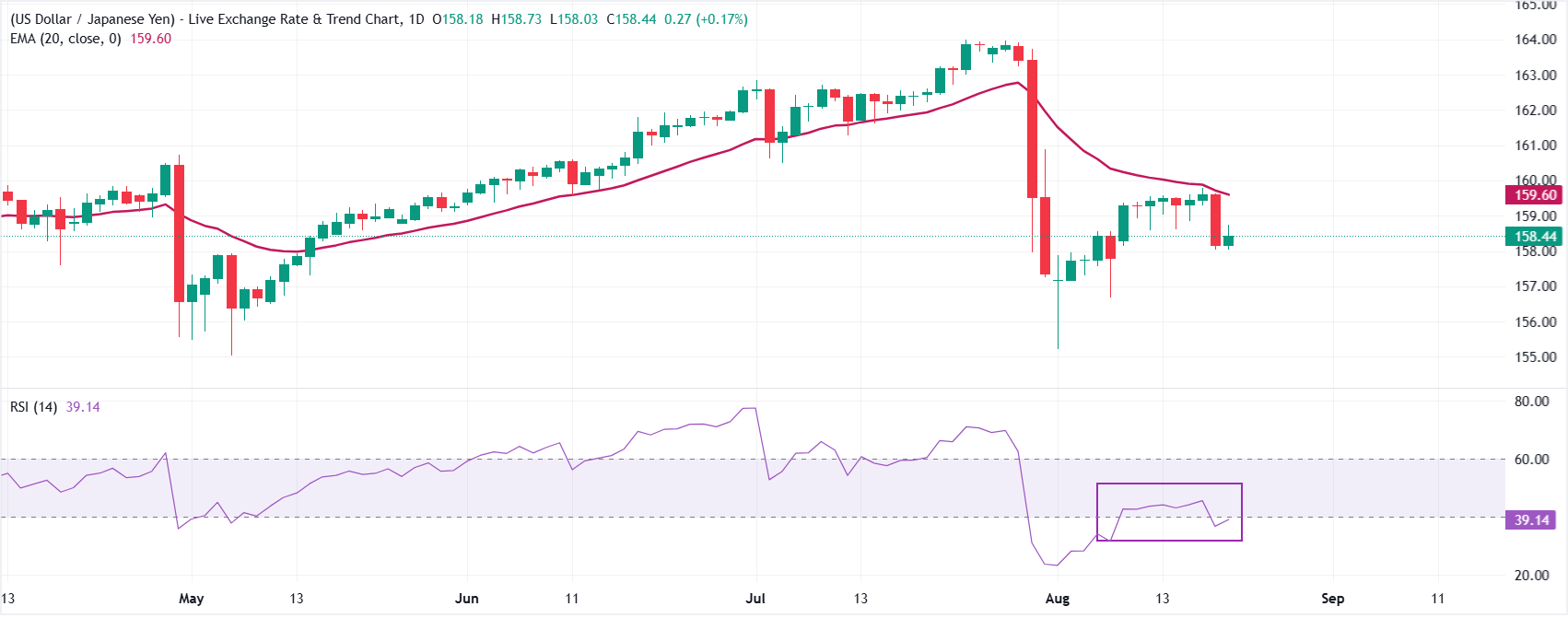
In the daily chart, USD/JPY trades at 158.43, keeping a bearish near-term bias as spot remains below the 20-day Exponential Moving Average (EMA) at 159.59. The pair trades under this short-term trend proxy, suggesting topside attempts are likely to be capped while momentum stays soft, with the 14-day Relative Strength Index (RSI) hovering near 39 and signaling weak but not oversold demand.
On the topside, immediate resistance is located at the 20-day EMA at 159.59, which acts as the first barrier for any recovery attempts and reinforces the bearish tone while price holds beneath it. With no clear underlying support levels in the immediate data set, the focus remains on whether sellers can maintain pressure below 159.59, as a sustained break above this EMA would be needed to ease the current downside bias.
(The technical analysis of this story was written with the help of an AI tool. Know more.)
Economic Indicator
Merchandise Trade Balance Total
The Merchandise Trade Balance Total released by the Ministry of Finance is a measure of balance amount between import and export. A positive value shows a trade surplus while a negative value shows a trade deficit. Japan is so much dependant on exports that the Japanese economy heavily relies on a trade surplus. Therefore, any variation in the figures influences the domestic economy. If a steady demand in exchange for Japanese exports is seen, that would turn into a positive.
Read more.Last release: Wed Aug 19, 2026 23:50
Frequency: Monthly
Actual: ¥-634.5B
Consensus: ¥-680B
Previous: ¥-406.9B
Source: Ministry of Finance of Japan
Author

Sagar Dua
FXStreet
Sagar Dua is associated with the financial markets from his college days. Along with pursuing post-graduation in Commerce in 2014, he started his markets training with chart analysis.

















