Indonesian Rupiah weakens amid domestic political instability, stable US Dollar
- USD/IDR rises as the Indonesian Rupiah struggles amid market caution following domestic political instability.
- The US Dollar gained as stronger CPI data increased Fed rate hike bets.
- CME FedWatch Tool suggests nearly a 91% probability of a rate hike in December.
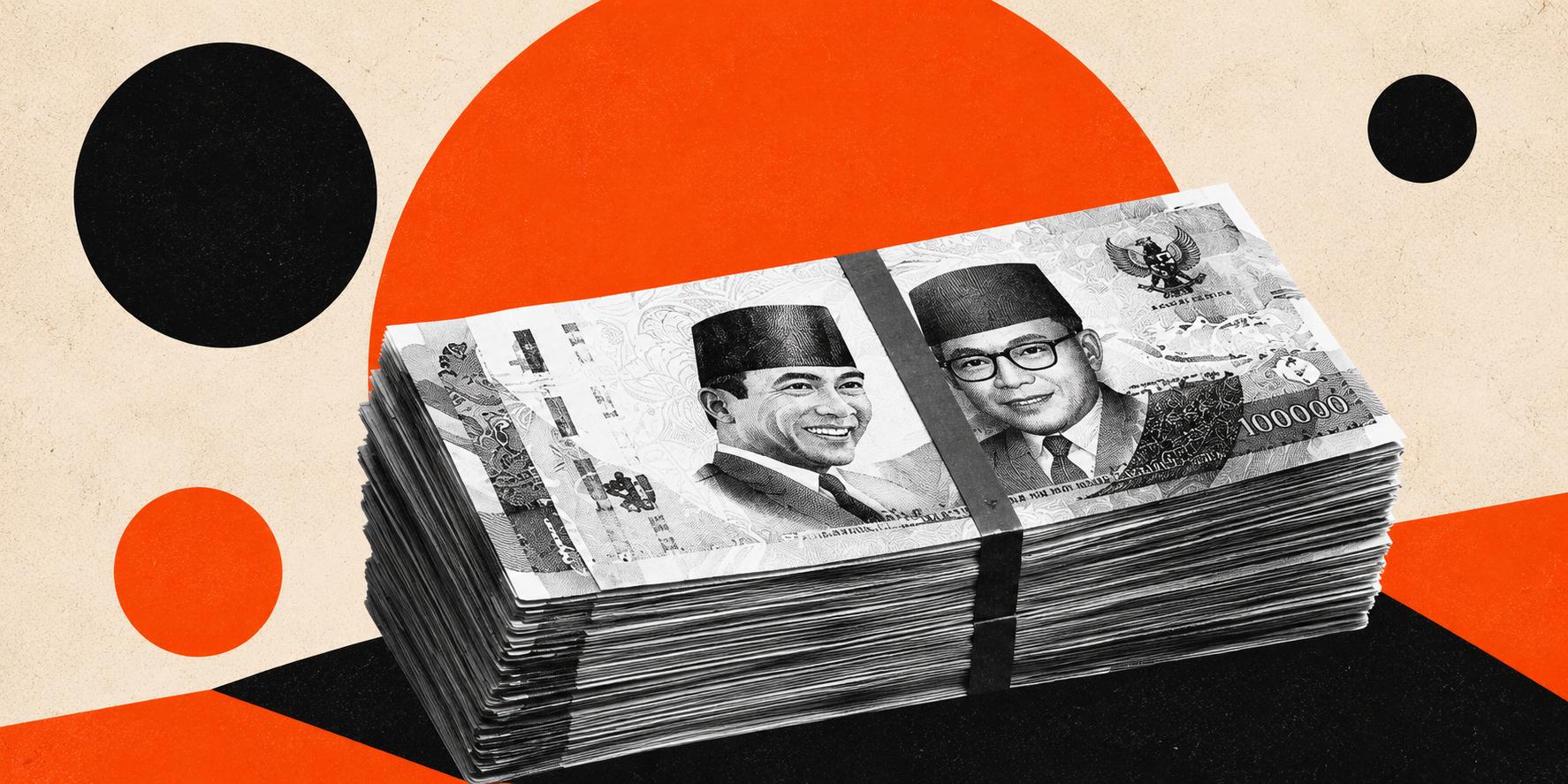
USD/IDR gains ground after registering modest losses the previous day, trading around 18,140 during Asian hours on Wednesday. The currency pair advanced as the Indonesian Rupiah (IDR) came under pressure from heightened market caution following political instability in the country.
The uncertainty mounted after Vice President Gibran Rakabuming Raka met with President Prabowo Subianto and expressed his intention to resign. The offer followed two consecutive court rulings regarding Gibran's foreign educational credentials, including a Supreme Court decision invalidating his high school equivalency certificate, which raised questions about his eligibility for office and triggered calls for parliamentary impeachment proceedings.
The USD/IDR pair rises as the US Dollar (USD) receives support from rising Federal Reserve (Fed) rate hike odds in December after the release of the latest US inflation data. According to the CME FedWatch Tool, markets are now pricing in approximately a 91% probability of a rate increase next month.
US Consumer Price Index rose 0.4% month-over-month in October, beating the 0.3% forecast even as it slowed from September's 0.6% gain. Meanwhile, Core CPI, which excludes food and energy prices, rose 0.3%, matching September's pace and topping the 0.2% estimate. The Bureau of Labor Statistics omitted annual figures for October due to last year's government shutdown.
USD stays supported as markets lean toward a more hawkish Fed
According to TD Securities, the Dollar is set to remain underpinned in the coming sessions, with the bank arguing that “the USD will likely stay bid in the near-term as the market assesses odds of a more hawkish Fed.” This reflects their view that recent data have pushed investors to reassess the policy path, keeping the US currency supported while those expectations are repriced.
Indonesian Rupiah FAQs
The Indonesian Rupiah (IDR) is sensitive to a dynamic mix of global market conditions, domestic economic fundamentals, commodity price shifts, and proactive central bank interventions. As an emerging market currency, the Rupiah’s trajectory depends heavily on both domestic resilience and international economic momentum.
Bank Indonesia (BI) plays a central role in stabilizing the Rupiah through strategic monetary policy and direct market operations. By adjusting benchmark interest rates, the central bank manages yield differentials against major global central banks like the US Federal Reserve to attract and retain foreign portfolio investments. BI also utilizes a "triple-intervention" framework—operating across spot, derivative (DNDF), and government bond markets- to smooth out currency volatility, complemented by monetary instruments like Sekuritas Rupiah Bank Indonesia (SRBI) to bolster capital inflows.
From a broader macroeconomic perspective, domestic inflation rates, trade performance, and overall fiscal health dictate the IDR's underlying strength. Indonesia's trade and current account balances are closely tied to these fundamentals, while broader global factors, such as risk-on or risk-off sentiment among international investors and global liquidity trends, directly affect exchange rate movements.
As a major exporter of commodities such as palm oil, coal, nickel, and natural gas, Indonesia benefits from higher global commodity prices, which generate trade surpluses, increase foreign currency inflows, and strengthen the Rupiah. However, because Indonesia is also a net importer of crude oil, elevated global oil prices increase the foreign exchange burden, widening the current account deficit and weighing on the currency's value.
Author

Akhtar Faruqui
FXStreet
Akhtar Faruqui is a Forex Analyst based in New Delhi, India. With a keen eye for market trends and a passion for dissecting complex financial dynamics, he is dedicated to delivering accurate and insightful Forex news and analysis.