|

Fed: Warsh’s challenge and Q4 cuts – BNY
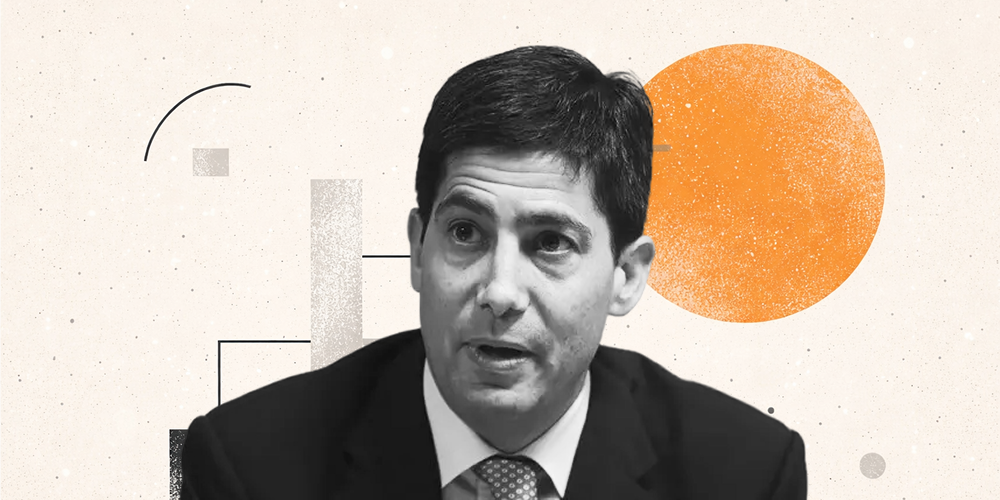
BNY’s John Velis reviews the April Federal Open Market Committee (FOMC), highlighting four dissents against the easing bias and implications for future policy under incoming Chair Kevin Warsh. He argues markets overstate the impact of the dissents and maintains a forecast of two Federal Reserve (Fed) rate cuts in Q4, conditional on the Strait of Hormuz reopening and Oil prices easing.

FOMC dissents, Powell tenure, Q4 cuts

"For a meeting that was supposed to be straightforward and relatively predictable, the April FOMC proved considerably more eventful than expected. Chair Jerome Powell may not be riding off into the sunset just yet, but the real story of the meeting was four dissents, the first time in over 30 years. Three of these – from Beth Hammack (Cleveland), Neel Kashkari (Minneapolis), and Lorie Logan (Dallas) – opposed the “inclusion of an easing bias” in the statement language, a signal that incoming Chair Kevin Warsh will get the “messier meetings” that he asked for in his Senate Banking Committee testimony."

"The dissents suggest the new Chair will likely face at least a few obstacles in fulfilling the President’s stated desire for quick rate cuts. We think this is currently a moot point and the market is overweighting the significance of this development."

"Current market pricing has indeed shifted in a more hawkish direction, with the December 2026 implied rate showing 8bp of hikes, and March 2027 pricing showing about 17bp."

"Warsh will only be able to cut rates if he can do the same or if macro conditions shift materially. Those who believe Powell is staying on to block rate cuts misunderstand both him and Committee dynamics."

"We maintain our outlook of two cuts in Q4 – contingent on the Strait of Hormuz reopening and oil prices beginning to recede, taking inflation fears lower with them. We view the labor market as a key risk."

(This article was created with the help of an Artificial Intelligence tool and reviewed by an editor.)

Author

FXStreet Insights Team

The FXStreet Insights Team is a group of journalists that handpicks selected market observations published by renowned experts. The content includes notes by commercial as well as additional insights by internal and external analysts.


More from FXStreet Insights Team
Share:

Editor's Picks

GBP/USD bounces off lows, back above 1.3200

After bottoming out near 1.3160, GBP/USD manages to regain a bit of shine and reclaim the 1.3200 mark and beyond at the end of the week. Stronger-than-expected UK Retail Sales data seem to be helping the British Pound limit its losses, while the chaotic UK political environment keeps the bulls at bay for now.

EUR/USD looks consolidative around 1.1460

EUR/USD stages a modest rebound after slipping to a three-month low below 1.1420 at the end of the week. That said, the pair now looks to consolidate humble gains just above 1.1460 despite growing uncertainty surrounding the next round of US-Iran negotiations, which keeps the US Dollar’s downside contained.

Gold slips back to six-day lows, targets $4,100

Gold retreats for the third consecutive day on Friday, eroding gains seen in the first half of the week and approaching the key $4,100 mark per troy ounce. Indeed, the precious metal continues to face headwinds from the Fed's hawkish stance and renewed uncertainty surrounding the next round of US-Iran negotiations.

Breaking: Iran closes the Strait of Hormuz amid ceasefire deal violation
Iran says it is closing the Strait of Hormuz after accusing the United States (US) and Israel of violating the ceasefire. According to Iran, the decision came over the continued Israeli strikes in Lebanon. The Iranian Revolutionary Guard Corps Navy issued a warning to all vessels: "Do not approach the Strait of Hormuz; otherwise, your security will be jeopardized."
The Iran war didn't break the US economy, but what happens next?

Nearly four months after the start of the Iran war, the US economy remains remarkably resilient. While the conflict initially triggered a severe disruption to global energy markets and a sharp rise in Oil prices, recent diplomatic progress between Washington and Tehran has eased concerns about a prolonged supply shock.

Regime change: Inside Kevin Warsh's first move to make the Fed unreadable on purpose

The rate did not move. That was the least interesting thing about Kevin Warsh's first meeting in charge of the Fed. The FOMC held its benchmark at 3.50%-3.75% for the fourth straight meeting, exactly as priced, and then the new chair used his first press conference to dismantle the machinery the market has leaned on for a decade.