|

Draghi speech: Did not discuss when to raise rates

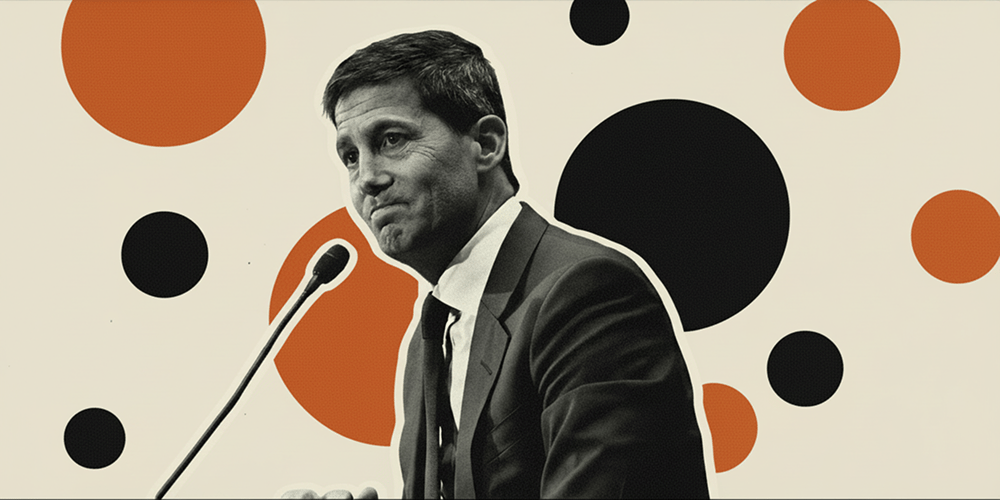
Mario Draghi, President of the ECB, is responding to questions from the press, providing the key quotes, via Reuters, found below.

  • Structural reforms must be substantially stepped up.
  • Decisions will ensure ample degree of accommodation.
  • Rates to remain at present levels through summer 2019, did not discuss when to raise rates
  • We see an undeniable increase in uncertainty due to geopolitical reasons.

Related articles

EUR/USD turns negative below 1.1800 post-ECB.

The European currency loses traction today after the European Central Bank left its monetary policy unchanged at today’s meeting, with EUR/USD around the 1.1770 area for the time being.

ECB: 3m Taper announced while rates remain on hold - TDS.

The ECB announced the end of its QE programme today, with a 3m taper at €15bn/month through to December 2018, notes Jacqui Douglas, Chief European Macro Strategist at TDS.

About Mario Draghi

The European Central Bank's president Mario Draghi was born in 1947 in Rome, Italy. Graduated of the Massachusetts Institute of Technology (MIT), Draghi became the president of the European Central Bank in 2011. As part of his job in the Governing Council he gives press conferences in the back of how the ECB observes the current European economy. President's comments may determine positive or negative the Euro's trend in the short-term. Usually, if he shows a hawkish outlook, that is seen as positive (or bullish) for the EUR, while a dovish is seen as negative (or bearish).

Author

Eren Sengezer

As an economist at heart, Eren Sengezer specializes in the assessment of the short-term and long-term impacts of macroeconomic data, central bank policies and political developments on financial assets.


More from Eren Sengezer
Share:

Editor's Picks

GBP/USD fills weekly bearish gap vs USD; upside seems capped amid UK political chaos

The GBP/USD pair climbs back to the 1.3235 region during the Asian session and fails the weekly bearish gap opening amid a modest US Dollar downtick, though the upside potential seems limited.


EUR/USD declines to near 1.1450 amid concerns over progress for US-Iran peace deal

The EUR/USD pair drifts lower to around 1.1460 during the early Asian session on Monday. Concerns about progress for the US-Iran peace deal and expectations of higher US interest rates boost a safe-haven currency such as the US Dollar against the Euro. European Central Bank President Christine Lagarde is set to speak later on Monday.  

Gold clings to recovery gains near $4,200; US-Iran talks eyed

Gold has staged a solid rebound in the mid-Asian session on Monday, closing the bearish opening gap. The US Dollar pauses its upside amid renewed progress on the US-Iran peace talks after Qatar and Pakistan said that the US and Iran agreed to establish a de-confliction cell involving Lebanon, with mediator support to ensure termination compliance.

Breaking: Iran closes the Strait of Hormuz amid ceasefire deal violation
Iran says it is closing the Strait of Hormuz after accusing the United States (US) and Israel of violating the ceasefire. According to Iran, the decision came over the continued Israeli strikes in Lebanon. The Iranian Revolutionary Guard Corps Navy issued a warning to all vessels: "Do not approach the Strait of Hormuz; otherwise, your security will be jeopardized."
Week ahead: Fed’s hawkish tilt and Iran deal turn focus to PCE inflation and PMIs
New Fed Chair Kevin Warsh didn’t waste any time in his first FOMC meeting in prioritizing the need for the central bank to bring inflation back within the Fed’s 2% objective, unsettling markets just as subsiding geopolitical risks had lifted the mood in the past week.
Regime change: Inside Kevin Warsh's first move to make the Fed unreadable on purpose

The rate did not move. That was the least interesting thing about Kevin Warsh's first meeting in charge of the Fed. The FOMC held its benchmark at 3.50%-3.75% for the fourth straight meeting, exactly as priced, and then the new chair used his first press conference to dismantle the machinery the market has leaned on for a decade.