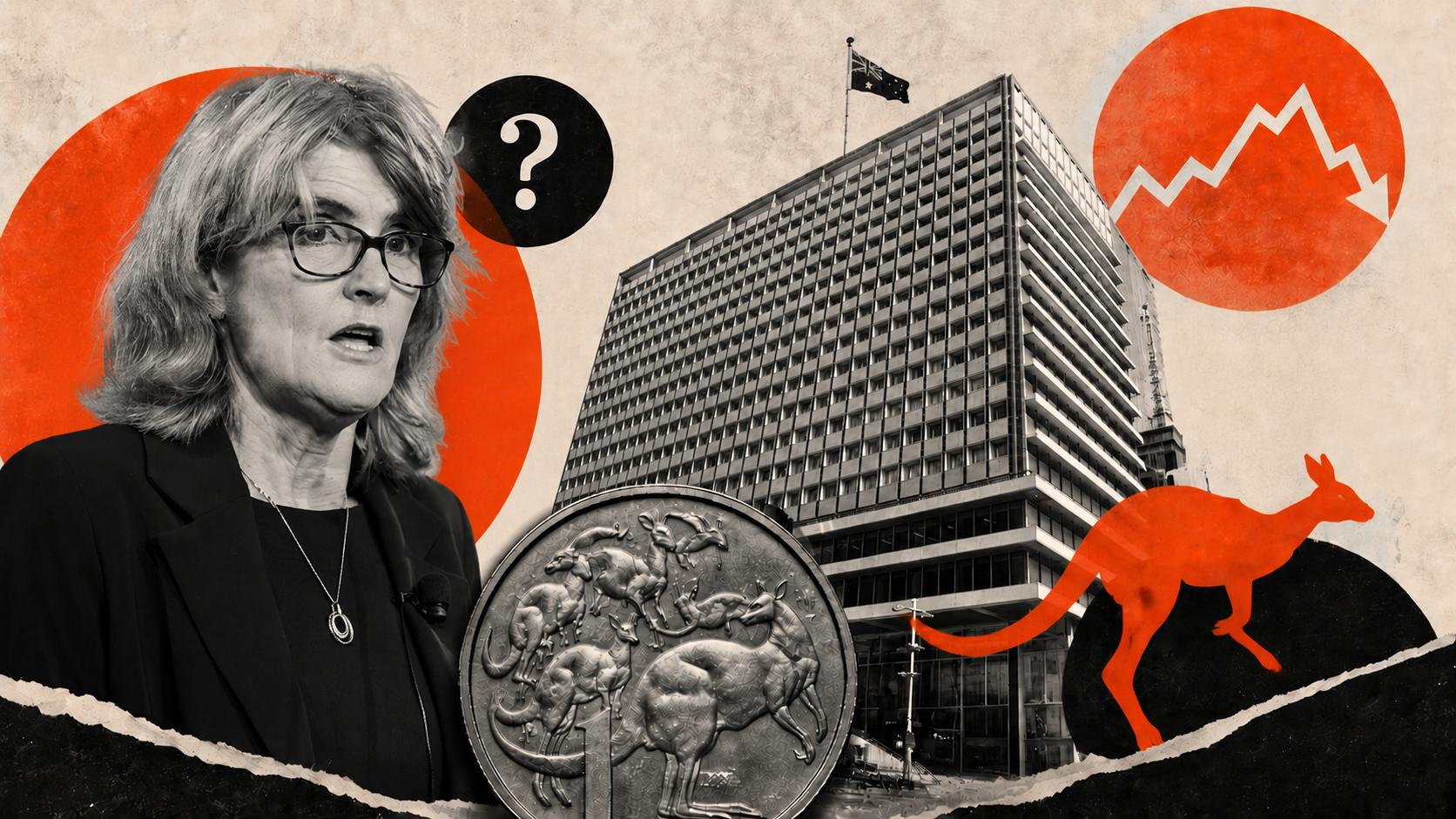
Australian Dollar falls below 0.7000 as RBA hike fails to convince bulls
- AUD/USD falls below 0.7000 after briefly rising following the Reserve Bank of Australia’s interest rate decision.
- The Australian central bank raises rates by 25 basis points to 4.60%, but Michele Bullock’s comments temper expectations of another near-term hike.
- The US Dollar remains firm as elevated Treasury yields and expectations of further Federal Reserve tightening support the Greenback.
AUD/USD trades around 0.6990 at the time of writing on Tuesday, down 0.39% on the day, after failing to sustain an initial rally following the Reserve Bank of Australia’s (RBA) monetary policy decision. The pair initially climbed toward 0.7030 before reversing and falling as low as the 0.6980 region.
The Australian Dollar (AUD) initially benefited from the RBA’s decision to raise its Cash Rate by 25 basis points (bps) to 4.60%, its highest level in around 15 years. The decision was unanimous, while policymakers reiterated that inflation remains too high and that further increases in the Cash Rate could be delivered if necessary.
However, the rate hike was already largely anticipated and attention quickly shifted toward RBA Governor Michele Bullock’s press conference. Bullock said that the Board had considered both a 25-bps increase and keeping rates unchanged. She also expressed hope that the four hikes delivered this year would prove sufficiently restrictive to slow inflation and said that further tightening might not be required if inflation eases.
The comments took some of the hawkish edge off the RBA announcement. Francesco Pesole, FX Strategist at ING, described the press conference as adding a “dovish taint” to the decision, while TD Securities views Tuesday’s move as a “risk management hike” rather than the beginning of a new tightening cycle.
The Governor also reiterated that policymakers are prepared to raise interest rates again if necessary. At the same time, the RBA has reasons to proceed cautiously. Bullock emphasized the lagged impact of monetary tightening, while recent household spending figures showed weakness across several categories. Housing and labor-market conditions are also showing signs of easing.
On the other side of the pair, the US Dollar (USD) remains supported by elevated US Treasury yields and expectations that the Federal Reserve (Fed) could tighten monetary policy further. The resilience of the US economy and persistent inflation concerns continue to support the Greenback, limiting the Australian Dollar’s ability to benefit from higher domestic interest rates.
Investors now turn their attention to upcoming United States (US) economic releases, with the Personal Consumption Expenditures (PCE) Price Index and Nonfarm Payrolls (NFP) data set to provide fresh clues about the Fed’s next monetary policy decision.
The divergence between the two central-bank outlooks remains important for AUD/USD. While the RBA has just raised rates, uncertainty over whether another hike will follow limits the support for the Aussie. Conversely, any strengthening of expectations for additional Fed tightening could maintain upward pressure on the US Dollar and keep AUD/USD below the 0.7000 psychological level.
AUD/USD technical analysis
In the one-hour chart, AUD/USD trades at 0.6992, keeping a bearish near-term bias as the pair holds below the 100-period simple moving average (SMA) at 0.7021 and the 200-period SMA at 0.7069. The clustering of nearby overhead levels reinforces a capped tone, while the Relative Strength Index (RSI) around 42 hints at mildly negative momentum rather than oversold conditions.
On the topside, initial resistance emerges at 0.7005, ahead of the 100-period SMA at 0.7021 and the 0.7045 horizontal barrier, with the 200-period SMA at 0.7069 and subsequent levels at 0.7075, 0.7105 and 0.7140 marking a broader supply zone. On the downside, immediate support is seen at 0.6980, and a clear break below this floor would likely pave the way for a deeper extension of the current bearish phase.
(The technical analysis of this story was written with the help of an AI tool. Know more.)
Author

Ghiles Guezout
FXStreet
Ghiles Guezout is a Market Analyst with a strong background in stock market investments, trading, and cryptocurrencies. He combines fundamental and technical analysis skills to identify market opportunities.