Defining the Carry Trade

Suppose that the deposit interest rate in the United States stands at 1.5% and the interest rate in Europe stands at 0%. Let’s also assume that the EURUSD rate is at 1.10 and that we do not expect it to move in the next year. Investors, aware of this situation would be willing to borrow from Europe deposit in the US, benefiting from the interest rate differential, and ensure a 1.5% risk-free return. This investment, where money is “carried” to another location (physically until mid-20th century), is called the Carry Trade.
While the carry trade appears to be very simple, many dangers lie in its application. Remember that our second and most crucial assumption was that the exchange rate would not move. Nonetheless, exchange rate seldom remain stable. In fact, the inflow of capital – deposits in our example – is what actually makes the exchange rate move. This is why, in an earlier post, we have already specified that a change in interest rates can be suggestive of the future movement of the exchange rate.
In order for the trade to be successful, the EURUSD rate must not depreciate to an extent after which profits will be eaten out. Suppose that an investor wishes to borrow EUR1 mln and carry it to the US. Thus, he would be depositing USD1.1 mln in the US with hopes of getting back USD 1.1165 mln one year from now. If the exchange rate remains at 1.10 then the investor would transform the money to EUR1.015, repay the loan and enjoy a EUR15,000 profit. Nonetheless, if the exchange rate moves to 1.11 then the investor’s profit is reduced to just EUR 5,000 after the loan is repaid. As you can imagine, the Dollar profit turns into a Euro loss if the exchange rate moves to 1.12. As you may have guessed, in order for the trade to be profitable, the exchange rate should not move by more than the exchange rate differential, which is not what the Inverse Fisher effect suggests.
As such, for the carry trade to be successful, there needs to be substantial room for error. As such, a large interest rate differential is required. Further to this, traders need to find a currency pair in which the currency with the highest interest rate is not expected to depreciate by much.
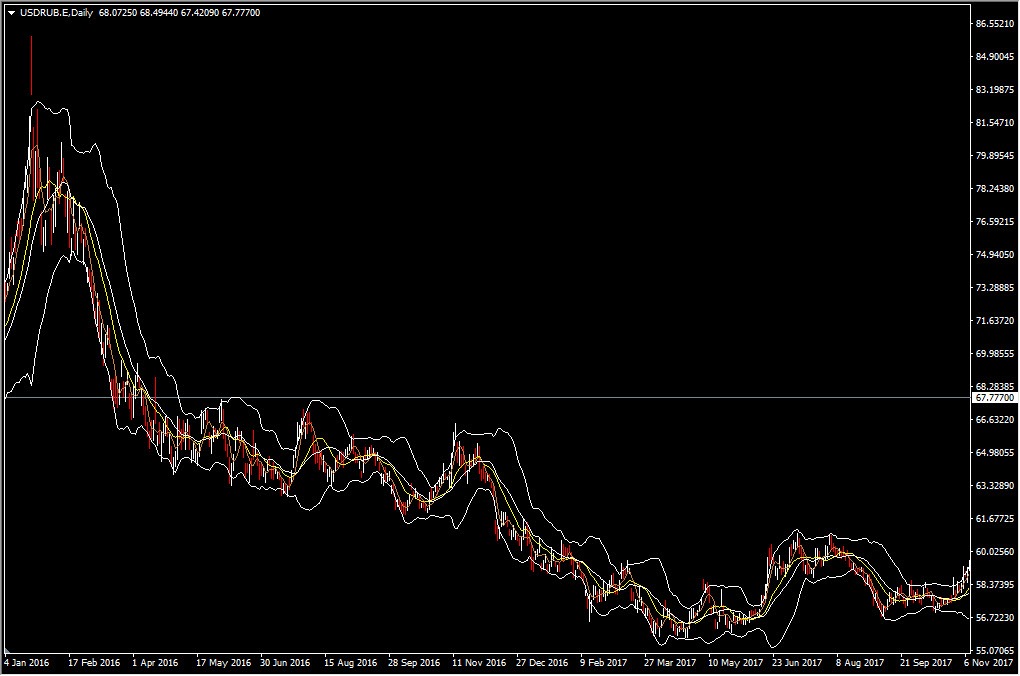
Is this the carry trade an easy trade to find? Of course not. But it is possible. In 2016, the Russian interest rate stood at 11%, while the respective interest rate in the US stood at 0.5% and remained at that point until December. This would imply an interest rate differential of approximately 10.5% for the year. The USDRUB exchange rate stood at 72.91 on January 4, 2016 and ended up at 60.68 on December 29, 2016. Suppose now that an investor borrowed USD 1 mln, exchanged it for RUB 72.91 mln and invested it in Russia. By the end of the year, the investor would have gained 11% on his RUB investment, at a value of RUB 80.93 mln. Exchanging it back to USD at the 60.68 rate would mean that the trade would have ended with a value of USD 1.334 mln, which after deducting the USD 1.005 mln, would leave the trader with approximately USD 330,000, or a 33% return on the investment.
Hence, while carry trade opportunities are rare, they can be present if good and careful research is made. However, it should be remembered that carry trades are high-risk strategies and thus proper risk management strategies should be used.
Author

With more than 4 years of experience at the Central Bank of Cyprus where he obtained hands-on experience with real-life economics, Dr Nektarios Michail is a supporter of a balanced approach between science and art when it comes to