A Flock of Black Swans: Are the outlier event that rare in financial markets?

Are the following dates meaningful for you: Aug 24th 2015, Oct 15th 2014, and May 6th 2010? If not, it's ok, don’t sweat it… these dates are mostly remembered by traders in financial markets, as these dates mark dates of the infamously events known as “Flash Crash”. A Flash Crash is an event that comes, out of the blue, drives the market insane for a short period of time (mostly in a form of a market sudden collapse), and once it ends, the market returns to (relatively) normal form. These events cannot be predicted, cannot be explained using the conventional probability theory, and are often known as “Black Swans”
“Black Swan” takes its meaning from the ancient saying that presumed black swans did not exist (which was later found out to be incorrect, as these existed in the wild). Nassim Taleb refers to the “Black Swan Theory” as a theory that holds three main characteristics:
1. The probability of the events is non-computable, as the normal distribution assumes these can never happen (beyond +/-3 Standard Deviation).
2. These events are impossible to predict, and their effects are disproportional to the probability they assumed to have.
3. The magnitude of these events is usually high and these events play dominant role in history
Is the financial market really normally distributed?
Endless numbers of papers were written about financial markets and the probability theory, all of them concluded that financial markets are, definitely, not distributed normally. Financial Markets’ distribution holds “Fat” Tails and “Skewed” Returns. These two characteristics help us explaining how evets, that the probability theory assumes will never happen in our lifetime, happening over and over again.
Let’s look at few examples from the recent history:
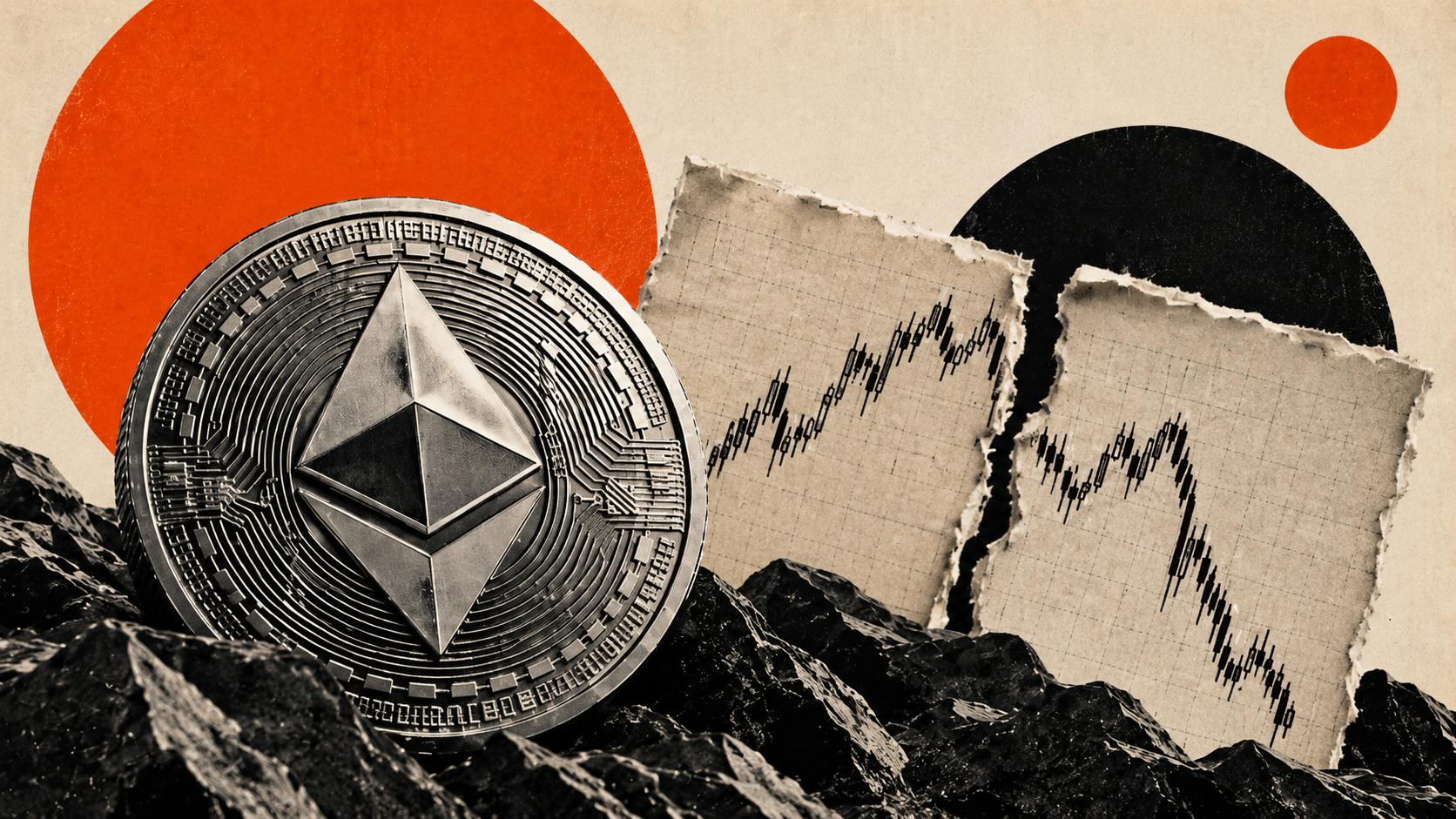
May 6th 2010 – US equity market collapsed 10% in a matter of 4-minutes, before rebounding (ending the day “only” 3.5% down”). This event is a 6 Standard Deviation event, in other words, this event should happen once every 1 million years.
Oct 15th 2014 – On a normal Friday morning in the US market, 10-years Treasury Bond yield collapsed 0.3% in a matter of 10-minutes. To put that in context, this move is equivalent to 16% move in equity market, a 7 Standard Deviation event in the US Treasury Market. Likelihood of witnessing such move again should not exist (this event happens once every 2.5 million years). Guess what, it just happened last month…
Aug 24th 2015 - Soon after the US equity market opened the trading day major indices collapsed 5%, and recovered some of the loss to end the day 3.6% down. Dollar rallied at the same period about 2%, but retraced back. This event is 5.5 Standard Deviations, so the chance of seeing such event exists only if you will live to the age of 1.7million years. ..
.
You can obviously see where this is going… Although the mathematics and probability theory tell us that there is absolutely no chance of these events occurring, they keep on happening, in fact, over the last 6 years, the S&P 500 had 34 days where it gained/lost more than +/-3%, which is above/below +/- 3 Standard Deviations

Why these events are keep on happening over and over again?
Few major developments over the last few years have increased the rate of these occurrences:
1. Technology Developments – the rise of algorithmic trading (High Frequency Trading) and sophisticated machines has caused a very sensitive market. In a blink of an eye, algorithm sends few millions of orders. This development added a significant risk to the market (just google "Knight Capital" to see what happens when algorithmic trading goes wrong…). Faulty algorithms and HFT market manipulation have been the primary reason for these occurrences.
2. Drying Liquidity – After the 2008 financial crisis a lot of banks and investment firms (namely big hedge funds) pulled out of different markets, causing drying liquidity. In illiquid markets every small trade can cause enormous waves. Even the most liquid markets (US Treasury, US Equities, and G10 currencies) are less liquid than before, which makes the shallow liquidity to act as a fertile ground for massive moves.
3. Banks’ risk limits and regulation – Since 2008 increasing regulation and extremely tight risk limits caused banks to be quite risk-averse. Despite their role of providing liquidity to the market (to the clients, the market-takers), and to warehouse the risk, they were forced to cut their risk limits to avoid experiencing 2008 crisis all over again. Trading floors nowadays have very strict and cautions risk profile, which means that in case of large moves, they will eventually stop out on their positions, and effectively intensifying the ripple effect
4. Global Interconnection – The chaos theory claims that “something as small as the flutter of a butterfly’s wing can ultimately cause a typhoon halfway around the world”. This is very much true in financial markets. The recent years brought the world a whole lot closer, and investment managers nowadays hold huge portfolios, with holdings from China to the US, from currencies to commodities. When things hit the fan, the risk of massive capitulation increases dramatically, and no asset is safe. A very famous example of this is Procter and Gamble (P&G), a Blue-chip company, which fell on May 6th 2010 as much as 37% at one point
How can we take advantage of these black swans?
There is an old and famous joke about a very religious guy that lived by the bible, prayed every day, and never did harm to anyone. When he died and went to haven, he asked God: “Every day I prayed, asking only one thing, to win the lottery, why didn’t you fulfil my pray?” God answered: “if only you would have sent a lottery ticket…”
It is obvious that to have the chance of “hitting the jackpot” we need to be in the game… paying for cheap lottery tickets in financial market is always a wise thing to do (but make sure that they are really cheap…). Buying small options for cheap, putting trades that their risk/reward is extreme will both keep you in the game, and will act as a protection for an event as rare being hit by an asteroid.
Good Luck!
Author

EzTrader Market Analysis Team
EzTrader
EZTRADER is a Binary Option Platform that offers a wide range of binary options on different asset classes. EZTRADER is regulated by most European regulators (including the UK FCA, and Germany BaFin)