Risk appetite muted – Bitcoin falls below $60,000
- BTC heads for eighth straight weekly loss.
- Headwinds persist; tech-stock weakness and rate expectations weigh.
- ETF funds shed record outflows near $5bn.
- Strategy is now worth less than the Bitcoin it holds.


Sentiment is bearish
This is a hard time for Bitcoin. A confluence of pressures has steadily sapped market sentiment, leaving the world’s largest cryptocurrency on course for an eighth consecutive weekly loss – the longest such losing streak since 2022. Concerns about AI valuations and borrowing costs have weighed on risk appetite, while ETF outflows have added to the pressure.
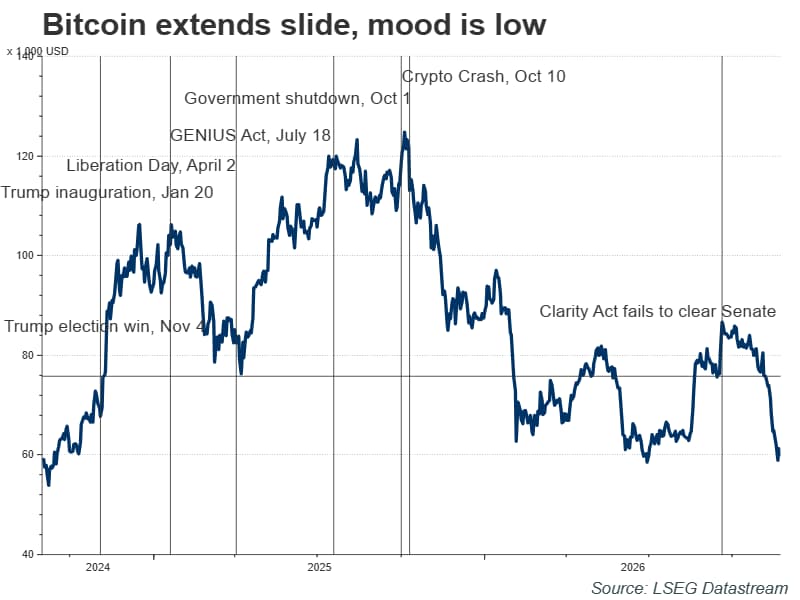
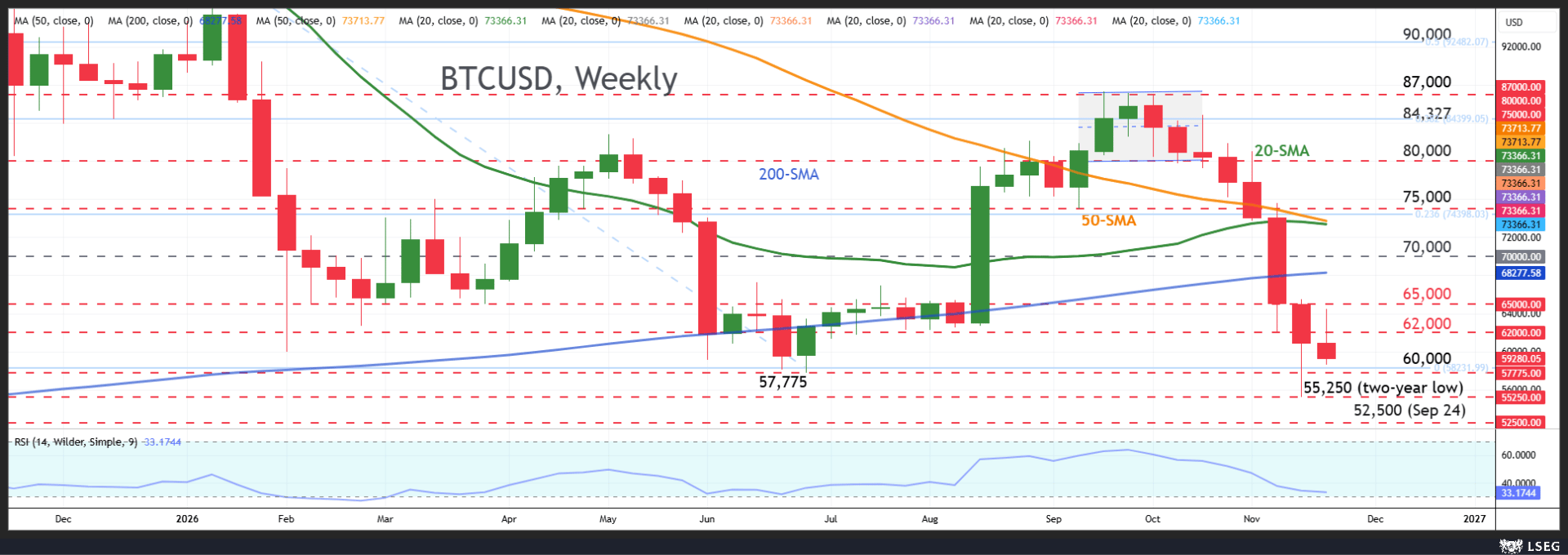
Bitcoin is trading around $59,300 on Wednesday, below the $60,000 level, giving up gains when it briefly hit $64,000 in the previous session after Nvidia reinstated Jensen Huang as chief executive. This leaves it more than 50% below its October 2025 record near $126,100 and down more than 23% in November. Of note, its also briefly fell to about $55,250 on Saturday, its weakest level since September 2024 – effectively printing a fresh 2026 low.
Several pressures have converged. Reports of a Binance hot-wallet attack at the end of October added crypto-specific risk, while Democrats’ midterm victories raised concerns about a tougher regulatory outlook. More recently, possible US tariff increases have added to uncertainty. Meanwhile, technology shares have swung sharply as investors reassess the AI trade, while markets are pricing in the possibility of another Fed rate hike.
Steady erosion of demand
Three months ago, Bitcoin was near $87,000 and investors were asking whether a new crypto bull market had begun. Since then, the macro backdrop has become less favourable for risk assets, while Bitcoin has struggled to attract fresh demand. It is also competing with equities and income-bearing assets for investor capital. That is consistent with a rotation away from crypto, though ETF outflows alone do not show where the money is going.
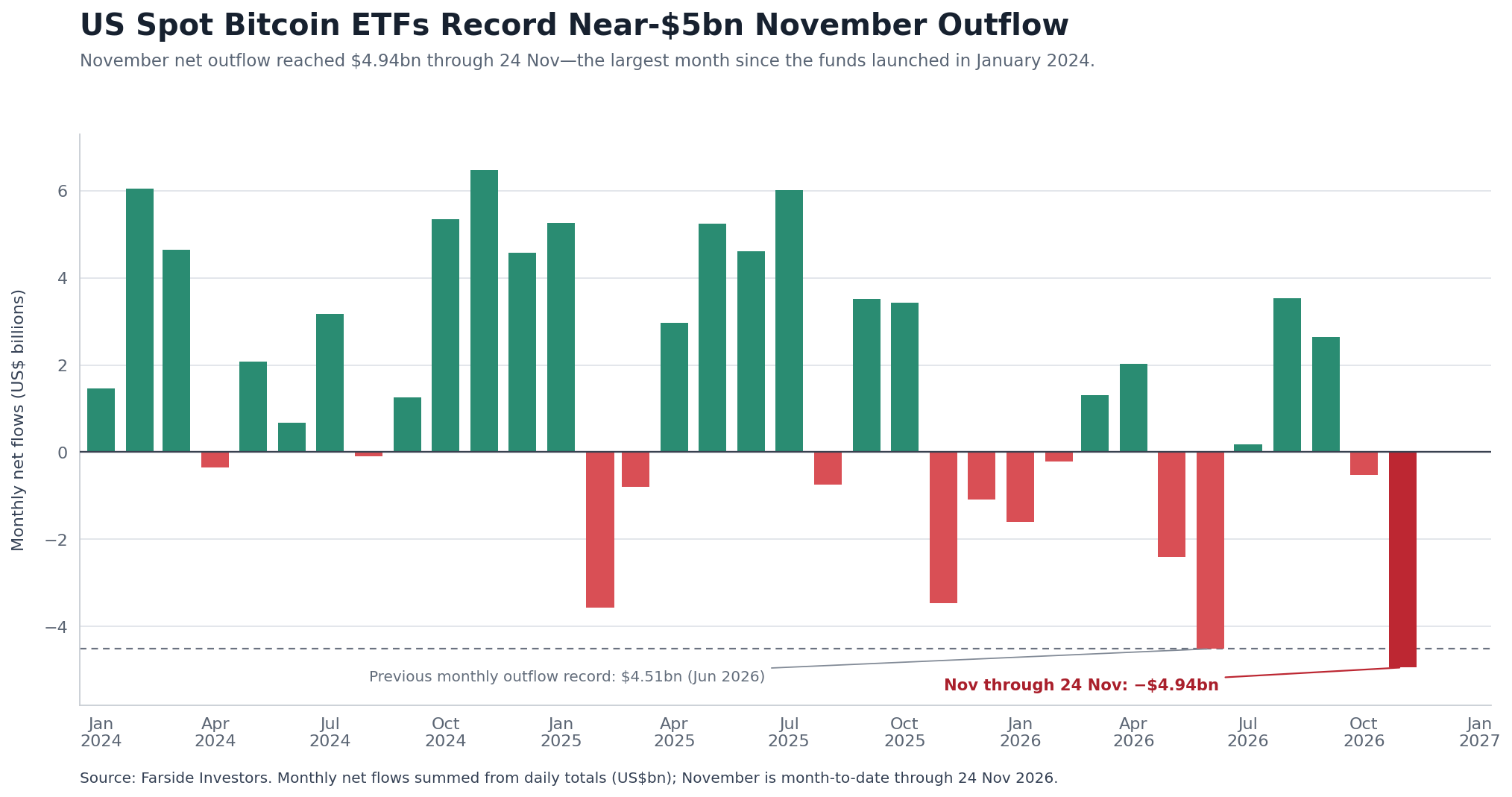
As illustrated in the chart, US spot Bitcoin ETFs recorded about $4.94 billion in net outflows through November 24, with outflows on 15 of 17 trading sessions, according to Farside Investors. That exceeds the previous monthly record of roughly $4.51 billion, set in June, and puts November on track to be the funds’ worst month since their 2024 launch. Sustained redemptions remove a source of incremental demand, although ETF flows alone do not determine Bitcoin’s price.
Bitcoin’s equity correlation deepens
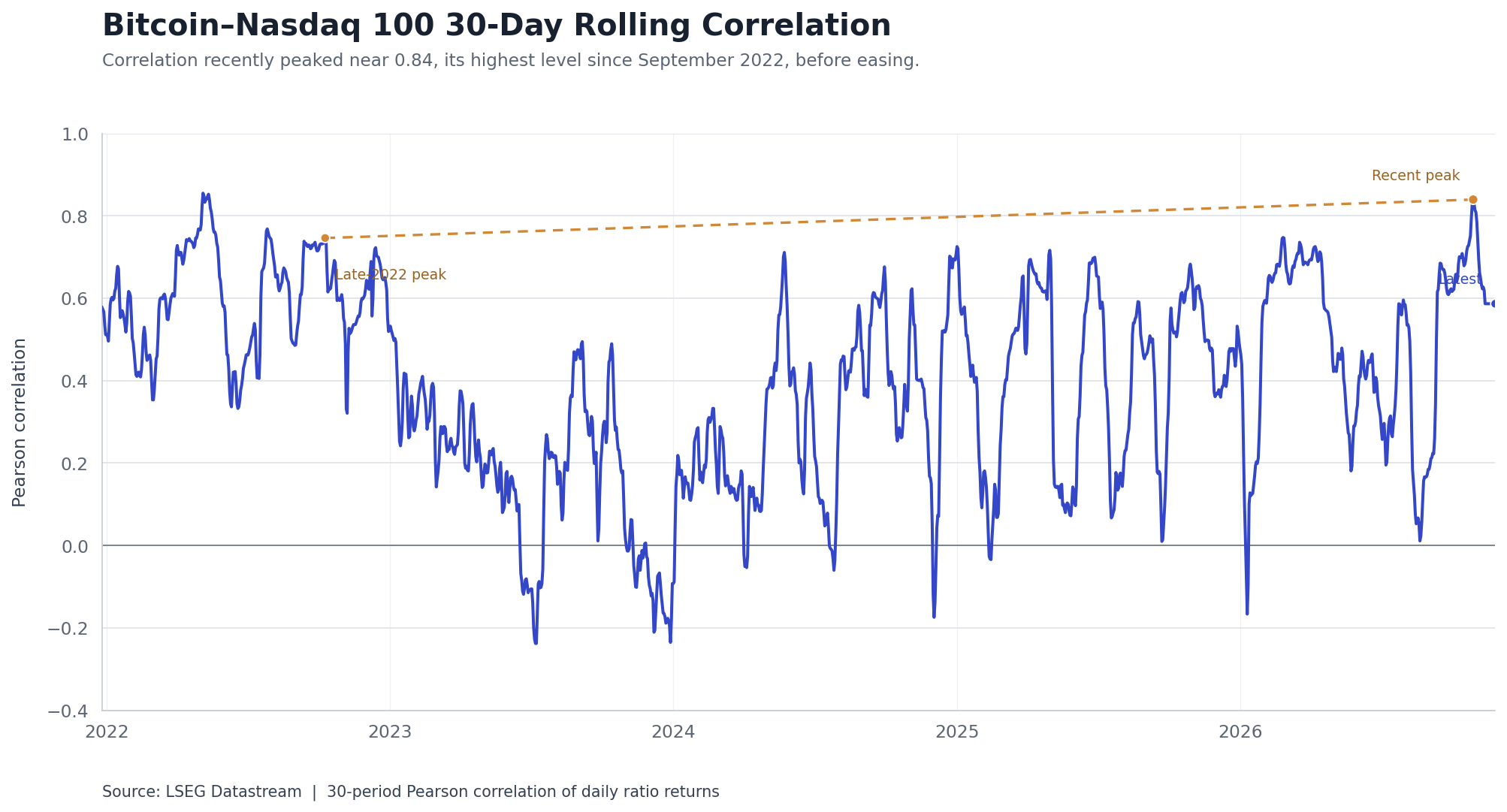
Bitcoin’s 30-day rolling correlation with the Nasdaq-100 recently peaked near 0.84, its highest level since September 2022, before easing. From a market perspective, the more telling signal is the imbalance: over a separate 60-trading-day period, Bitcoin captured less of the Nasdaq’s gains on up days but fell more on down days. That is an unfavorable risk profile - it behaves like a high-beta asset in sell-offs without matching the upside in rallies, weakening its value as a near-term diversifier. Combined with ETF outflows, it suggests Bitcoin faces both broad risk-off pressure and softer crypto-specific demand.
Strategy’s valuation adds to the test
The pressure is also visible at Strategy, the largest corporate holder of Bitcoin. Its enterprise value reportedly fell below the value of its 851,305 BTC holdings – to about $47 billion versus $52 billion – meaning its enterprise value is lower than the market value of its Bitcoin. Its mNAV, a measure of enterprise value relative to its Bitcoin holdings, fell below 1. That may make issuing shares to fund further purchases less attractive and could dilute Bitcoin exposure per share. Higher financing costs add to the strain on a model built around repeated capital raises. Strategy’s shares also remain more than 80% below their November 2024 peak.
Bitcoin slips for second session below the 200-week average
As long as Bitcoin holds below its 200-week SMA, currently near $68,200, the technical outlook will stay under pressure. A sustained move back above $62,000 and even $65,000 would help stabilise the near-term picture. Conversely, a break below the November 21 low near $55,250 would leave the market vulnerable to further losses.
All in all, Bitcoin’s slump is testing more than its price floor: it is exposing the market’s dependence on risk appetite and fresh demand. The rising Nasdaq correlation, sustained ETF redemptions and pressure on Strategy’s financing model are not proof of further losses, but together they leave rallies vulnerable. A durable recovery may need sustained buying and a fresh catalyst – not just a brief technology-led bounce.
Author
Nicole joined Trading Point as a Market Analyst in January 2025. She holds a BA in English Literature from Kingston University, London, and an MA in Applied Linguistics (Research Methodology) from the University of Southampton with distinction.