Defying the doom and gloom: How Bitcoin keeps surviving every global crisis
Bitcoin is once again navigating another crisis by defying the broader risk-off sentiment. History shows a clear pattern: every major crisis – from exchange collapses like Mt. Gox and FTX to global shocks like COVID-19 – has stress-tested Bitcoin and, ultimately, reinforced its long-term narrative. With the Iran war and all its ramifications for the global economy still uncertain, a new test for Bitcoin looms this 2026. Will this one set the stage for another bull cycle?
Launched after the 2008 global financial crisis, Bitcoin (BTC) emerged as a decentralized alternative not only to the US Dollar (USD) but also to the centuries-old safe-haven, Gold. Since then, Bitcoin has endured multiple global macroeconomic shocks, including the 2015-2016 Chinese stock market crash, the 2014-2016 Oil price collapse, the COVID-19 market crash in 2020, and the 2023 global banking crisis, all of which shocked financial markets worldwide.
At the same time, Bitcoin has survived crises within its own industry, including major events such as the Mt. Gox collapse in 2014, the Bitfinex hack in 2016, the FTX exchange collapse and the Terra-LUNA meltdown in 2022. While these all eroded investor confidence and sent BTC prices plunging by double digits, the King crypto recovered thereafter and reached successive all-time highs.
Over time, the "hedge against inflation" and the "digital gold" narratives of Bitcoin have faltered. Still, Bitcoin has continued to recover, and in 2026, the Crypto King faces another stress test as the US-Iran war escalates, fueling tension in the Middle East, while the rising Oil prices increase the risk of inflation.
Here’s how each crisis strengthened the Bitcoin narrative and how the US-Iran war could be the next stepping stone.
“Don’t trust intermediaries, trust the protocol”
According to the 2009 Whitepaper by Satoshi Nakamoto, Bitcoin is a purely peer-to-peer version of electronic cash that would allow online payments to be sent directly from one party to another without going through a financial institution. In simpler terms, Bitcoin is a decentralized, peer-to-peer digital currency that bypasses the need for intermediaries such as banks.
However, the growth of the crypto industry has brought its own set of intermediary risks. Companies such as Mt. Gox and Bitfinex were centralized crypto exchanges that were either hacked or collapsed due to mismanagement. The Mt. Gox hack resulted in the loss of 850,000 BTC in 2014, while the Bitfinex hack led to the loss of roughly 120,000 BTC in 2016.
Between the Mt. Gox hack and the Bitfinex hack, Bitcoin entered a consolidation phase in 2014-2015, which aligned with broader market risk-off sentiment linked to the Chinese stock market crash and declining Oil prices during the same period.
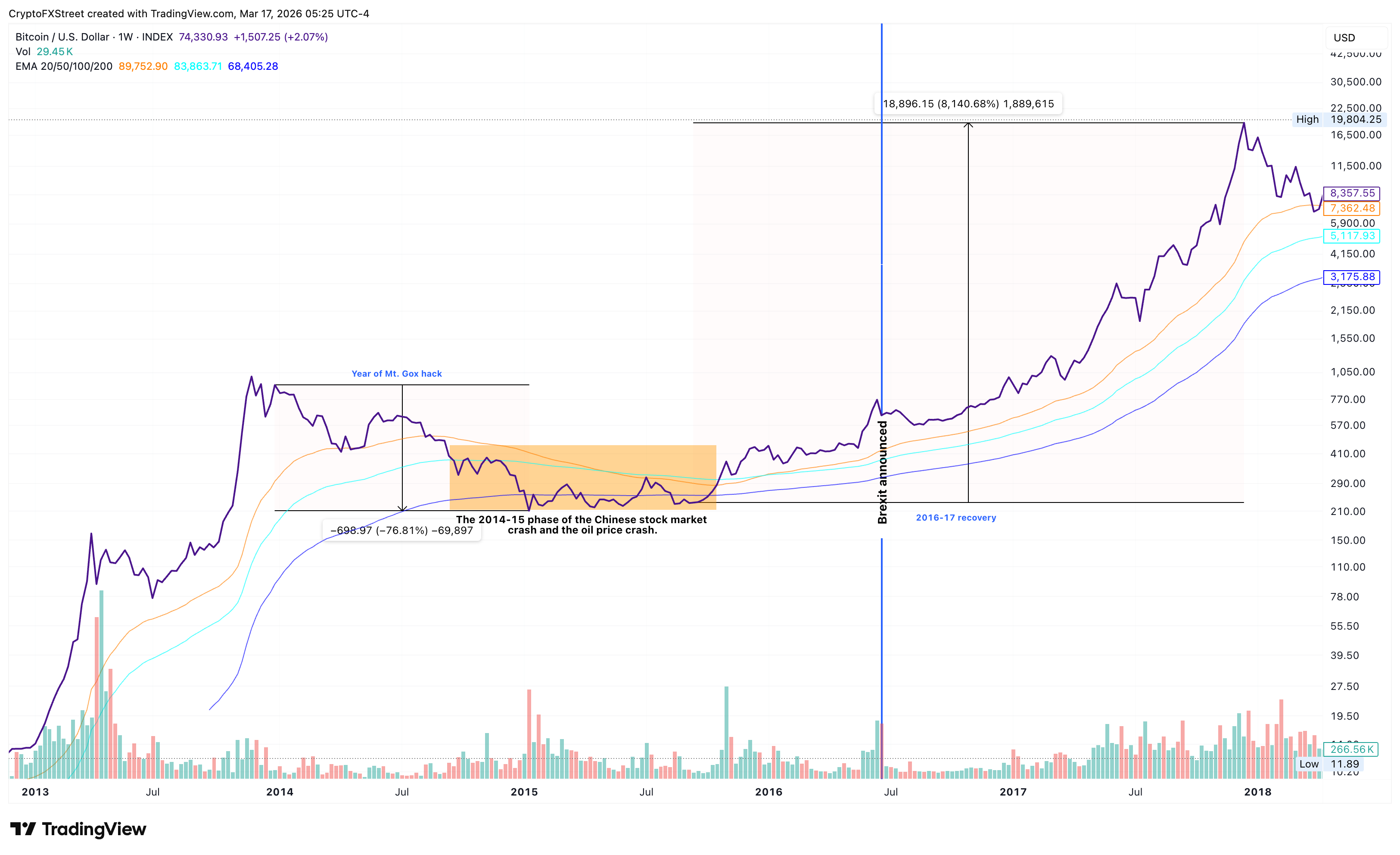
Despite the collapse of major exchanges, Bitcoin survived because of its decentralized nature, leading to a price surge to roughly $20,000 during the 2017 bull run. Each crisis dissolved companies built on top of Bitcoin, but the core protocol never failed, reinforcing the broader market narrative of don't trust intermediaries, trust the protocol.
From the ICO bubble burst to the COVID-19 crash
The Initial Coin Offering (ICO) boom began with the launch of Ethereum, but multiple projects failed due to rug pulls and scams. This resulted in increased regulatory pressure and triggered a market collapse. By December 2018, Bitcoin fell to roughly $3,000 from the $20,000 peak seen a year earlier.
After the market attempted a recovery in 2019, the COVID-19 crash in February-March 2020 triggered a broader sell-off. The uncertainty caused by the global pandemic weighed on Bitcoin and global financial markets.
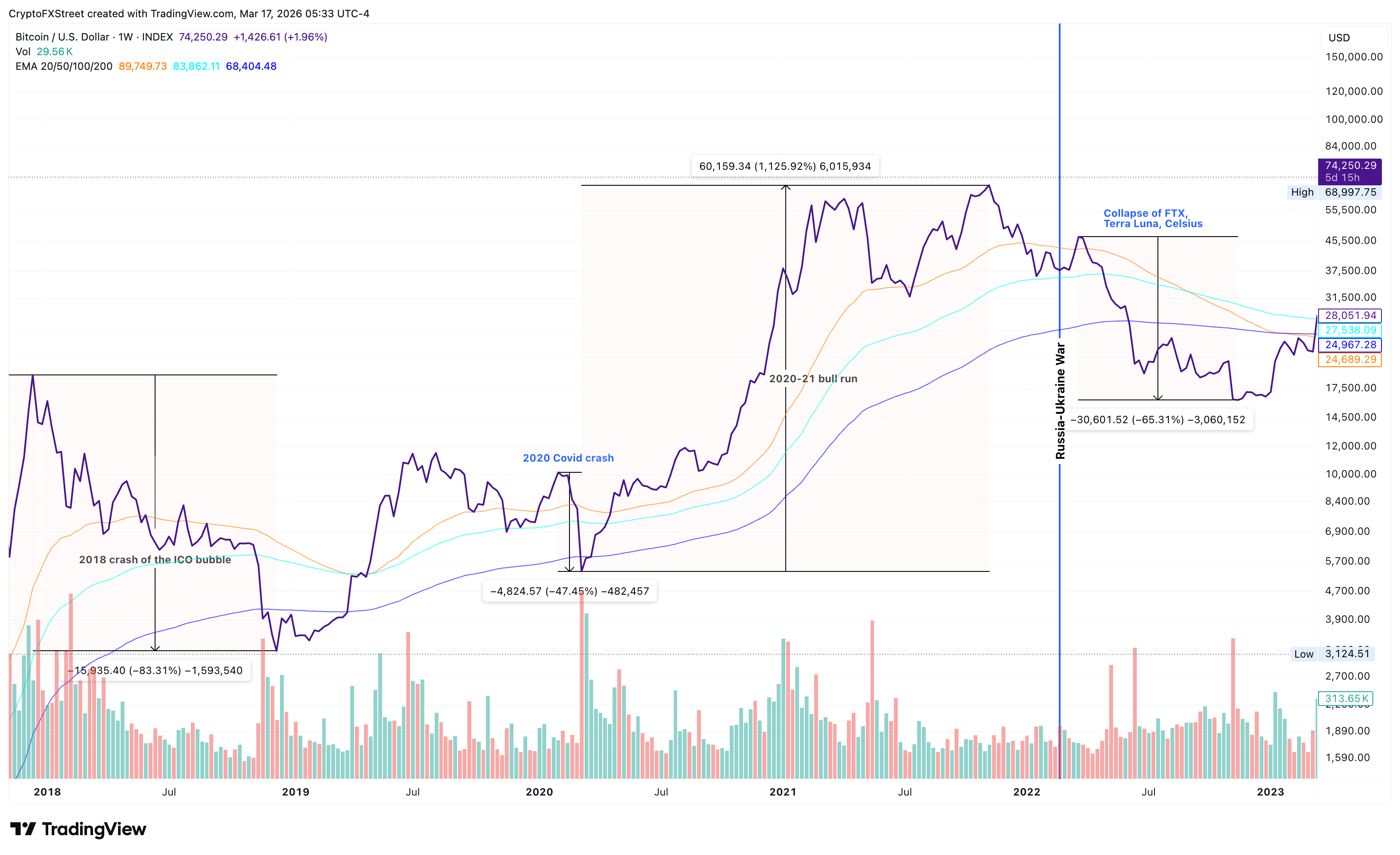
Despite an abrupt end to the 2019 recovery, Bitcoin scaled above $74,000 during the 2020-2021 bull run, surviving yet another phase of its major crisis.
The 2022 crypto winter
The Terra ecosystem in May 2022 collapsed amid a death spiral for its UST stablecoin, which lost its $1 peg to the US Dollar. The algorithmic stablecoin was designed to use a mint-and-burn mechanism with its sister token, Luna, allowing users to burn the stablecoin to mint the sister token. However, the depeg in the UST broke the Anchor Protocol, triggering a loss of investor confidence in the stablecoin and leading to massive selling and a surge in Luna's supply.
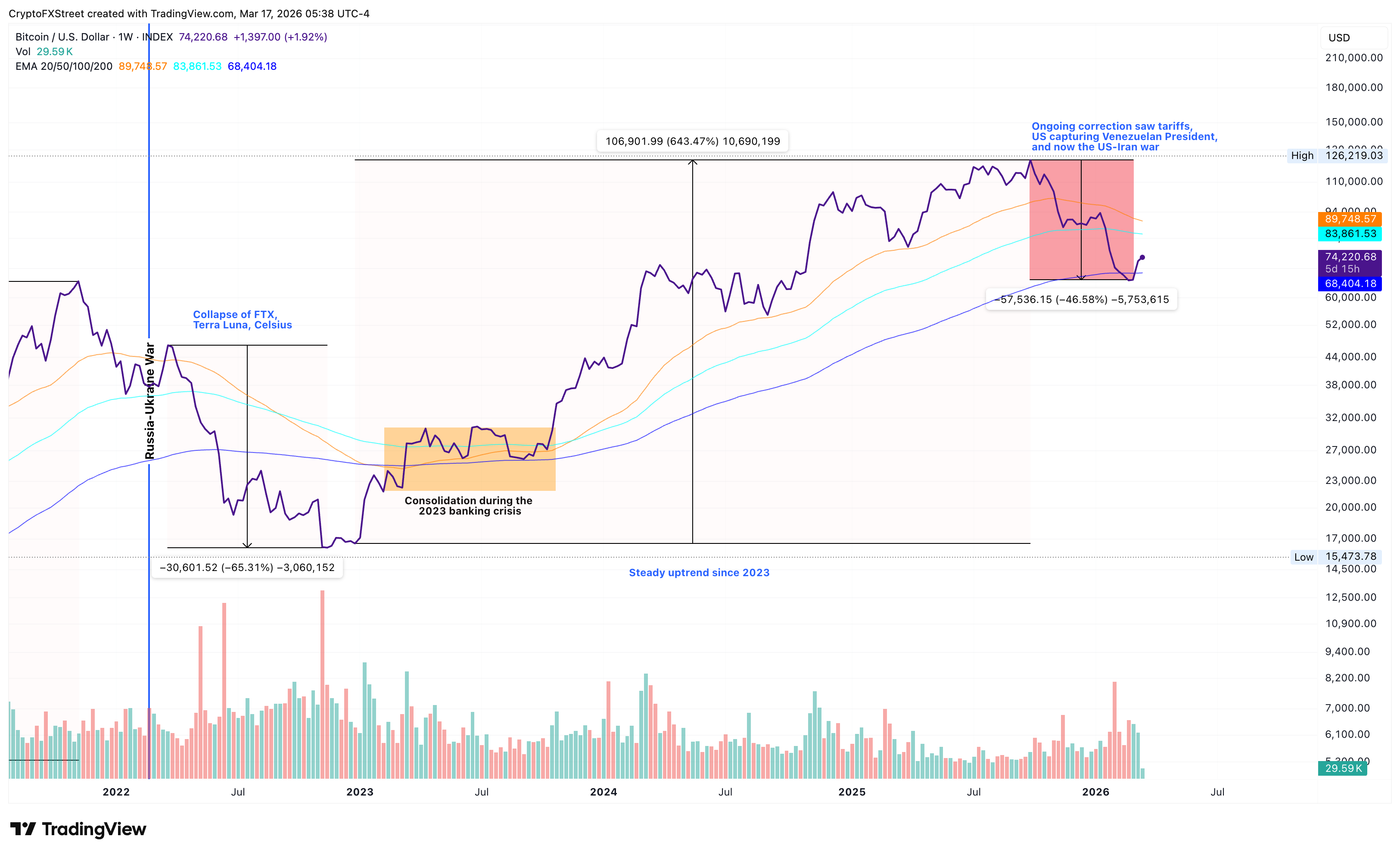
As the market was attempting to recover from the Terra ecosystem crash, the FTX scam emerged amid the mismanagement of customer funds by its founder, Sam Bankman-Fried, which led to one of the largest scandals in the crypto industry and drove Bitcoin to roughly $15,000 in late 2022.
Adding further downside pressure, the short-term recovery in Bitcoin in early 2023 met with a period of consolidation amid the 2023 banking crisis, which saw the bankrupcty of major banks like the Silicon Valley Bank.
Bitcoin’s journey to a record high before the recent correction
Bitcoin continued to broadly make higher highs between 2023 and 2025, reaching an all-time high of $126,199 on catalysts such as the launch of US spot Bitcoin Exchange-Traded Funds (ETFs), corporate digital treasuries like Strategy and Metaplanet, and the regulatory clarity in the second presidency of US President Donald Trump.
However, the ongoing correction has made Bitcoin drop to nearly $60,000 in February. The looming threat of global tariffs in the ongoing US-Iran war and brewing tensions in the Middle East are incubating bearish conditions in the crypto industry.
Bitcoin: A high-beta limited supply asset powered by proof-of-work miners
Despite the massive drawdowns, Bitcoin has recovered to a fresh record highs, behaving like a high-beta asset that often renews a bull cycle when global liquidity expands. This links the correlation between interest rate decisions by the US Federal Reserve (Fed) and Bitcoin, where a rate cut meant to boost liquidity drives demand for BTC, or vice versa.
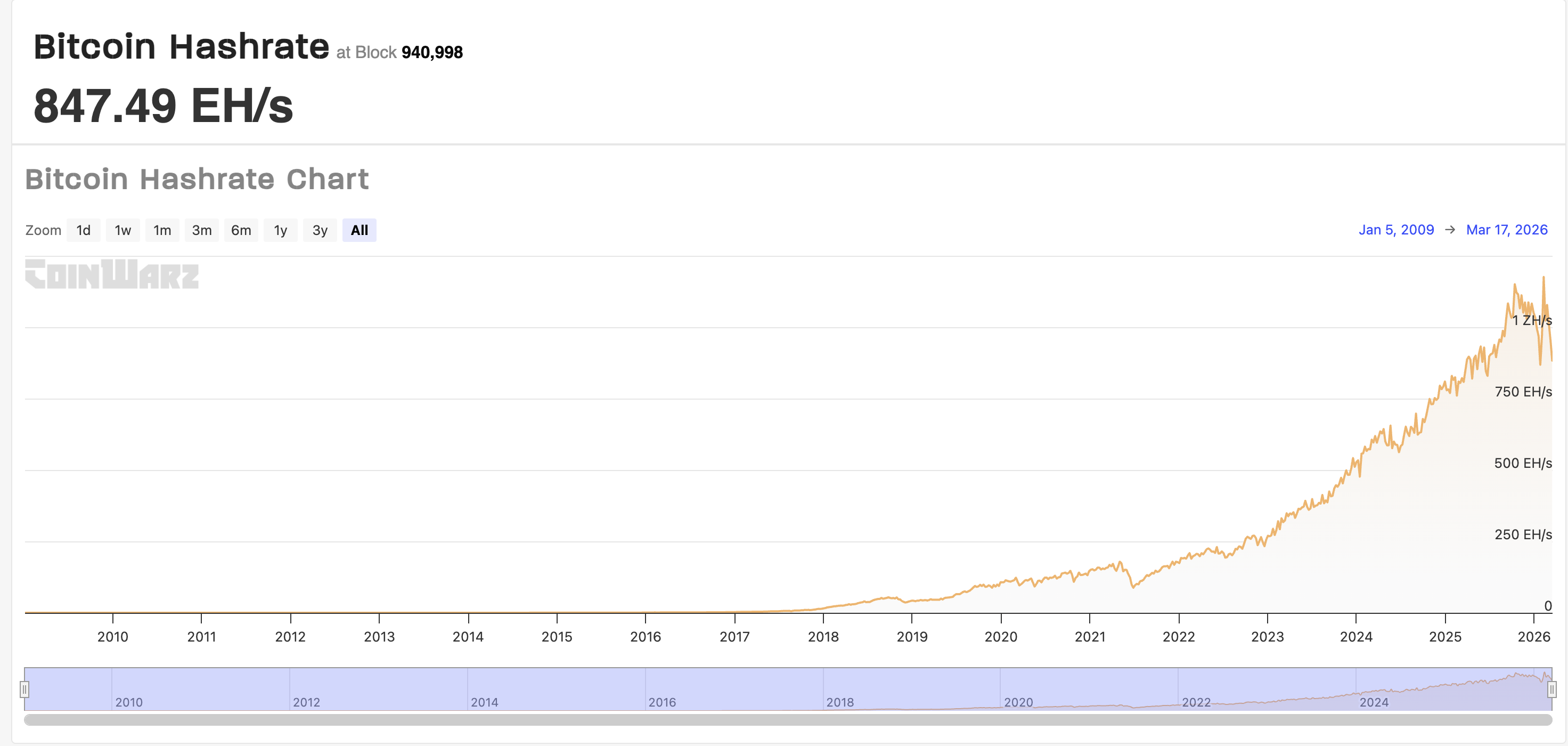
Meanwhile, the Bitcoin hashrate, the total computing power of the Bitcoin network, to validate transactions secures the blockchain. Similar to the BTC price surge, the Bitcoin network hashrate has been steadily rising, reflecting miners' long-term commitment and making it more difficult for malicious entities to mount a 51% attack, which would compromise the security of the blockchain. In case an entity controls 51% of the network, it could successfully block transactions, miner rewards and even double-spend Bitcoin.
On the other hand, the limited supply of 21 million BTC remains a strong narrative supporting Bitcoin’s status as digital Gold.
Given Bitcoin is surviving the Middle East tensions, historical data suggests the next recovery run could scale higher than the recent high of $126,199. Additionally, each crisis saw an increase in Bitcoin adoption, and optimistic investors are betting on Bitcoin as a hedge against the US Dollar's debasement. At the same time, some believe Iran will use tactics to shift the Middle East away from the PetroDollar toward the PetroYuan or PetroBitcoin standard.
Regardless of the assumptions, the Bitcoin standard remains strong as a potential bull cycle looms.
Author

Vishal Dixit
FXStreet
Vishal Dixit holds a B.Sc. in Chemistry from Wilson College but found his true calling in the world of crypto.



