Bitcoin and Gold find common pressure in the Dollar trade (BTC vs XAU)


Both Bitcoin and gold kicked off October, reacting to the same catalyst, though not in the same way. At 06:27 GMT on October 5, bitcoin sat near $85,929 after earlier creeping toward $87,000. Spot gold was slightly higher at $4,153.56 per ounce at 06:31 GMT, but a stronger dollar held back its rebound. U.S. financial conditions still steer the bitcoin vs gold narrative, even though the synchronized debasement rally from August now feels like a more fragile position.
The BTC/XAU comparison now hinges on if softer economic data can beat back high bond yields and a resurgent dollar. That tension matters even without one asset knocking the other down.
August's Treasury buyback announcement helped revive demand for scarce assets. By October 1, Reuters reported that recent long-bond purchases had not reached their stated caps. A higher ceiling does not guarantee that the Treasury will buy all the way up to that limit.
That undercuts the idea that Treasury intervention will reliably push borrowing costs down. Buybacks help market liquidity, but they do not create Fed money or put a hard ceiling on yields. Debt anxiety can coexist with expensive money, and that makes the backdrop for both assets harder to read.
Warsh's Jackson Hole speech already sits in the policy record. The clearer signal came on September 16, when the Fed raised its target range by 25 basis points to 3.75%–4.00%. An October pause would interrupt the tightening cycle, but it wouldn't begin an easing cycle.
PCE delivered relief, but the rally did not hold
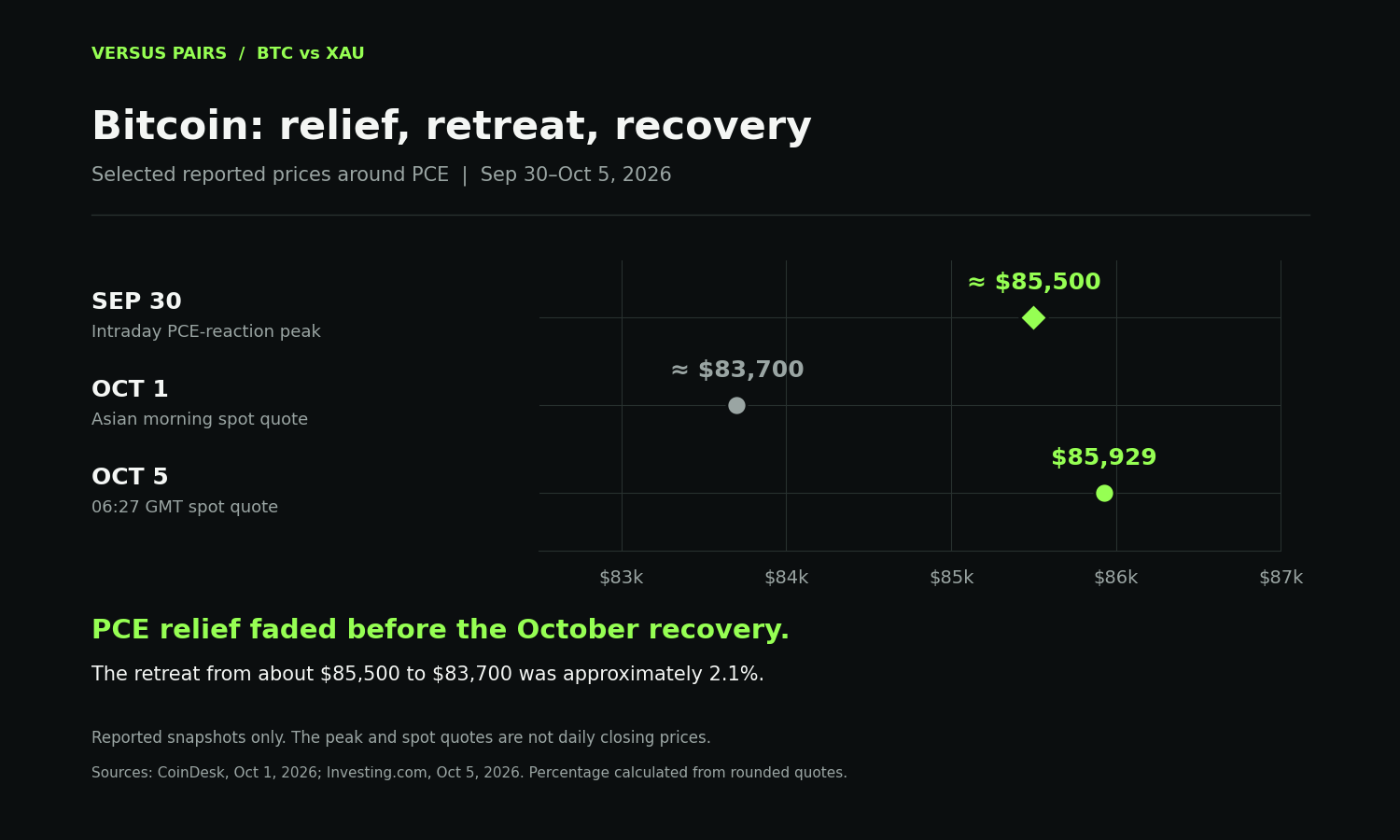
On September 30, the data showed August headline PCE inflation at 3.4% year over year, with core inflation at 3.0%. Bitcoin briefly climbed above $85,500, then fell back toward $83,700 by the next Asian morning as Treasury yields stayed high and limited the bounce.
The BTCUSD chart showed an immediate rebound consistent with improved risk appetite. The subsequent pullback suggested that the initial relief was vulnerable while Treasury yields remained elevated. The BTCUSD price still tracks liquidity expectations, but one softer inflation reading does not by itself loosen funding conditions.
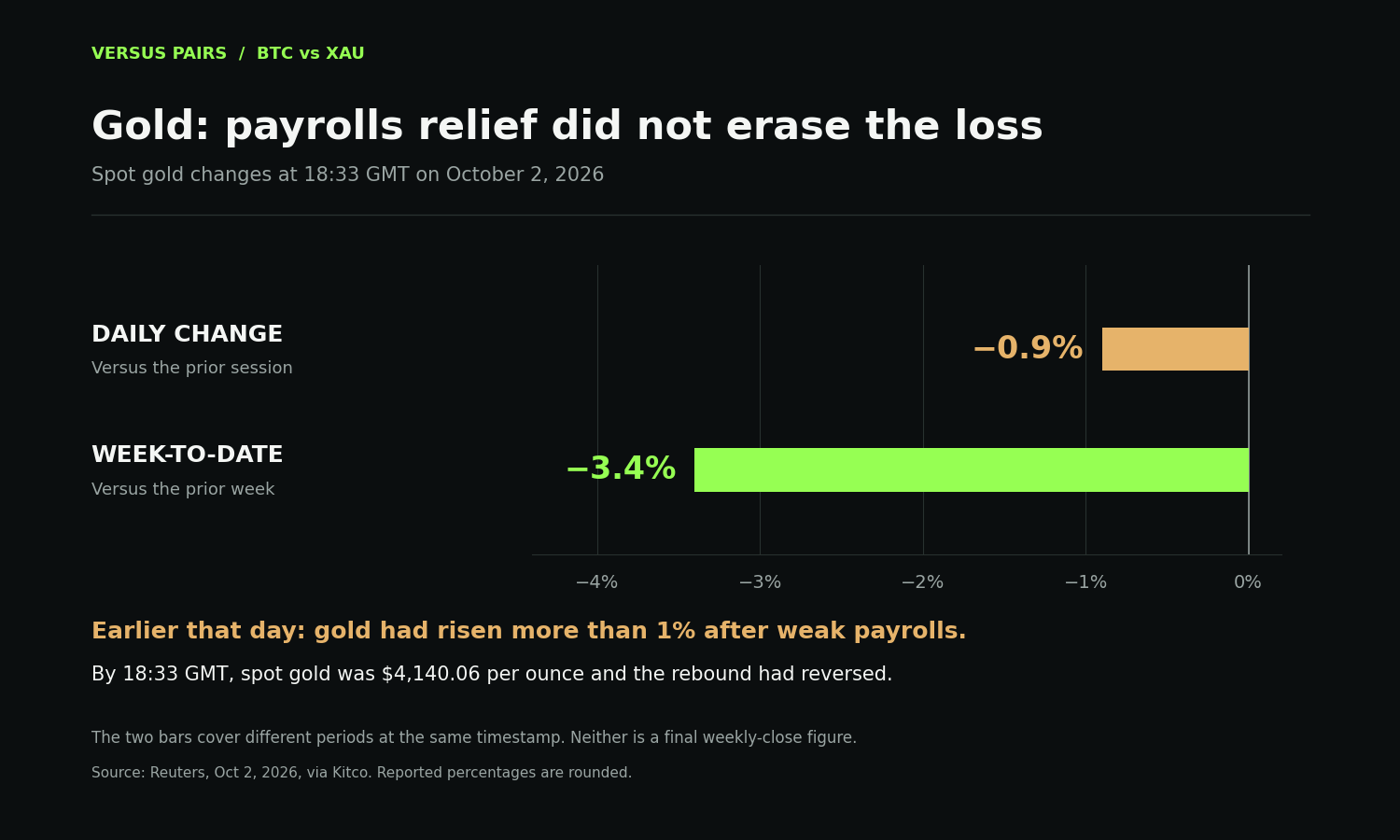
The Gold price chart tells a story with similar caveats. Gold was down about 3.4% for the week at 18:33 GMT on October 2, even after an early rally on weak payrolls. High yields kept competing for attention.
Those price moves do not prove that a stable Bitcoin vs gold correlation exists. A common catalyst does not mean both assets will hold up the same way or produce identical gains.
The BTC vs XAU split hinges on what eases
The September FOMC minutes, due October 7, work as this week's policy checkpoint. They could clarify the thinking behind the hike, though the meeting predates the latest inflation and employment releases.
For the Versus Trade BTC XAU setup, a sustained decline in yields alongside a softer dollar could give Bitcoin more room to outperform gold. That reading of the bitcoin price 2026 outlook comes with conditions; it is not a price target.
If debt worries grow and risk appetite fades, gold could take back the relative strength lead. The gold price investment case would then lean more on defensive buying. A bullish gold price forecast still runs into headwinds from rising real yields, and a gold price prediction built only on fiscal fear ignores that limit. Gold price volatility can stay high even as its defensive appeal gets stronger.
The Bitcoin vs gold store of value debate, which people often frame as "Should I buy gold or bitcoin?" overlooks the nuance this week brings. When you trade bitcoin vs gold, you are betting on relative performance. Both can rise in dollar terms while the pair tilts hard toward whichever asset grabs more of the rebound.
October's test is if bond yields and the dollar validate the relief markets have already priced into these assets. A pause in Fed hikes would leave borrowing costs high. The rally needs more than a pause.
Author




