What the Fed's December hike means for the Australian Dollar's bounce

AUD/USD extends its recovery on Friday after hitting a fresh yearly low of 0.6559 earlier this week. The Australian Dollar (AUD) benefits from a strong recovery in industrial metal prices and stabilizing risk sentiment across financial markets. However, expectations of further monetary tightening by the Federal Reserve (Fed) in December could limit the US Dollar’s (USD) downside and undermine the Aussie’s recovery.
While oversold conditions offer room for a short-term rebound, monetary policy fundamentals remain unfavorable for a sustained trend reversal.
Recovering industrial metal prices offer the Australian Dollar some breathing room
The Australian Dollar’s recovery comes as concerns surrounding global Artificial Intelligence (AI) investment ease. Copper (XCU/USD) rebounds sharply on Friday, supported by hopes that the recent sell-off in AI-related assets is coming to an end.
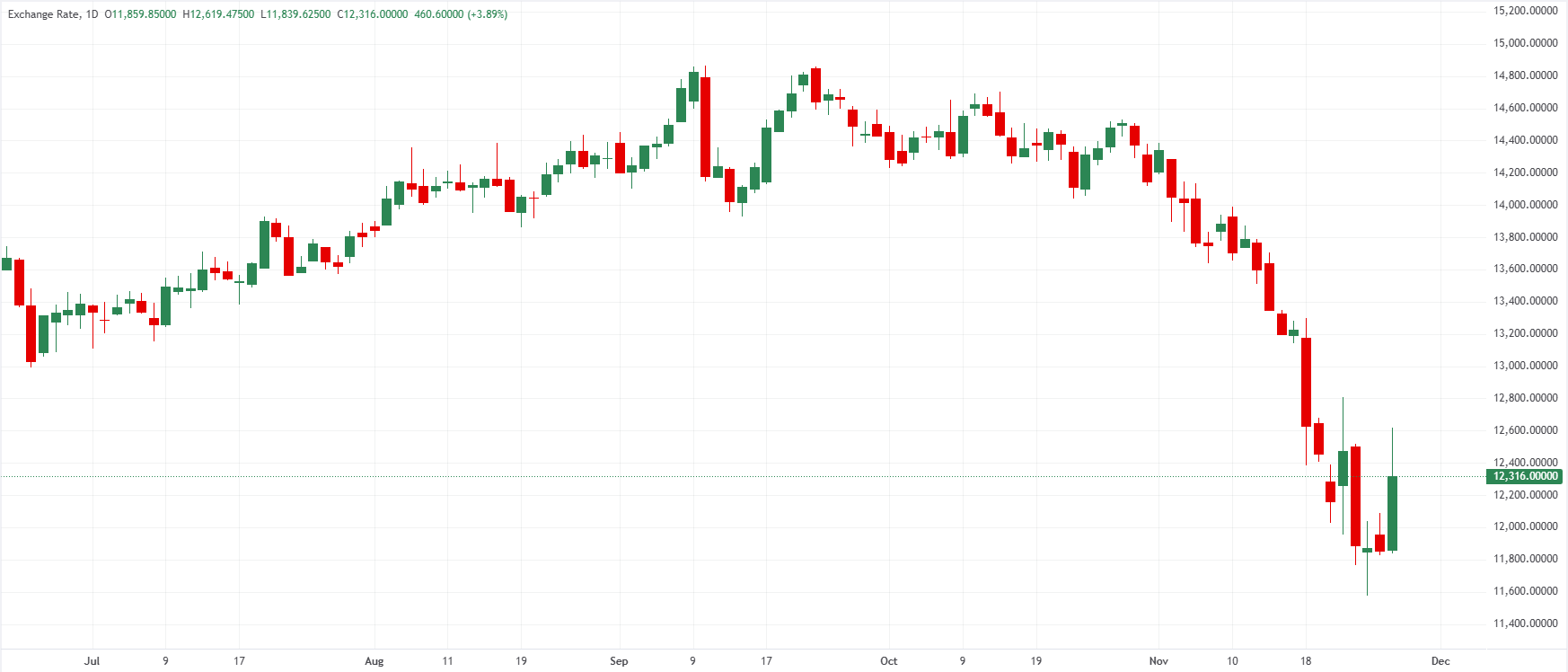
Although Iron Ore remains Australia’s largest commodity export, Copper is an important gauge of the global industrial cycle. Demand stemming from data center construction and energy infrastructure development also increases the metal’s sensitivity to the outlook for AI investment.
Commerzbank economists remain relatively optimistic despite the recent turmoil in equity markets. They argue that “despite all risks, strong arguments suggest that AI companies will continue to significantly increase their investments at least next year, thereby boosting the US economy.”
Sustained investment could support demand for industrial metals and, indirectly, the Australian Dollar. However, the resulting resilience of the US economy could also strengthen the case for restrictive monetary policy in the United States (US), limiting the benefits for AUD/USD.
A December Fed rate hike is almost fully priced in
Resilient US economic activity and persistent inflationary pressures have significantly strengthened expectations of further monetary tightening. The Personal Consumption Expenditures (PCE) Price Index, the Fed’s preferred inflation gauge, rose to 3.8% YoY in October, while weekly Initial Jobless Claims fell to 189K in the week ending November 21 from 2020K previously. Comments from US central bank officials have reinforced these expectations. Fed Governor Christopher Waller recently signaled that he could support a 50-basis-point (bps) rate hike to curb inflation.
According to the CME FedWatch tool, markets are pricing in a 99% chance of a 25 bps rate hike at the December meeting. With such a move already largely priced in, the US Dollar’s reaction could depend more on the Fed’s guidance regarding the interest rate trajectory in 2027 than on the December decision itself.
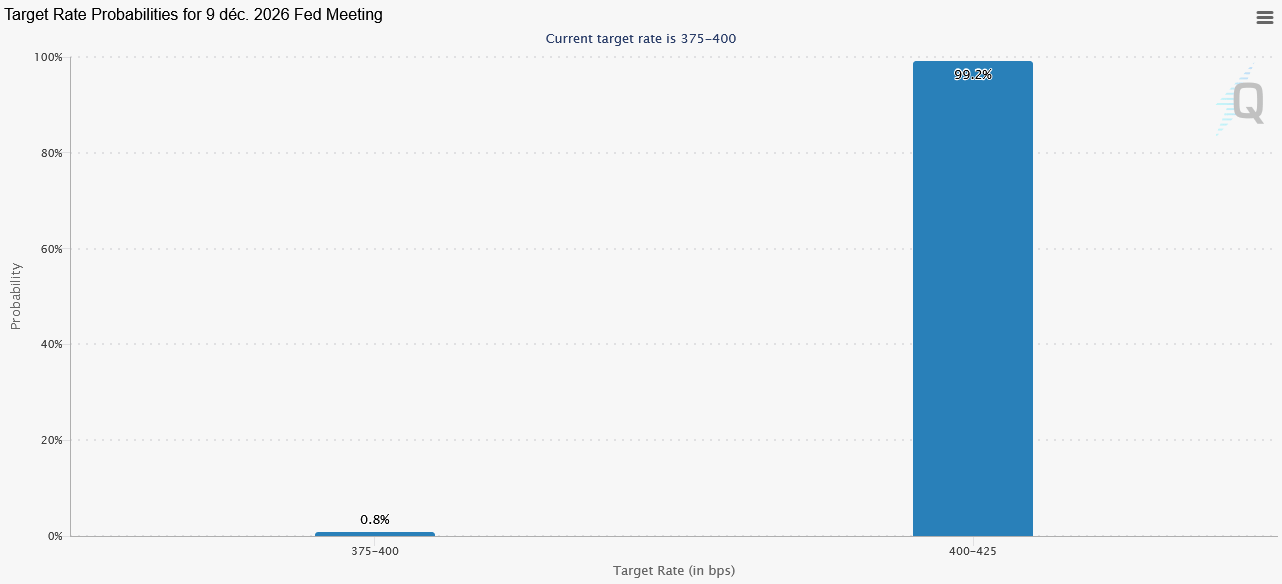
The prospect of additional rate hikes could support US Treasury yields and strengthen the Greenback’s appeal. Conversely, any indication that the tightening cycle is approaching its end could give AUD/USD more room to recover.
The RBA risks losing its interest rate advantage
In Australia, the Reserve Bank of Australia (RBA) faces an increasingly challenging economic backdrop. The Consumer Price Index (CPI) accelerated to 4.9% YoY in October from 4.3% in September, while underlying inflation, as measured by the Trimmed Mean, increased to 3.8% from 3.6%. However, the labor market is showing growing signs of deterioration. The Australian economy shed 43.5K jobs in October, marking a second consecutive monthly decline in employment, while the Unemployment Rate climbed to a five-year high of 4.9%.
OCBC Bank analysts highlight the risk of monetary policy divergence: “The RBA is likely close to the end of its tightening cycle, while other central banks still have room to catch up, threatening to erode Australia’s relative rate advantage.” TD Securities also expects an extended period of unchanged interest rates: “Data affirm rate cut speculation to be premature for now with the RBA likely on a prolonged hold in 2027.”
Even without Australian rate cuts, further monetary tightening in the US could gradually erode the Aussie’s relative yield advantage, limiting the scope for a sustained recovery. Investors will closely monitor a speech by RBA Governor Michele Bullock on Tuesday, followed by the release of the US Nonfarm Payrolls (NFP) report for November next Friday.
A stronger-than-expected US employment report could reinforce expectations of further Fed rate hikes in 2027, while signs of labor market weakness could prompt investors to reassess the extent of future monetary tightening, providing some relief to the Australian Dollar.
AUD/USD rebounds, but the broader downtrend remains intact
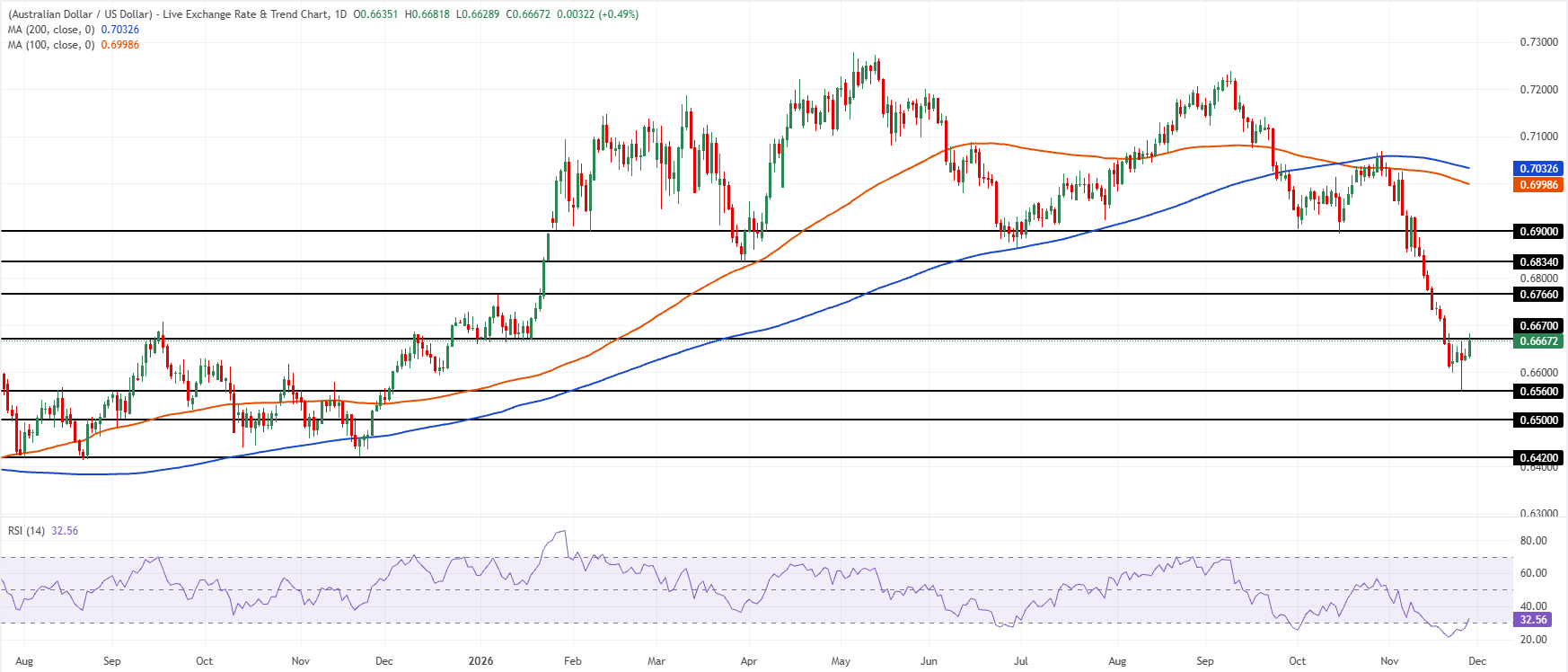
After losing more than 7% from its September peak, AUD/USD is attempting to break the 0.6670 resistance level. The Relative Strength Index (RSI) on the daily chart recovers to around 33, moving out of oversold territory and suggesting that selling pressure is easing.
However, AUD/USD faces immediate resistance at 0.6670. A sustained break above this level could pave the way for a further recovery toward 0.6766, followed by 0.6834 and 0.6900.
The broader technical outlook nevertheless remains bearish, with the 100-day and 200-day Simple Moving Averages (SMAs) trending lower at 0.6999 and 0.7033, respectively. Should selling pressure resume, a break below the 0.6560 support level could expose the 0.6500 psychological level, followed by 0.6420.
For now, improving risk sentiment and easing oversold conditions favor a corrective rebound rather than a genuine bullish reversal. With the December Fed rate hike largely priced in, expectations surrounding the US tightening cycle in 2027 could ultimately determine how far the Australian Dollar’s recovery can go.
Author
Ghiles Guezout
FXStreet
Ghiles Guezout is a Market Analyst with a strong background in stock market investments, trading, and cryptocurrencies. He combines fundamental and technical analysis skills to identify market opportunities.