The Japanese Yen is being defended by words, not money, and it's working

Japan's Ministry of Finance has kept the Japanese Yen (JPY) from weakening past 160 to the US Dollar (USD) this month without any reported spending. Its warnings carry weight because Tokyo spent ¥27.1 trillion to defend the currency earlier this year, and traders remember what that cost.
Japan has paid twice this year to stop the Yen from falling, and the two rounds cost ¥27.1 trillion, about $170 billion. The Yen is now back at 160.00 to the US Dollar, where the trouble started in April, and Tokyo's response so far has been a pair of statements to the press. The pair went above 160.00 on November 12 for the first time since early September; two officials warned traders within a day, and it hasn't stayed above the level since. The warnings are working because the money came first, and the open question is how long a threat can run on memory before traders ask to see it again.
Twice back to 160 since the summer, and nothing spent
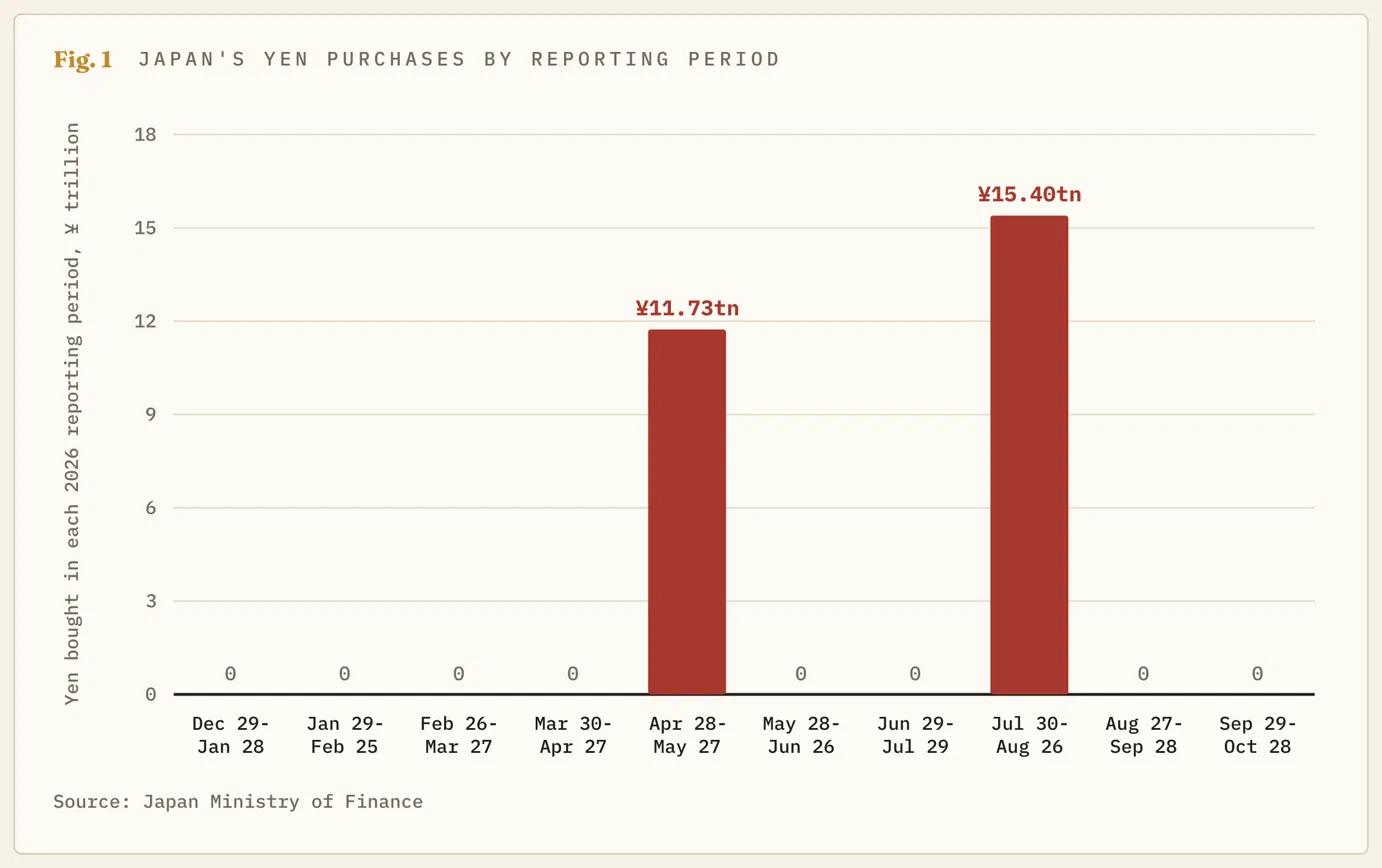
The record of what Tokyo paid is public. The Ministry of Finance (MoF), which decides when Japan buys or sells its own currency, bought ¥11.73 trillion of Yen between late April and late May. It then bought ¥15.4 trillion between July 30 and August 26, the largest monthly total it has ever reported, after the US Dollar reached about 164.00 Yen.
In that second round, the pair fell from around 164.00 to around 155.00 between July 30 and August 3, according to the Federal Reserve Bank of New York's quarterly report on currency operations. Traders who had bet against the Yen lost about 5.5% in three trading days. By early September, though, the pair was back at 160.00.
Since then, the MoF's monthly reports have shown zero for every period from August 27 to October 28. The pair fell back from 160.00 in September without Tokyo spending anything, and no purchase has been reported this month either.
This time, the defence has been verbal. Japan's top currency official, Atsushi Mimura, said on November 12 that it was too early to forget the summer. Finance Minister Satsuki Katayama followed on November 13, calling the moves rapid and one-sided and saying Japan would respond appropriately in contact with the US Treasury. The MoF won't publish this month's figure until the end of November, which means the claim that words did the job rests, for now, on words.
A warning that cost ¥27 trillion to write
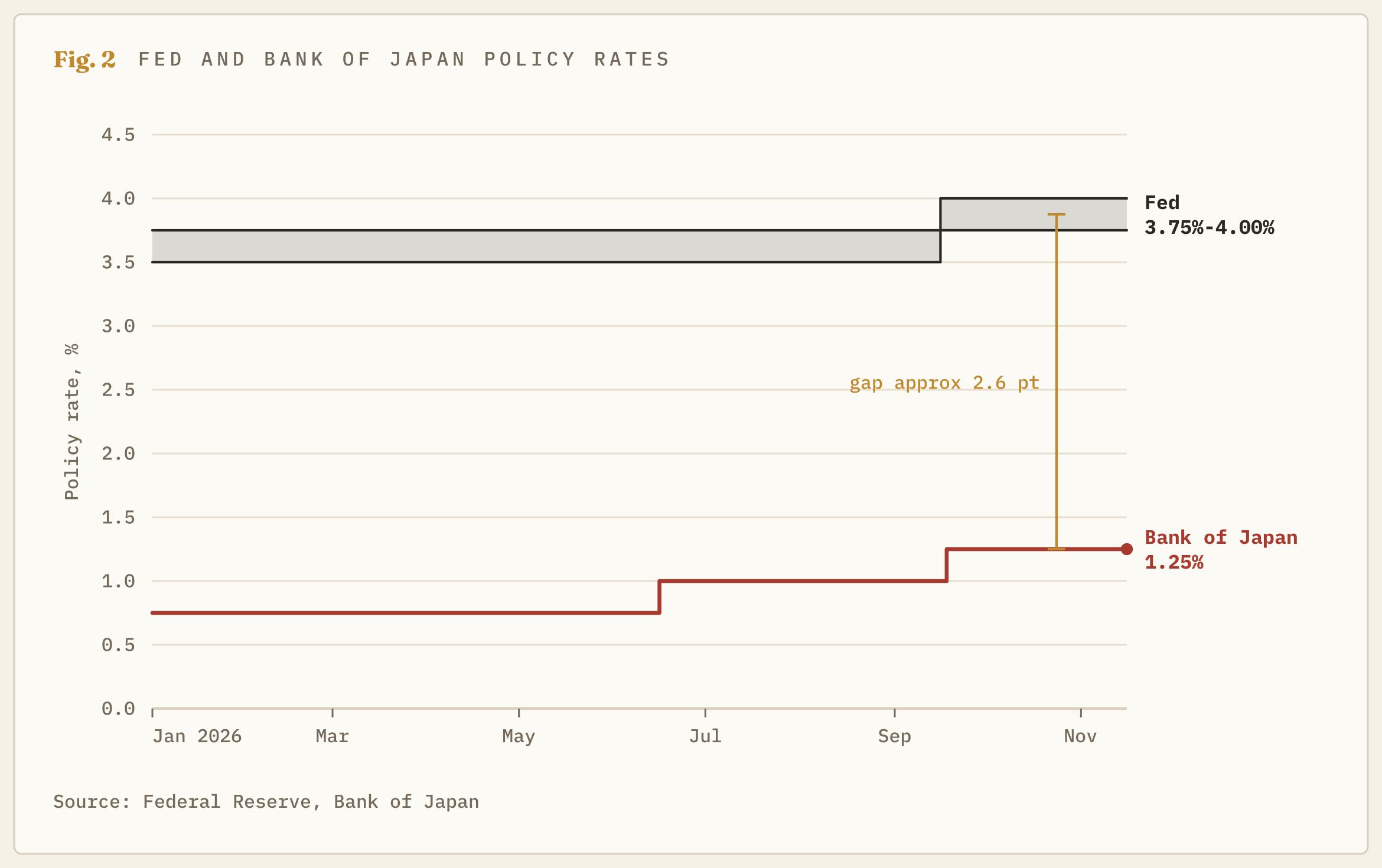
The reason a warning can move a currency is the arithmetic facing the person on the other side. A trader who sells Yen to hold US Dollars is paid the difference between the two countries' interest rates. The Federal Reserve (Fed) has its rate at 3.75%-4.00%, and the Bank of Japan (BoJ) has its rate at 1.25%, so that difference is worth roughly 2.6% a year, or about 0.2% a month.
Against that income, the July operation took 5.5% off the same trade in three trading days, which is about two years of the interest difference. Close to 160.00, a trader is therefore weighing a fifth of a percent a month against the chance of losing two years' worth before the week is out. Most would likely take their profit before the level instead of at it, and that Dollar-selling is what stops the pair without Tokyo touching its reserves.
Over time, that deterrent weakens each time it goes untested. Every visit to 160.00 that draws a statement and no purchase teaches traders a little more about where the real limit is, and Tokyo's own position is that there isn't one. Officials say they respond to how fast the Yen moves and have never named a level, yet the warnings have arrived at 160.00 each time.
Everything except the warnings points to a weaker Yen
The rate difference is not about to shrink. The Fed raised its rate in September for the first time in more than three years, and traders fully expect another quarter-point on December 9. The BoJ is expected to raise its own rate to 1.50% at its December meeting. If both deliver, the gap that makes it profitable to sell Yen would end the year exactly where it is now.
On top of that, Japan's Gross Domestic Product (GDP), the broadest measure of its output, shrank 0.1% annually in the third quarter, the Cabinet Office reported on Monday. Economists had forecast 0.3% growth, and it was the first contraction in four quarters. A shrinking economy would normally weaken a currency, because it makes rate rises harder to justify. The Yen hardly moved on the number, and traders still put the odds of a December rise at roughly three in four.
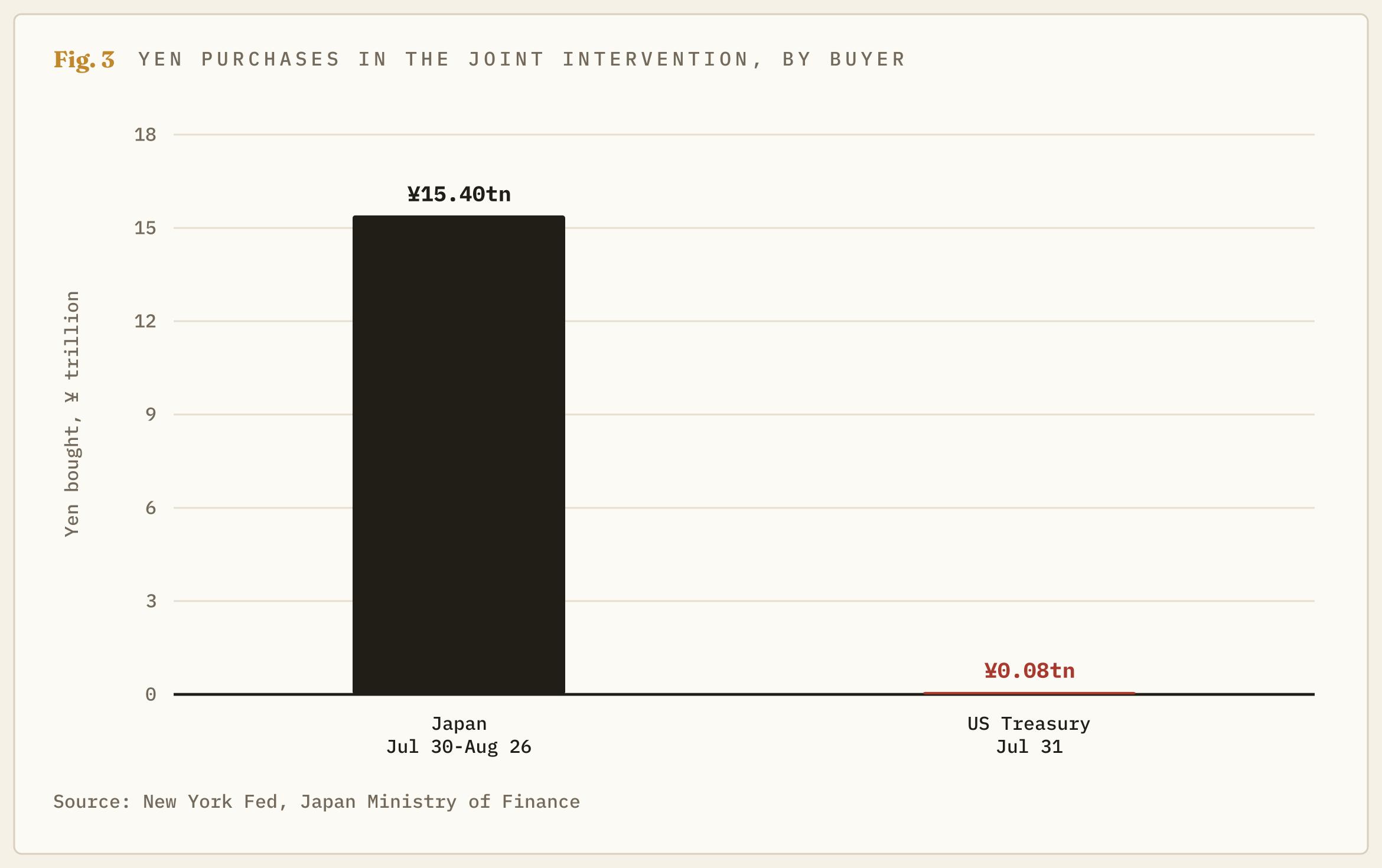
Even Washington's backing turns out to be thinner than the warnings imply. The New York Fed's report, published on November 12, showed the US Treasury bought ¥79.4 billion of Yen on July 31, its first such purchase since 1998. Japan spent ¥15.4 trillion over the same summer, which puts Washington's share at about half of one percent, and the Treasury paid for it by selling Euros. Finance Minister Katayama's warnings point to that partnership, so its size matters to any trader deciding how seriously to take the next one.
What would make Tokyo pay a third time
The first thing that would force a purchase is speed, since a slow climb through 160.00 would likely draw only more statements. A jump of a Yen or two in a single session is the kind of rapid move officials say they act against, and that would likely draw money. The MoF's report for the period to late November, due at the month's end, will show whether this defence has cost anything so far.
Beyond that, the next test is December. The rate difference would widen if the Fed raises its rate and signals more to come while BoJ Governor Kazuo Ueda raises his and signals a pause. In that case, the pressure on 160.00 would return with the summer one month further away. The gap would start doing some of Tokyo's work for it if Governor Ueda instead signals that further rises are coming.
For now, the lean is that 160.00 holds, so long as officials keep warning and traders keep taking profit ahead of the level. That view breaks on a full trading day above 160.00, met with another statement and nothing else, because traders would then have tested the threat and found words. From there, Tokyo would either have to spend a third time or let the level go. The ¥27.1 trillion already spent buys patience from traders only for as long as they think more is coming.
Author
Joshua Gibson
FXStreet
Joshua joins the FXStreet team as an Economics and Finance double major from Vancouver Island University with twelve years' experience as an independent trader focusing on technical analysis.