The Euro is sinking further into a downtrend that won't let go

EUR/USD continues its downward trajectory on Monday, falling to its lowest level in 18 months as the Euro (EUR) struggles against a strengthening US Dollar (USD). The pair is extending a five-day losing streak and approaching the psychological 1.1000 level.
The decline reflects more than a temporary resurgence in US Dollar demand. A combination of increasingly hawkish Federal Reserve (Fed) expectations, persistent European fiscal concerns and an unfavorable interest rate environment is reinforcing the Euro's broader downtrend.
The Fed is giving the US Dollar another reason to climb
The latest acceleration in EUR/USD's decline follows stronger-than-expected US inflation figures and increasingly hawkish comments from Fed policymakers, prompting investors to reassess the trajectory of US interest rates. According to the CME FedWatch tool, markets assign a 93% chance of a 25-basis-point rate hike at the December meeting, with lower odds of a larger 50-basis-point move. More importantly, traders are also pricing in additional interest rate hikes in January and March, further increasing the upward pressure on the US Dollar.
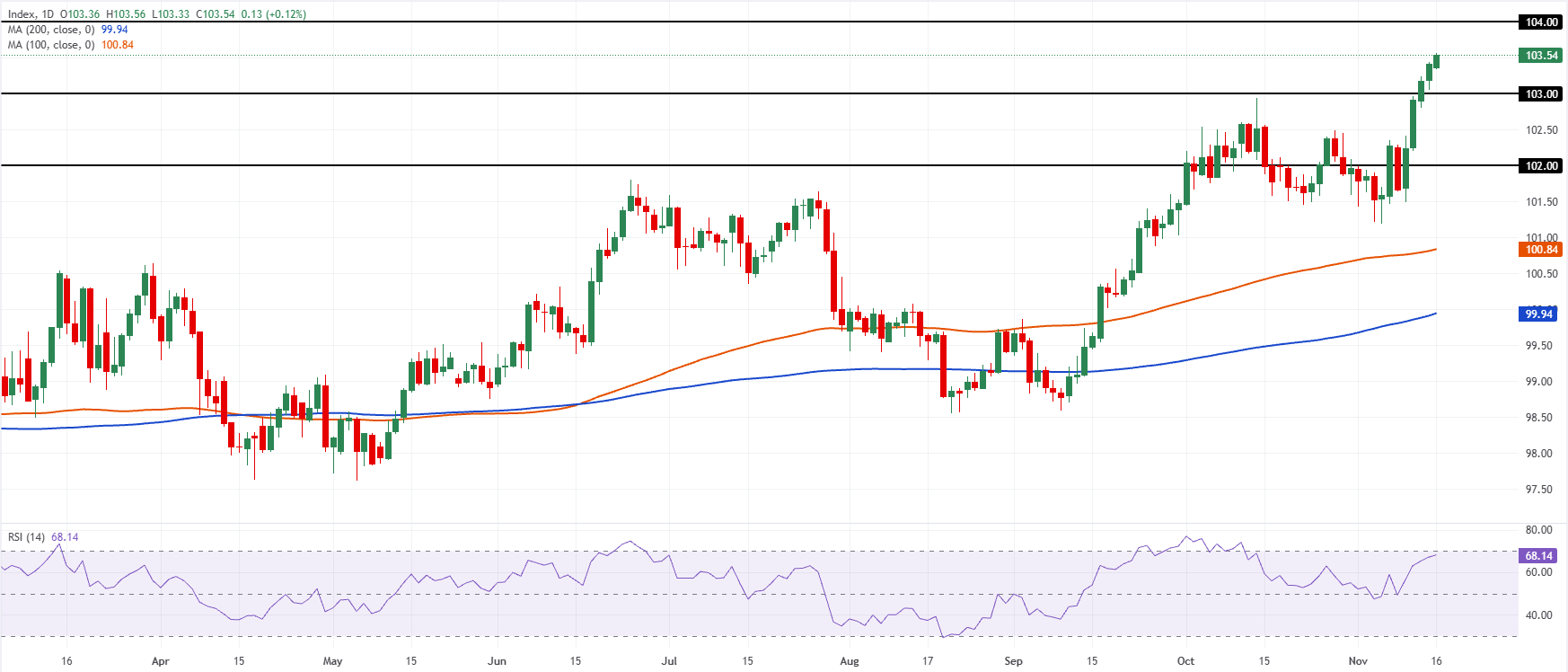
Kansas City Fed President Jeffrey Schmid reinforced these expectations over the weekend, warning that inflation remains "uncomfortably above" the central bank's 2% target and that policymakers still have "some work to do on inflation." Boston Fed President Susan Collins also supported a gradual tightening approach while acknowledging that interest rates might need to rise further than previously anticipated. This increasingly restrictive outlook is strengthening US Treasury yields and making the US Dollar more attractive to investors.
ING highlights the difficulty of anticipating a meaningful US Dollar reversal: "The macro backdrop makes it risky to call for a dollar correction just yet," noted ING. The bank adds that two-year US Dollar swap rates have increased by 35 basis points since November 10, illustrating the scale of the recent repricing in monetary policy expectations.
Why the European Central Bank cannot rescue the Euro
The European Central Bank (ECB) is also signaling further monetary tightening, but its increasingly hawkish rhetoric has failed to generate meaningful support for the single currency. According to a recent Reuters survey, most economists expect the ECB to deliver another interest rate increase in December, potentially its final move in the current tightening cycle.
However, investors appear more convinced that the Fed can sustain a prolonged tightening cycle than its European counterpart. ING analysts explain that "the market sees the potential for a prolonged tightening cycle as more credible in the US than in the Eurozone." This divergence is particularly important for EUR/USD because higher expected US interest rates relative to European rates increase the attractiveness of USD-denominated investments.
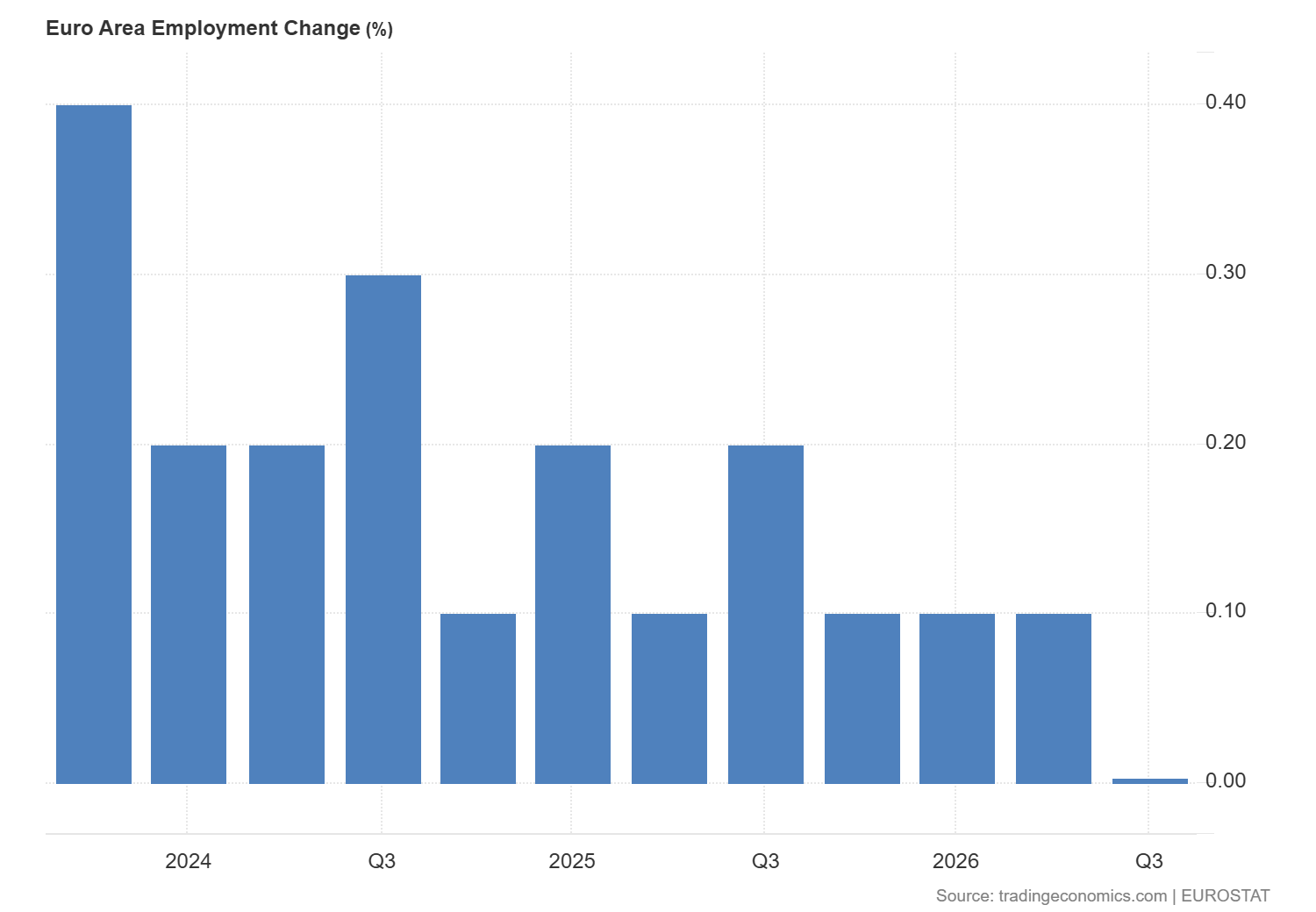
The European economy also faces a less favorable growth environment. Eurozone employment stagnated during the third quarter, with job losses in Germany and marginal declines in France and Italy. This labor market weakness could limit second-round inflation effects from higher energy prices, reducing the ECB's ability to justify an extended tightening cycle.
Meanwhile, ECB Vice President Boris Vujcic warned that recent energy price developments could push inflation higher, leaving policymakers facing the difficult combination of persistent price pressures and fragile economic activity.
France's fiscal uncertainty adds another layer of pressure
Beyond monetary policy, concerns surrounding France's public finances are creating an additional obstacle to a sustained Euro recovery. Commerzbank observes that the single currency has struggled to benefit even during periods when market-implied interest rate differentials moved in its favor: "The reason seems straightforward, concerns about France’s public finances are weighing on the euro, apparently to such an extent that the single currency is struggling to benefit even from more favourable rate expectations," notes the bank.
The concern extends beyond France's fiscal position. Questions surrounding the ECB's capacity to intervene during a potential sovereign debt crisis, without compromising its price stability mandate, are also affecting investor confidence.
Consequently, the Euro faces pressure from both sides: stronger US interest rate expectations are supporting the US Dollar, while European fiscal vulnerabilities are limiting the single currency's ability to recover. OCBC consequently sees "scope for modest further US Dollar gains against the Euro, particularly as French fiscal uncertainty persists into early 2027."
EUR/USD downtrend remains firmly in control
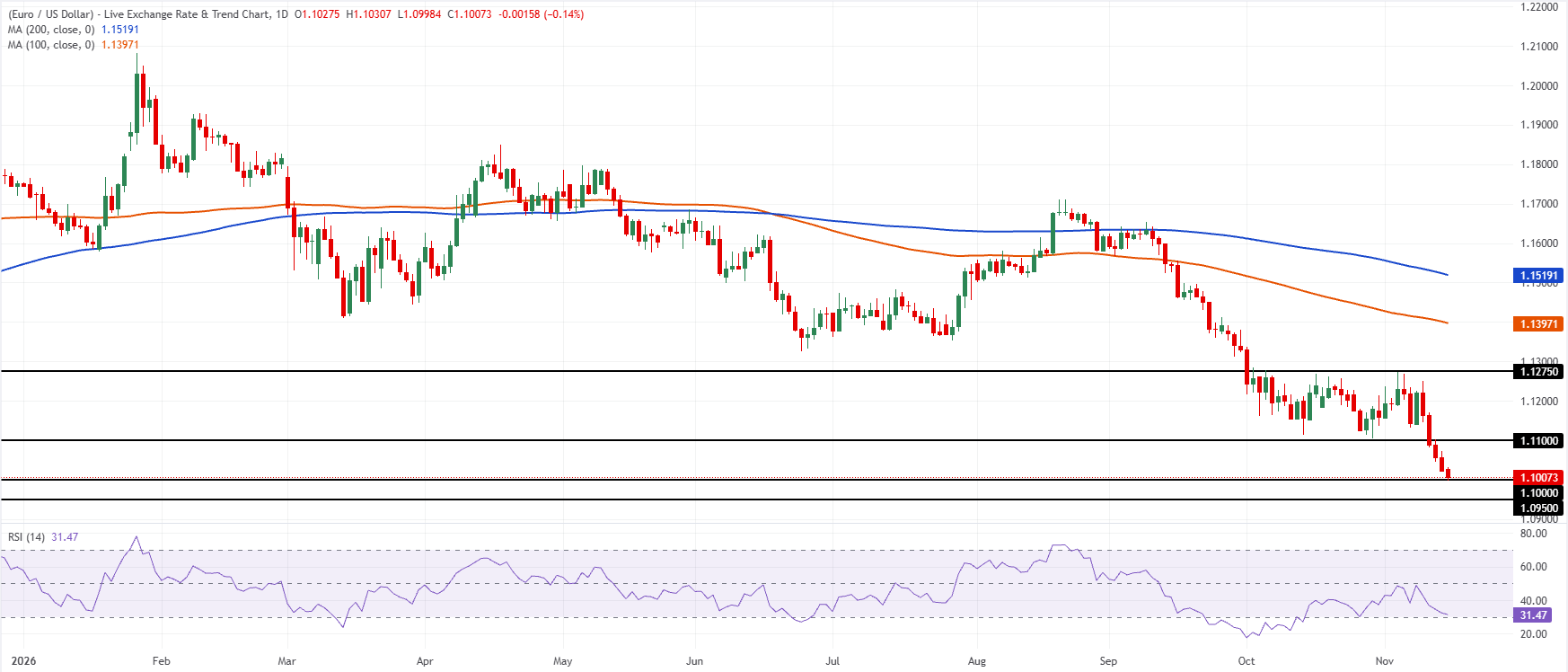
EUR/USD's daily chart confirms a persistent bearish structure, with the pair recording successive lower highs and lower lows since its January peak near 1.2100. The latest downward acceleration has pushed prices below the former support levels at 1.1275 and 1.1100, turning these areas into potential resistance.
The pair also trades significantly below its 100-day Simple Moving Average (SMA) at 1.1397 and its 200-day SMA at 1.1519. Both averages are declining, reinforcing the broader bearish outlook. The Relative Strength Index (RSI) stands near 31.50, approaching oversold territory without yet signaling a reversal. This suggests that bearish momentum remains dominant, although the proximity of the oversold threshold increases the possibility of a consolidation.
The immediate focus is on the psychological 1.1000 level, followed by the support area at 1.0950. A decisive break below this region could open the door to a further extension of the downtrend.
Conversely, an initial recovery would need to reclaim 1.1100 before challenging the stronger resistance at 1.1275. As long as EUR/USD remains below these levels, rebounds risk being viewed as opportunities to resume selling rather than evidence of a sustainable bullish reversal.
What could finally break the Euro's downward spiral?
The coming US economic releases and central bank communications could determine whether EUR/USD breaks decisively below 1.1000. Investors will monitor Tuesday's US Retail Sales report, Wednesday's Fed meeting Minutes and speeches from Fed Chair Kevin Warsh and other policymakers.
Stronger US consumption figures or further hawkish signals could reinforce expectations of additional rate hikes, extending the US Dollar's advantage. Conversely, weaker US data or a moderation in Fed rhetoric could offer the Euro some relief.
Nevertheless, a lasting EUR/USD recovery would likely require more than a short-lived US Dollar correction. A meaningful improvement in European growth prospects, reduced French fiscal uncertainty or a shift in relative monetary policy expectations may be necessary to challenge the prevailing bearish trend.
Author
Ghiles Guezout
FXStreet
Ghiles Guezout is a Market Analyst with a strong background in stock market investments, trading, and cryptocurrencies. He combines fundamental and technical analysis skills to identify market opportunities.