GBP/USD needs support


GBP/USD starts the new week around 1.3210. Over the past week, the pair lost about 0.9%, with the pound under pressure mainly from another round of strong US inflation data.
The Producer Price Index (PPI) rose 6.5% year-on-year in October, the fastest pace since November 2022. The figure came in slightly below the forecast but accelerated from 6.3% a month earlier, largely due to higher transportation and warehousing costs. Core PPI remained at 5.0%, in line with expectations.
The data reinforced expectations of further Fed policy tightening. Chicago Fed President Austan Goolsbee noted that recent data point to a worsening inflation picture, which may require more aggressive action from the Fed. Markets now estimate the probability of a 25-basis-point rate hike in December at almost 90%, with the probability of a 50-basis-point move at around 10%.
In the UK, GDP data released last Thursday matched expectations. Following the Bank of England’s recent rate hike, markets are already pricing in another increase in December, with a probability of around 85%. However, expectations of tighter BoE policy have not yet been enough to offset the support the dollar is receiving from US inflation data and Fed rhetoric.
The market’s focus will shift to UK inflation this week. In the US, retail sales, further comments from Fed officials and the minutes of the latest FOMC meeting will be in focus.
Technical analysis
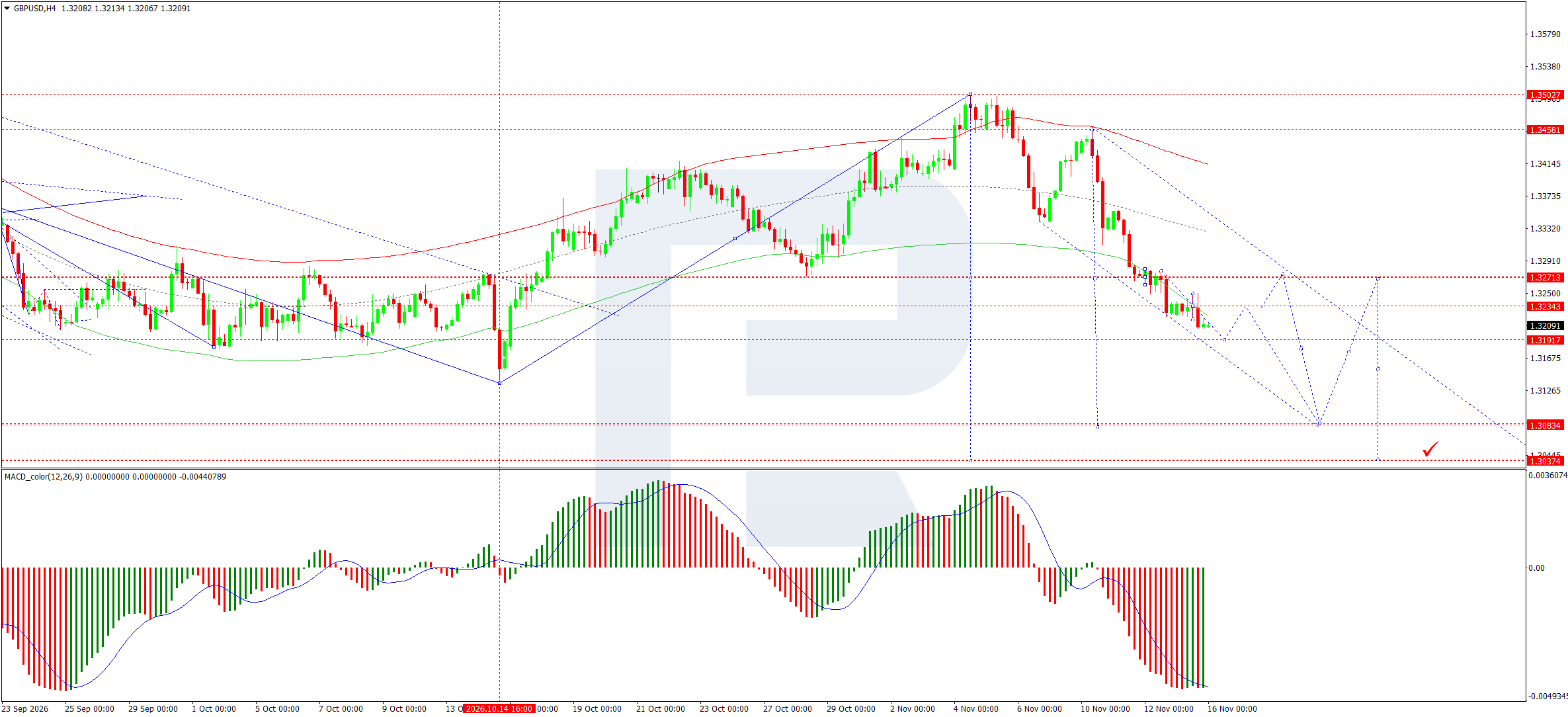
The H4 GBP/USD chart maintains a downward structure, with a sequence of lower highs and lower lows indicating sellers still have the advantage. The current move can be viewed as the third wave of the decline, although this labelling remains a working hypothesis. The pair has approached support at 1.3192. A break and consolidation below this level would increase the likelihood of a move towards 1.3084, followed by 1.3037. These levels represent the trend targets, although reaching them within a single session is not required. The MACD remains below zero, with its signal line pointing downwards, supporting the bearish scenario.
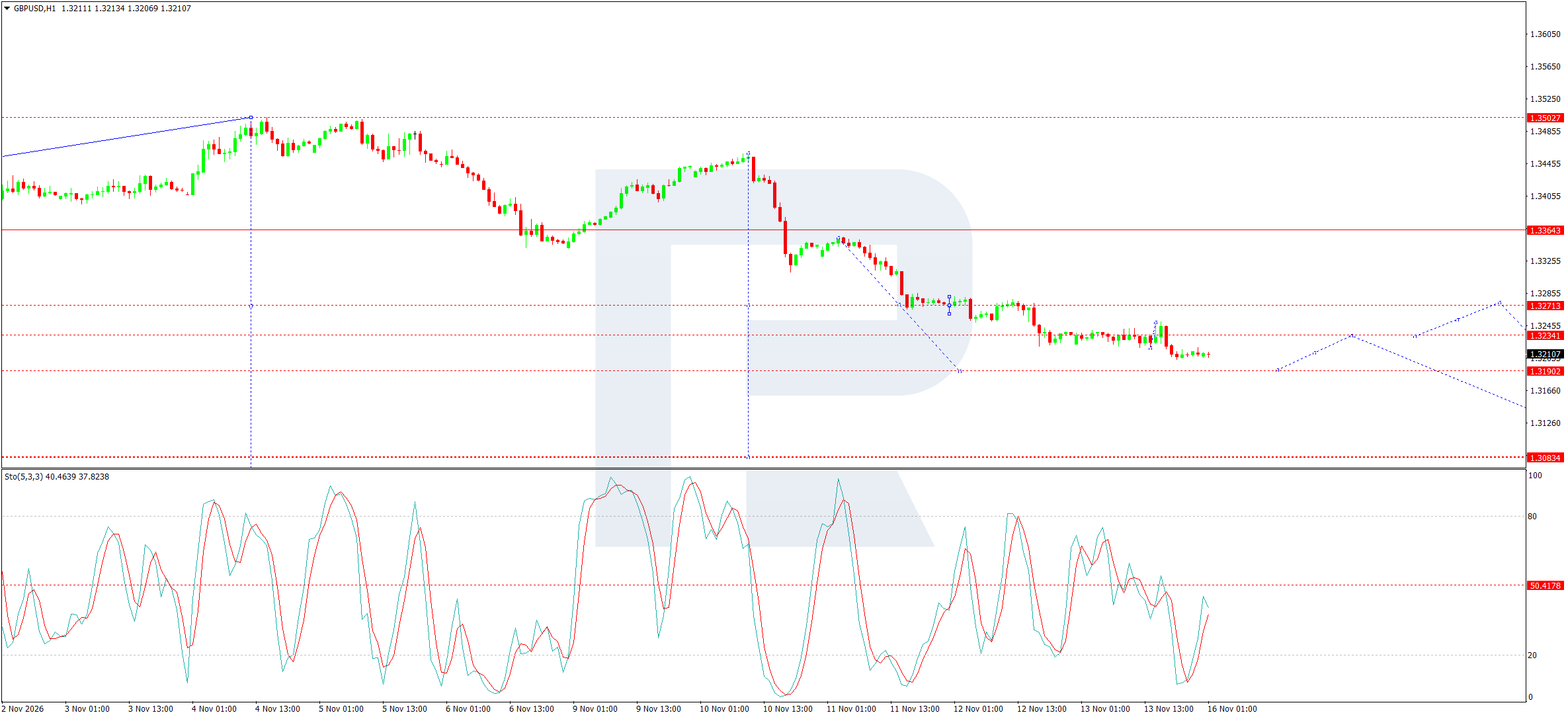
On the H1 GBP/USD chart, the decline from the consolidation area around 1.3272 has continued. The price remains below resistance at 1.3232, maintaining pressure on support. At the same time, the Stochastic is below 50 but recovering after leaving the oversold zone. The indicator therefore allows for a short-term rebound and does not yet confirm an acceleration in the decline.
For the upcoming trading day, 1.3192 remains the key level in the baseline scenario. If support holds, a correction towards 1.3232 is possible, with consolidation above this level opening the way for a further recovery towards 1.3272. A resumption of selling from this area would keep the targets at 1.3084 and 1.3037 relevant.
Conclusion
GBP/USD starts the week under pressure from strong US inflation data and rising expectations of further Fed tightening, with the probability of a 25-basis-point rate hike in December now approaching 90%. While the BoE is also expected to raise rates in December, with the probability currently estimated at around 85%, these expectations have not been sufficient to offset the dollar’s strength. Technically, the pair maintains a downward structure, with support at 1.3192 and targets at 1.3084 and 1.3037 if the decline continues. A short-term rebound towards 1.3232 and 1.3272 is possible, particularly given the recovering Stochastic, but the downward structure remains intact unless resistance is decisively broken. This week’s UK inflation data and US retail sales, along with Fed commentary and the FOMC minutes, will be the key catalysts for the pair’s next move.
Author
RoboForex Analysis Department
RoboForex
RoboForex Analysis Department provides timely market insights, expert technical analysis, and actionable forecasts across forex, commodities, indices, and equities.