|

British Pound: BoE tightening seen over-priced – BBH

Brown Brothers Harriman’s Elias Haddad expects UK September Consumer Price Index (CPI) and August labour data to be pivotal for Bank of England (BoE) pricing, with markets already discounting a 25 bps hike to 4.00% in November and 100 bps over twelve months. Haddad argues the BoE may not need to tighten as much, citing spare capacity, near-neutral rates, and likely fiscal tightening, which weighs on the British Pound (GBP).

UK inflation and wages in focus

"UK September CPI (Wednesday). Headline CPI is expected at 3.4% y/y (BoE projection: 3.0%) vs. 3.1% in August, core CPI is seen at 2.8% y/y vs. 2.6% in August, and services CPI is projected at 3.6% (BoE projection: 3.6%) vs. 3.4% in August."

"Ahead of that, the UK August labor market data is due Tuesday. The policy-relevant private sector regular pay growth is seen at 3.0% y/y vs. 2.9% in July, matching the BoE’s Q3 forecast and supporting Governor Andrew Bailey’s comments last week that there is little evidence yet of inflation becoming embedded in wage-setting."

"The swaps curve price in 90% odds of a 25bps hike to 4.00% on November 5 and 100bps of tightening in the next twelve months. In our view, the BoE may not need to tighten as much as markets anticipate, which is a drag on GBP. The UK economy is operating below capacity, the policy rate is near the top of the BoE’s estimated 2% to 4% neutral range, and fiscal policy will likely turn more restrictive following the October 28 UK budget."

(This article was created with the help of an Artificial Intelligence tool and reviewed by an editor. Know more.)

Author

FXStreet Insights Team

The FXStreet Insights Team is a group of journalists that handpicks selected market observations published by renowned experts. The content includes notes by commercial as well as additional insights by internal and external analysts.


More from FXStreet Insights Team
Share:

Editor's Picks

AUD/USD climbs toward 0.7000 after strong China data dump

AUD/USD attracts follow-through buyers for the second straight day on Monday, extending last week's recovery toward 0.7000 in Monday's Asian trading. Strong Chniese Q3 GDP and activity data for September strengthen the pair's advance, following RBA Assistant Governor Chris Kent's hawkish remarks.

USD/JPY struggles near 158.00 amid hawkish BoJ, subdued USD

USD/JPY remains defensive near 158.00 in the Asian session on Monday, as the US Dollar remains depressed near a two-week low amid the recent decline in US bond yields. Furthermore, looming intervention risks underpin the Japanese Yen and weigh on the pair amid BoJ Governor Kazuo Ueda's hawkish remarks. However, Fed rate-hike bets and geopolitical uncertainties could limit USD losses and the major.

Gold stalls below $4,200 as Fed rate-hike bets limit upside

Gold (XAU/USD) struggles after opening the week higher. The US Dollar (USD) and US Treasury yields find some footing following last week’s pullback as traders assess the Federal Reserve’s (Fed) interest rate path and geopolitical developments.

Crypto Today: Bitcoin, Ethereum, XRP extend recovery despite ETFs outflows

Bitcoin edges higher above $82,000, building strong structural support despite roughly $229 million in ETF outflows last week. Ethereum recovers above $2,400 as bulls strive to regain trend control, backed by a subtle recovery in momentum indicators.

Higher than expected inflation shakes markets: What to prepare for?

US CPI report came in stronger than expected, lifting the probability of a December rate hike higher once again. Even though Fed Chair Warsh reinforced expectations of a hold for the October’s meeting, markets now face a two-step event: a likely pause on October 28, followed by an interest rate hike on December 9.

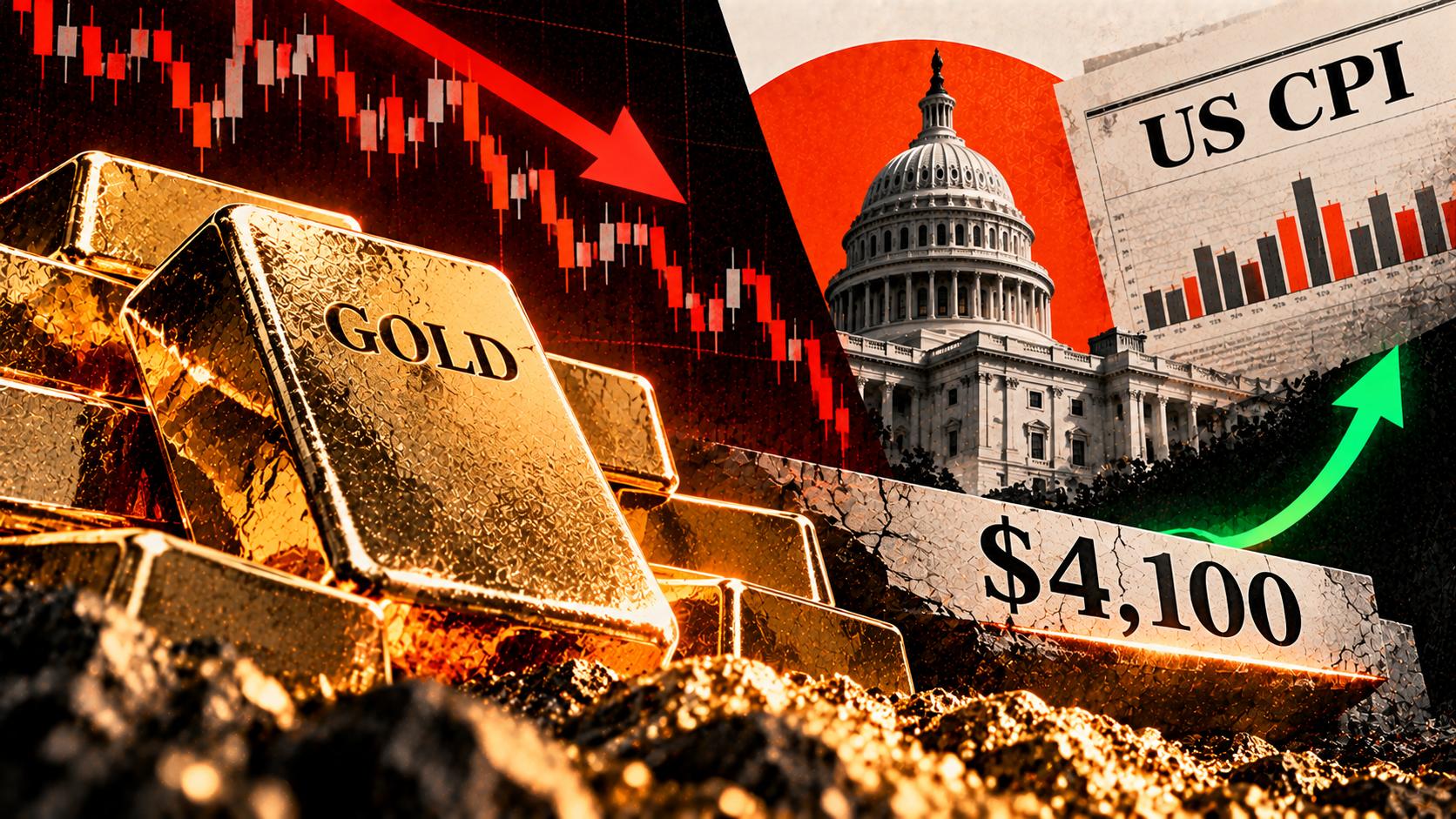
Everyone's dumping Gold after hot US inflation. Here's why $4,100 could be a floor, not a cliff
Gold (XAU/USD) is recovering from a sharp sell-off triggered by hotter-than-expected United States (US) inflation data released on Wednesday. The precious metal briefly plunged toward $4,073 as investors increased their bets on further Federal Reserve (Fed) interest rate hikes before recovering as US Treasury yields and the US Dollar (USD) reversed their initial gains.