5.197%: US 30-year Treasury yield hits highest level since July 2007
- US long-term yields continue to rise, with the 30-year Treasury yield reaching its highest level since 2007.
- Rising Oil prices and geopolitical tensions are reinforcing inflation concerns and reducing expectations of near-term monetary easing.
- Investors are increasingly demanding higher compensation to hold long-dated debt amid fiscal and inflation uncertainty.

US 30-Year Treasury Yield and US 10-Year Treasury Yield continue to advance on Tuesday, with the 30-year yield trading at 5.195% and the 10-year yield at 4.683% at the time of writing. The US 30-year Treasury yield reached a peak of 5.197% earlier in the day, its highest level since July 2007, highlighting growing pressure across fixed-income markets.
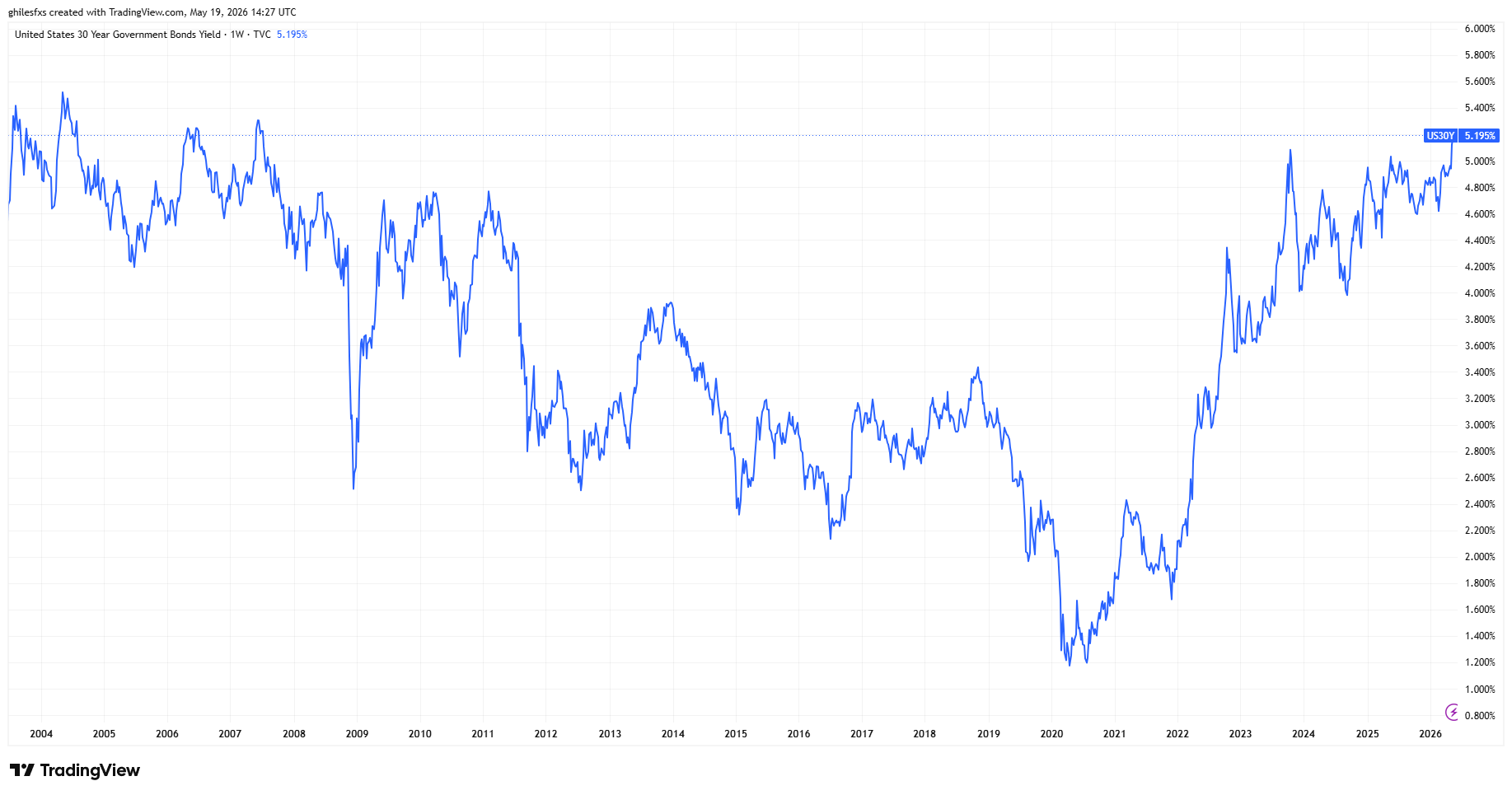
The sharp increase in yields reflects renewed concerns that inflation could remain elevated for longer than previously expected. Rising energy prices linked to the conflict involving Iran are adding upward pressure on inflation expectations, forcing investors to reassess the trajectory of monetary policy. Higher Oil prices have recently revived speculation that the next move from the Federal Reserve (Fed) may not necessarily be a rate cut.
At the same time, investors are also demanding a higher term premium, the additional compensation required to hold longer-duration debt. Concerns around persistent fiscal deficits and increasing government borrowing needs continue to weigh on sentiment toward long-dated Treasuries.
A Bank of America survey reported by Reuters on Tuesday shows that 62% of fund managers expect the US 30-year Treasury yield to rise above 6% over the next year.
Market participants also continue to monitor geopolitical developments in the Middle East. Any meaningful de-escalation could help ease Oil prices and improve the inflation outlook, potentially supporting Bond demand and weighing down on yields. However, uncertainty surrounding negotiations with Iran continues to keep investors cautious.
The recent move higher in Treasury yields is also beginning to raise concerns for broader financial markets. Higher long-term borrowing costs may increase pressure on mortgages, consumer credit conditions and equity valuations if the current trend persists.
Interest rates FAQs
Interest rates are charged by financial institutions on loans to borrowers and are paid as interest to savers and depositors. They are influenced by base lending rates, which are set by central banks in response to changes in the economy. Central banks normally have a mandate to ensure price stability, which in most cases means targeting a core inflation rate of around 2%. If inflation falls below target the central bank may cut base lending rates, with a view to stimulating lending and boosting the economy. If inflation rises substantially above 2% it normally results in the central bank raising base lending rates in an attempt to lower inflation.
Higher interest rates generally help strengthen a country’s currency as they make it a more attractive place for global investors to park their money.
Higher interest rates overall weigh on the price of Gold because they increase the opportunity cost of holding Gold instead of investing in an interest-bearing asset or placing cash in the bank. If interest rates are high that usually pushes up the price of the US Dollar (USD), and since Gold is priced in Dollars, this has the effect of lowering the price of Gold.
The Fed funds rate is the overnight rate at which US banks lend to each other. It is the oft-quoted headline rate set by the Federal Reserve at its FOMC meetings. It is set as a range, for example 4.75%-5.00%, though the upper limit (in that case 5.00%) is the quoted figure. Market expectations for future Fed funds rate are tracked by the CME FedWatch tool, which shapes how many financial markets behave in anticipation of future Federal Reserve monetary policy decisions.
Author

Ghiles Guezout
FXStreet
Ghiles Guezout is a Market Analyst with a strong background in stock market investments, trading, and cryptocurrencies. He combines fundamental and technical analysis skills to identify market opportunities.

















