Three reasons to be bullish on Ethereum
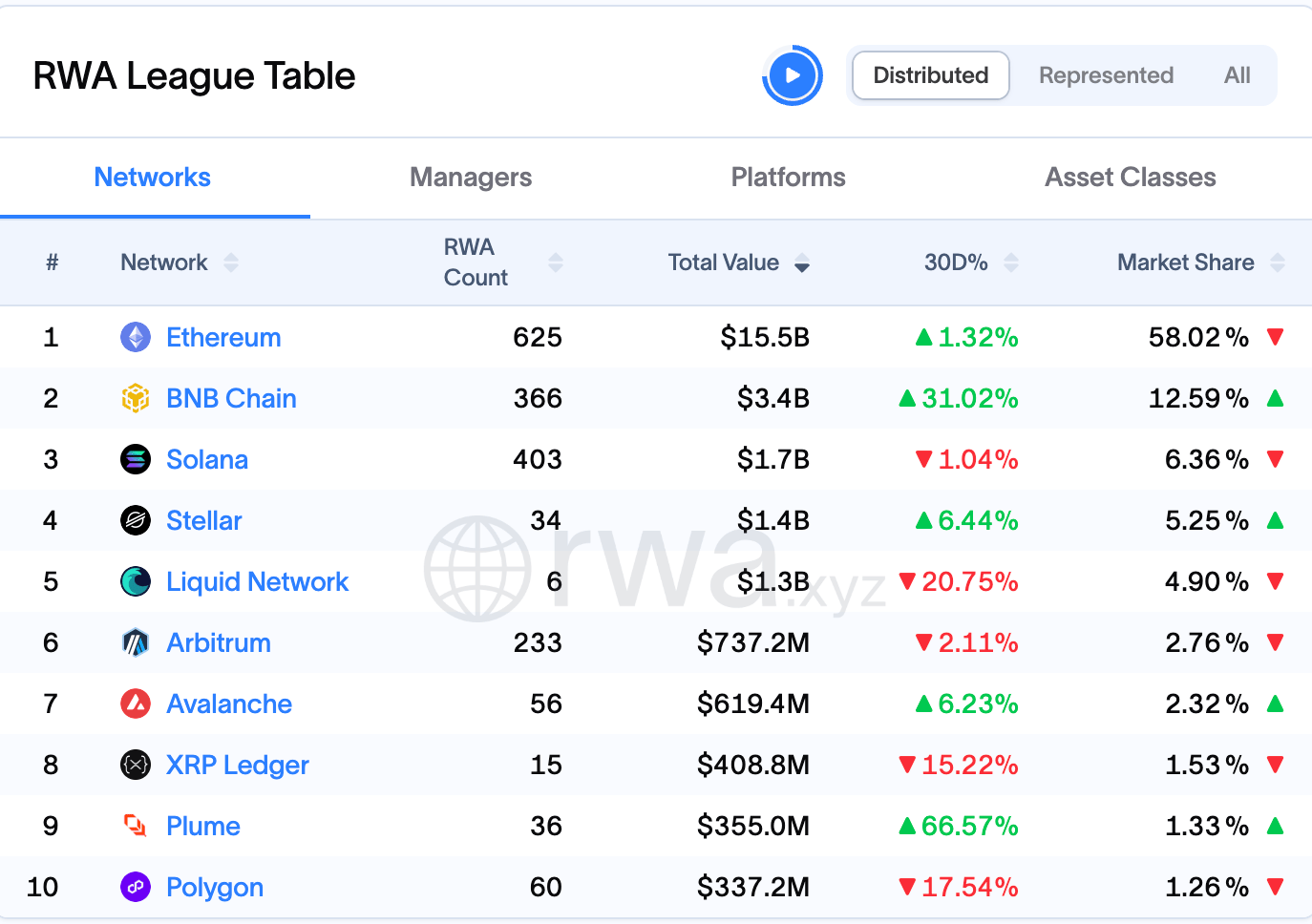
- Ethereum is the leading chain in the tokenization race, dominating 58% market share.
- The upcoming upgrades in 2026 aim to boost parallel transactions and reduce hardware demand at the node level.
- The 365-day MVRV ratio signals Ethereum is oversold, testing levels seen before the 40% rally in May 2025.
Ethereum (ETH) is trading under pressure around $2,000 at press time on Monday, while the declining crypto market's sentiment, linked to rising tensions in the Middle East, paints a grim near-term outlook for the biggest altcoin. Still, the race to tokenize assets, stablecoin payments, and upcoming upgrades to improve the blockchain, all while on-chain data signals the altcoin is oversold, flash reasons to be bullish on Ethereum.
1) Ethereum is at the forefront of real-world tokenization
Ethereum, the first programmable blockchain, brought smart contracts to blockchains. This added functionality gave birth to Decentralized Finance (DeFi), tokenization, launchpads, and supported other narratives in the web3 industry, including privacy and AI.
Tokenization is the trending use case of programmable layer-1 blockchains, bringing Real-World Assets (RWA) on-chain. According to a BCX and ADDX report, the RWA tokenization market could reach a valuation of $16 trillion by 2030.
The RWA.xyz data shows over $26.66 billion in tokenized assets on-chain, excluding stablecoins, with $15.50 billion, or roughly 58%, on Ethereum.
Meanwhile, the $164.64 billion in stablecoin on Ethereum accounts for 52% of the $315.14 billion in stablecoin market capitalization. Overall, the Total Value Locked (TVL) on Ethereum amounts to $53.72 billion, or 56% of the total $93.61 billion in DeFi TVL.

Ethereum’s dominance in stablecoins and tokenized RWAs positions it as the preferred institutional-grade choice, which could support the next wave of local stablecoin issuance and the tokenization of global assets.
2) The future of Ethereum is parallel transactions
Ethereum witnessed two major upgrades last year: Pectra in May 2025 and Fuska in December, which introduced EIP-7702 for added smart functionality to wallets, increased the staking limit to 2,048 ETH via EIP-7251, and Peer Data Availability Sampling (PeerDAS) to reduce gas fees and blob space to increase the blockchain’s capacity.
The upcoming upgrades for Ethereum in 2026 are Glamsterdam, which will focus on boosting parallel transactions by integrating proposer-builder separation (ePBS), and Hegotá, which plans to introduce Verkle Trees to allow node-level data verification with much smaller proofs and reduce hardware and storage requirements.
On-chain data from the Validator Queue shows a drastic decline in the Ethereum staking exit queue to near-zero levels in late 2025, driven by increased user confidence. Simultaneously, the queue for staking entry increased to 71 days on February 13 and is currently standing at 48 days.
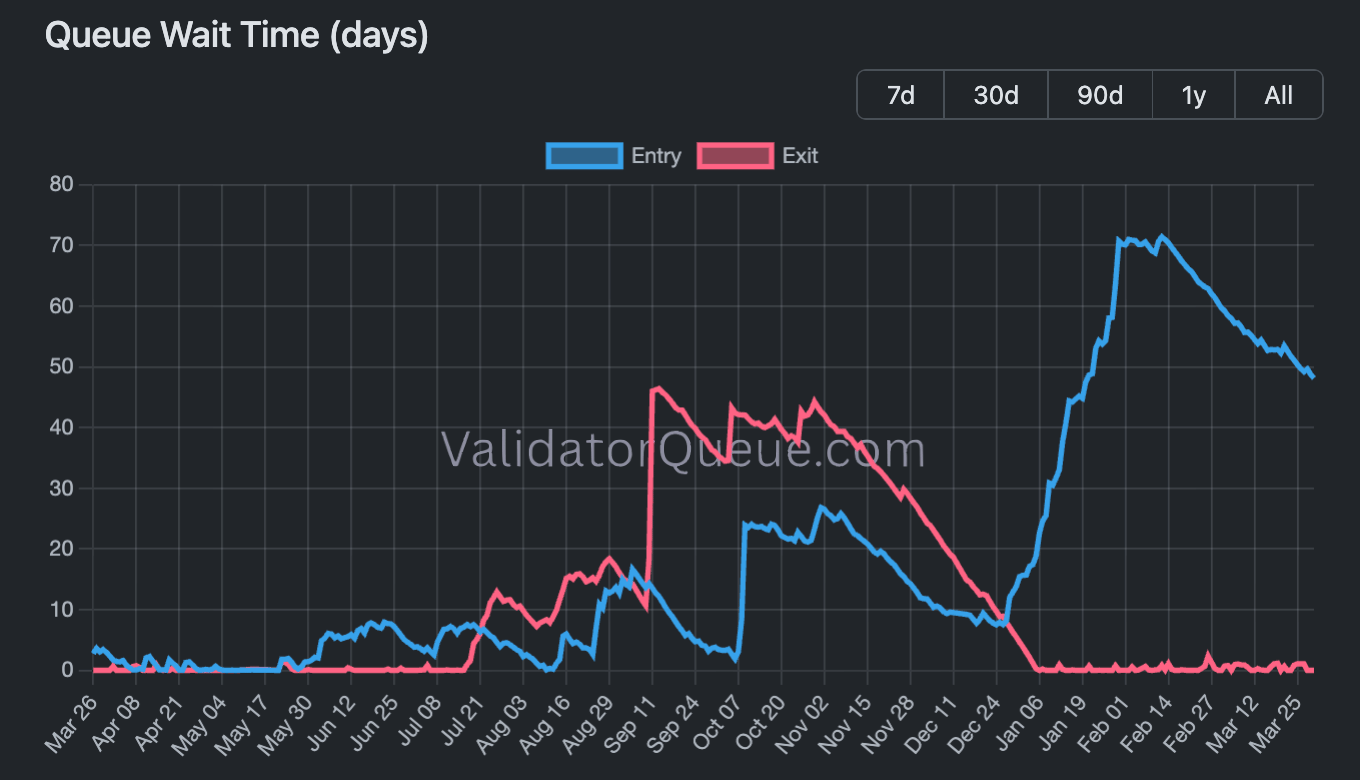
Additionally, the data show that 31.58% of the Ethereum supply is staked on-chain, which limits the downside pressure on the altcoin.
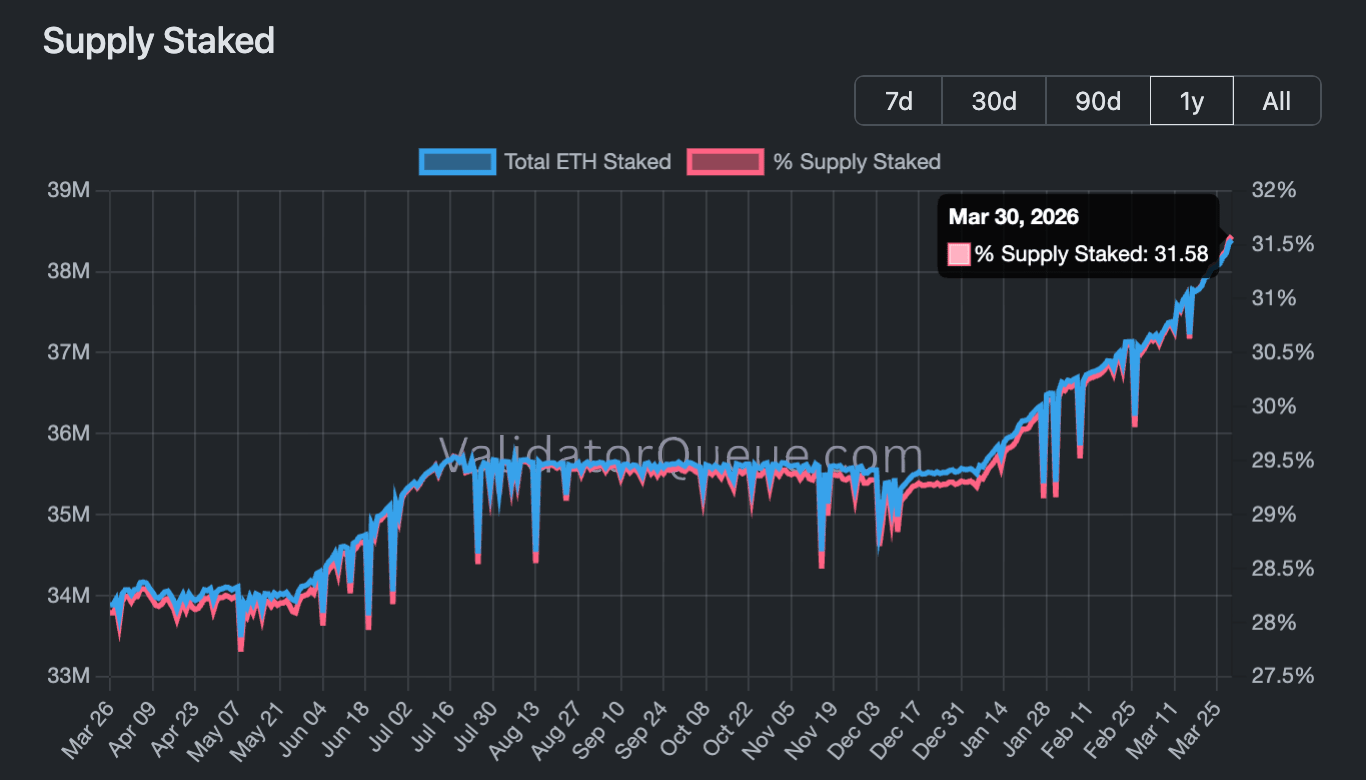
A successful rollout of the Glamsterdam and Hegotá upgrades would increase Ethereum throughput while reducing storage requirements, potentially boosting transactions for stablecoins and tokenized RWAs.
3) On-chain data signals potential upside in Ethereum
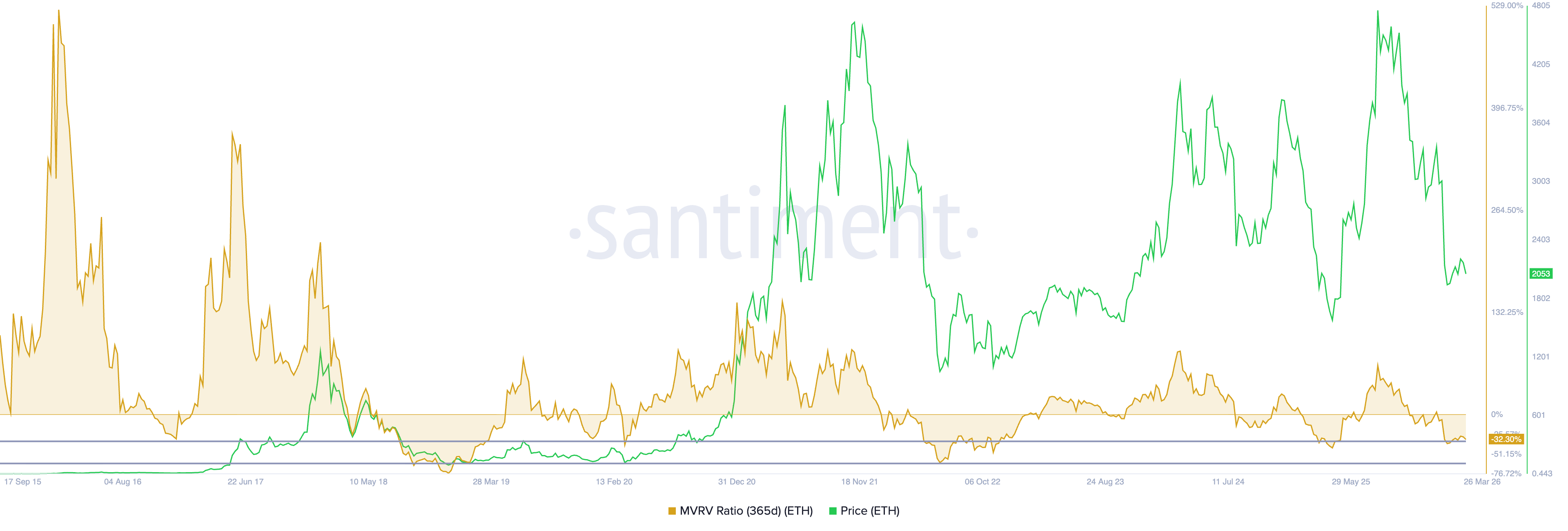
Santiment data shows that the Market Value to Realized Value (MVRV) ratio for Ethereum over the last 365 days is -32.30% as of Monday. A negative MVRV ratio indicates that investors are underwater, as the market price is below the average price of ETH based on on-chain activity over the same period.
However, an MVRV ratio below -30% led to the 40% rally in May 2025, which was followed through by a 48% increase in July. A similar trend could be observed in Ethereum with a positive reversal in Ethereum’s 365-day MVRV ratio.
Putting it all together, Ethereum shows steady development on the network side, which could help sustain its dominance in RWAs and stablecoins. Institutional support and regulatory clarity could fuel demand for ETH as a digital commodity (classified by the US SEC and CFTC).
However, the ongoing US-Iran war is a looming downside pressure on the broader cryptocurrency market, which could overshadow Ethereum’s core fundamentals.
Author

Vishal Dixit
FXStreet
Vishal Dixit holds a B.Sc. in Chemistry from Wilson College but found his true calling in the world of crypto.