Samsung partners with Solana to integrate stablecoins into US Galaxy devices
- Samsung and Solana announced a partnership on Wednesday to integrate the USDC stablecoin into 82 million US Galaxy devices.
- Samsung Wallet will support USDC payments and transfers by the end of October, offering cross-border remittances to over 60 countries.
- Solana maintains a near-term corrective tone on Thursday, holding above $100 after a 3% decline the previous day.


Samsung announced a partnership with Solana (SOL) to integrate the US Dollar stablecoin issued by Circle, USDC, into US Galaxy devices, supporting cross-border remittances. The feature will be built into the Samsung Pay and Samsung Wallet apps, sharing the same screen used for displaying credit cards and boarding passes.
The feature will allow users to transfer USDC across 60 countries by the last week of October. Solana’s network infrastructure will settle payments in the background across the initial batch of 82 million Galaxy devices in the US.
“Stablecoins have the potential to make moving money around the world faster and easier, and we want Galaxy users to be able to take advantage of that without having to navigate the complexity of traditional crypto tools. Solana helps us bring that experience to Samsung's scale,” said Woncheol Chai, EVP and Head of the Digital Wallet Team at the Mobile eXperience (MX) Business at Samsung Electronics.
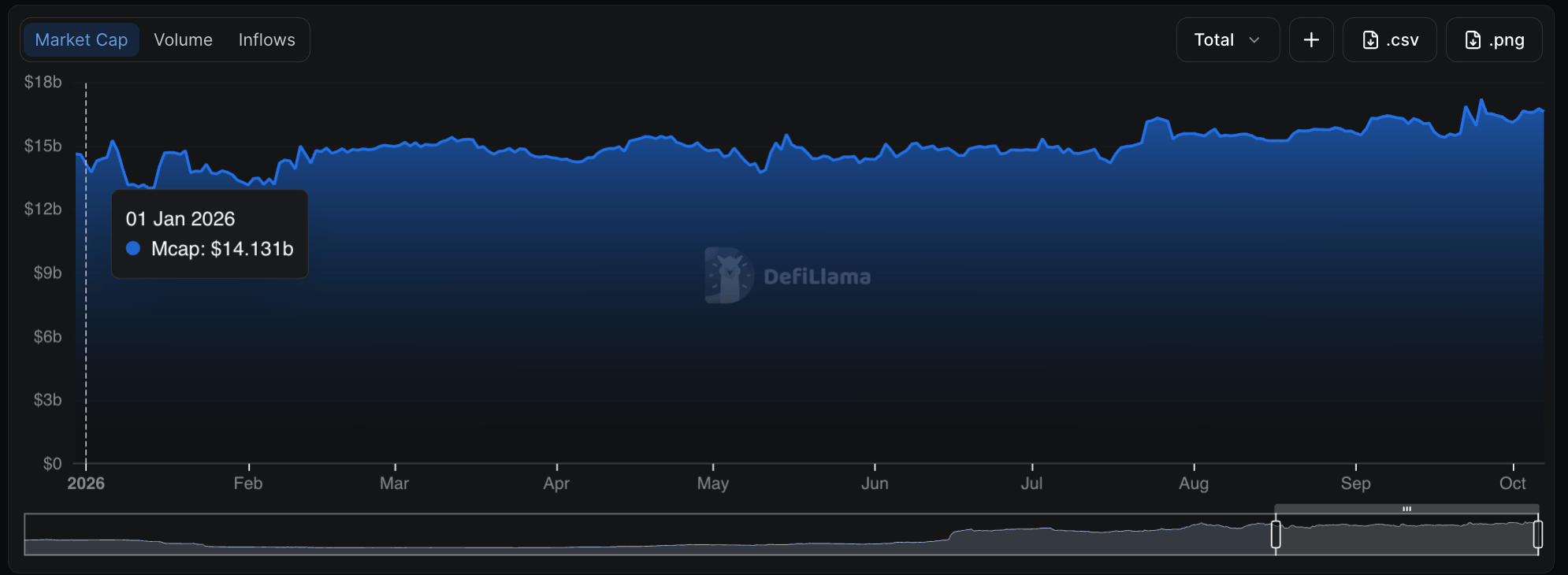
Solana has seen stablecoin activity grow sharply over the past year, with supply at $16.61 billion, up from $14.13 billion on January 1. At the same time, the network has processed more than $5.25 trillion in stablecoin volume so far this year.
Technical outlook: Solana continues to pose downside risk
Despite the major integration announcement, Solana continues to face near-term selling pressure. At the time of writing, SOL steadies around $116 on Thursday, following a 3% decline the previous day.
Still, the altcoin maintains a long-term constructive bias, with the price well above the 50-, 100-, and 200-day Exponential Moving Averages (EMAs) reinforcing a broader uptrend. The 50-day EMA at $107.47 serves as the immediate support, ahead of secondary demand around the 100-day EMA at $98.49 and the 200-day EMA at $96.78, where buyers would be expected to re-emerge should the token extend a corrective pullback.
However, the Moving Average Convergence Divergence (MACD) slips below its signal line, resulting in a negative histogram reading, hinting that upside momentum is fading. At the same time, the Relative Strength Index (RSI) dips to 54, reaffirming the loss of bullish pressure.
Looking up, the next notable resistance is the previously defined horizontal barrier at the September 25 high of $122.94, followed by the January 13 high at $148.74 as a distant cap for any extended recovery.
(The technical analysis of this story was written with the help of an AI tool. Know more.)
Author
Vishal Dixit
FXStreet
Vishal Dixit holds a B.Sc. in Chemistry from Wilson College but found his true calling in the world of crypto.