The Canadian Dollar falls to its weakest level against the US Dollar in 19 months
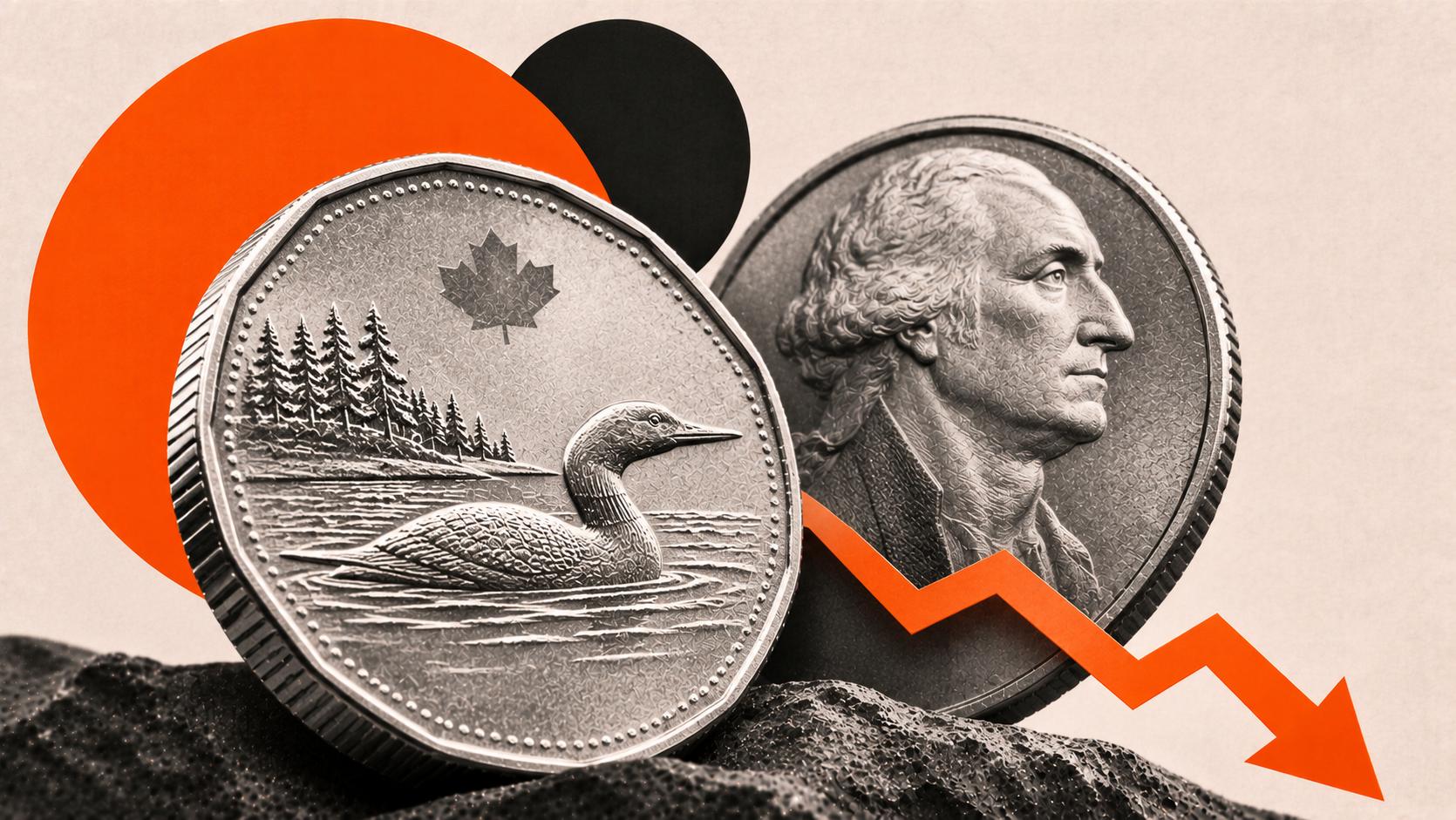

USD/CAD trades above 1.4300 on Thursday, after reaching 1.4357 earlier in the day, its highest level in 19 months. The Canadian Dollar (CAD) continues to lose ground against the US Dollar (USD), reflecting diverging monetary policy expectations, persistent trade uncertainty and the relative strength of the US economy.
The pair has climbed substantially since its early November lows, approaching the 1.4400 psychological level. This depreciation highlights the challenges facing the Canadian currency as falling Oil prices provide some headwinds to Canada's export-dependent economy.
The latest advance in USD/CAD is primarily driven by the Federal Reserve's (Fed) increasingly hawkish stance, which contrasts with more uncertain expectations surrounding the Bank of Canada (BoC).
Canadian Dollar weighed down by monetary uncertainty and lower Oil prices
The Canadian Dollar faces pressure from uncertainty surrounding the Bank of Canada's next monetary policy decision. Canadian inflation figures released earlier this week came in below expectations, temporarily reducing the probability of another interest rate increase in December. Although the BoC has recently resumed monetary tightening, investors remain uncertain about the pace of future increases, particularly given the challenges facing Canada's economy.
The country's exposure to US trade policy represents another source of vulnerability. Persistent uncertainty surrounding bilateral trade relations continues to cloud the outlook for Canadian businesses and investment.
Meanwhile, Oil prices remain an important factor for the Canadian Dollar, given Canada's position as a major energy exporter. Brent Oil declined by more than 20% in recent weeks, although signs of stabilisation are emerging.
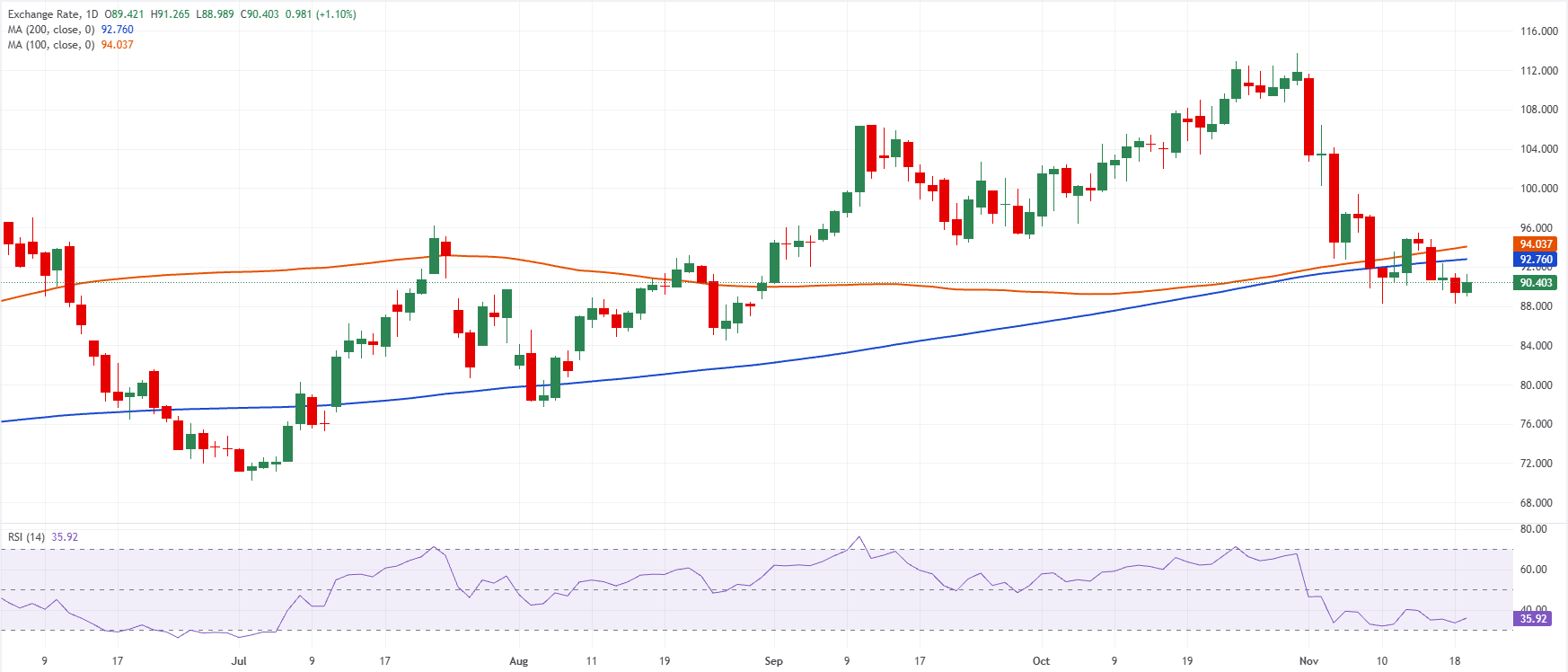
Supply disruptions are contributing to a slight recovery as Reuters reported that Ukrainian drone strikes have reduced Russian refineries' combined Crude processing volumes by 45% since late October. Meanwhile, incidents involving Oil tankers near the Strait of Hormuz have heightened concerns about potential disruptions to global energy supplies.
However, the recovery faces obstacles. The US Energy Information Administration (EIA) reported a 3.4 million-barrel increase in Crude inventories last week, significantly exceeding market expectations.
Consequently, higher Oil prices could limit further Canadian Dollar depreciation, although they have so far failed to reverse the currency's broader weakness.
Why is the US Dollar outperforming the Canadian Dollar?
The US Dollar benefits from renewed expectations of monetary tightening in the United States (US), following the release of the Federal Open Market Committee (FOMC) Minutes on Wednesday. The Minutes of the October meeting revealed broad support among policymakers for additional interest rate increases, suggesting that the decision to leave borrowing costs unchanged represented a temporary pause rather than the end of the tightening cycle.
According to Brown Brothers Harriman (BBH), the Minutes “confirmed broad support for further rate hikes, with the debate moving to how much and how fast to tighten.” The financial services firm also highlights that “a couple of participants” considered that “an increase of more than 25 basis points could warrant consideration at the next meeting if incoming inflation data were unfavorable.”
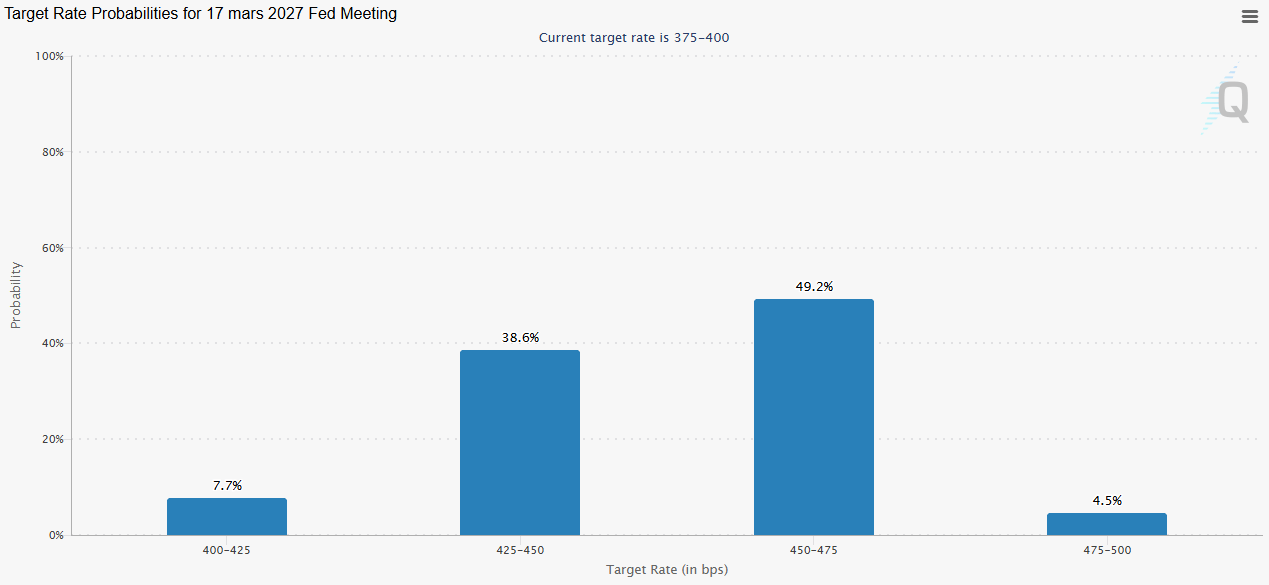
These signals have reinforced expectations of further tightening. According to the CME FedWatch Tool, investors are pricing in a certain interest rate hike in December, with additional increases anticipated in January and March.
Higher US interest rates tend to strengthen the Greenback by increasing the attractiveness of USD-denominated assets. The US Dollar Index (DXY), which measures the Greenback against six major currencies, reached a 19-month high of 103.97 on Thursday before retreating slightly.
Can the USD/CAD rally extend towards 1.4400?
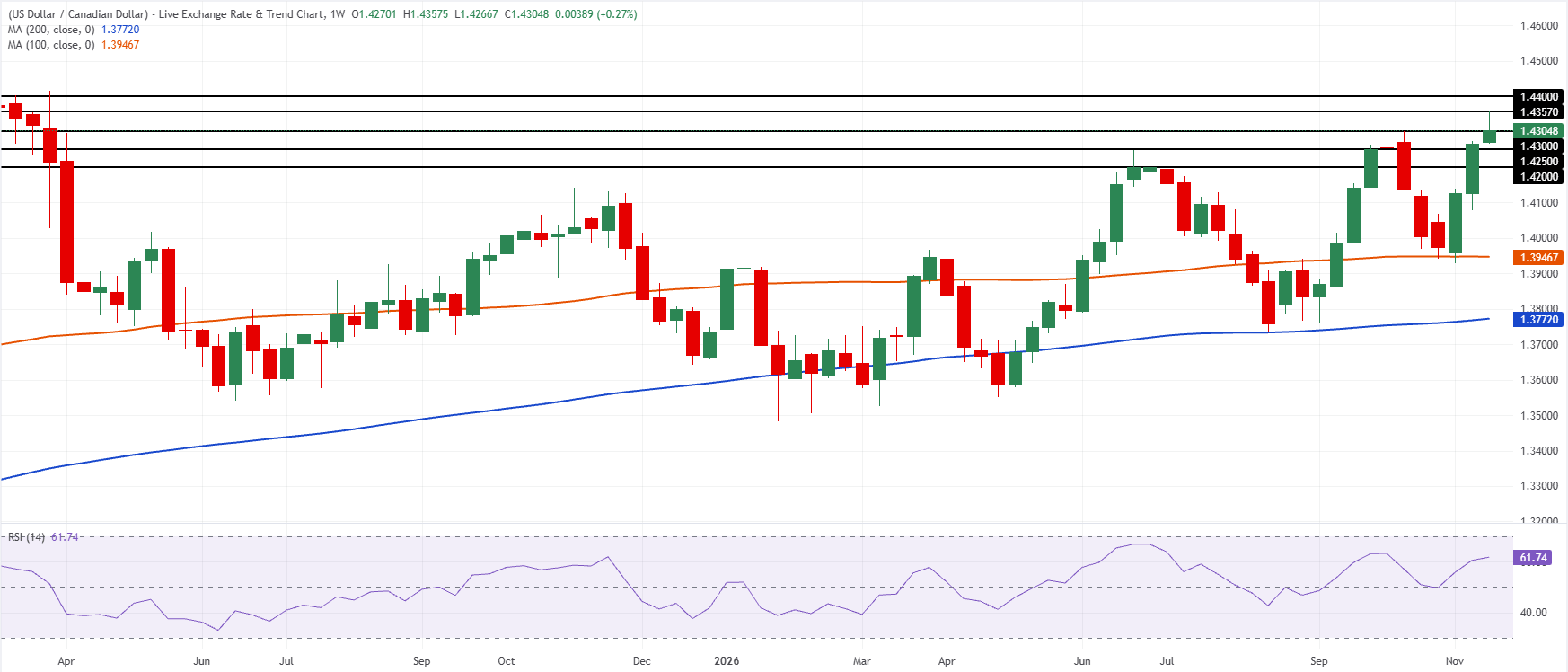
The weekly chart shows that USD/CAD remains firmly bullish, trading above 1.4300 after reaching a 19-month high at 1.4357. The pair is trading comfortably above its 100-week Simple Moving Average (SMA) at 1.3947 and its 200-week SMA at 1.3772, reinforcing the positive medium-term outlook. The Relative Strength Index (RSI) stands around 61, indicating bullish momentum without entering overbought territory.
Immediate resistance stands at 1.4357, followed by the important 1.4400 round level. A sustained break above this area could encourage a further extension of the bullish trend. Conversely, a rejection from current levels could trigger a correction toward 1.4300, followed by the support zone between 1.4250 and 1.4200.
A deeper decline would bring the 100-week SMA near 1.3947 back into focus. However, as long as USD/CAD remains above this moving average, the broader bullish structure remains intact.
Author
Ghiles Guezout
FXStreet
Ghiles Guezout is a Market Analyst with a strong background in stock market investments, trading, and cryptocurrencies. He combines fundamental and technical analysis skills to identify market opportunities.