The Australian Dollar is at make-or-break near 0.6900

AUD/USD retreats on Tuesday after Monday's sharp rebound from multi-month lows near 0.6855. The Australian Dollar (AUD) is struggling to build on its recovery against the US Dollar (USD), as investors weigh improving global risk sentiment against increasingly hawkish expectations for the Federal Reserve (Fed).
The pair remains at a critical juncture near 0.6900, with the recent stronger-than-expected US inflation report potentially determining whether the Aussie can hold its support area or decline toward the March low.
US-Iran peace hopes offer temporary relief to the Aussie
The Australian Dollar benefited from a recovery in risk appetite on Monday, as speculation about a possible diplomatic breakthrough between the United States (US) and Iran helped ease geopolitical tensions. US President Donald Trump suggested that further military strikes against Iran were “highly unlikely,” fueling hopes that the conflict could be approaching a resolution.
Reports of renewed diplomatic discussions between Washington and Tehran also contributed to a sharp decline in Oil prices, with West Texas Intermediate (WTI) falling nearly 4.5% on Monday. Lower energy prices could help alleviate global inflationary pressures and reduce the need for additional monetary tightening, providing some support to risk-sensitive currencies such as the Australian Dollar.
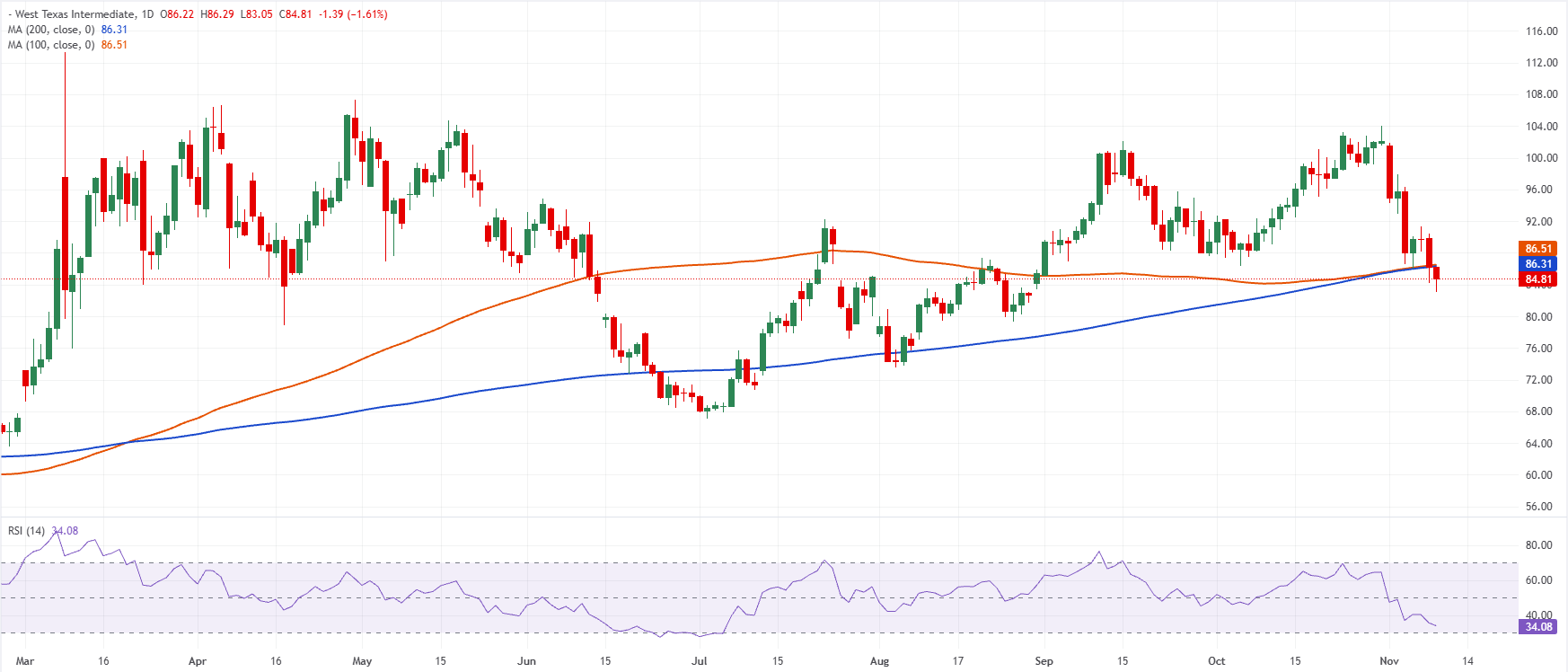
However, the sustainability of the recovery remains uncertain. Any deterioration in diplomatic negotiations or renewed selling pressure across global equity markets could quickly undermine the Aussie's rebound.
Fed's hawkish stance threatens the recovery
Despite improving risk sentiment, expectations of further interest rate hikes by the Fed continue to support the US Dollar. Last week's stronger-than-expected US employment report reinforced the view that the American economy remains resilient, allowing policymakers to maintain their focus on persistent inflation. Fed Governor Christopher Waller adopted a particularly hawkish tone on Tuesday, arguing that monetary policy remains insufficiently restrictive. “We need to raise rates to put downward pressure on inflation. Policy has been not nearly as restrictive as I thought.” Waller said, according to Reuters.
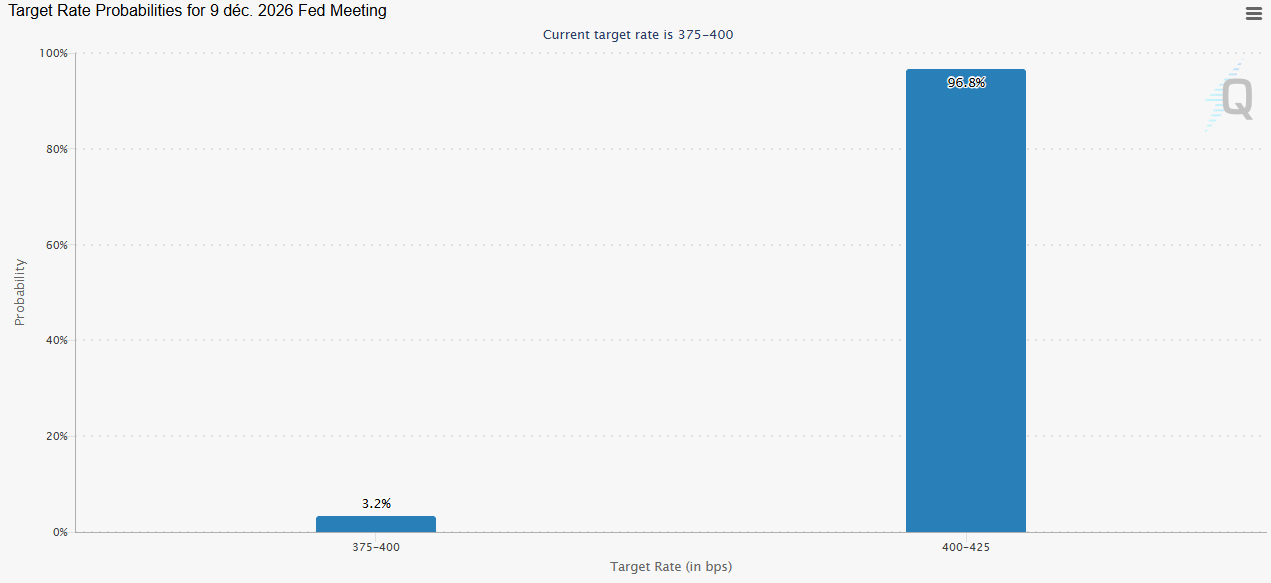
According to the CME FedWatch tool, markets now assign approximately a 97% chance of a 25-basis-point interest rate hike at the December meeting, compared with 84% a day earlier.
The US Consumer Price Index (CPI), published by the Bureau of Labor Statistics (BLS) on Tuesday, rose 0.4% MoM in October, exceeding market expectations of 0.3%, although slowing from September's 0.6% increase. Meanwhile, the Core CPI, which excludes volatile food and energy prices, increased 0.3%, above forecasts of 0.2% and matching the previous month's reading. The stronger-than-expected inflation figures reinforce the US Dollar and add to the downside pressure on AUD/USD.
China's narrowing trade surplus adds uncertainty
Meanwhile, the latest Chinese trade figures provide another reason for caution regarding the Australian Dollar. China, Australia's largest trading partner, reported a trade surplus of $105.28 billion in October, down from $133.53 billion in September and below market expectations of $125.8 billion.
Although exports and imports continued to expand on an annual basis, the narrowing surplus highlights uncertainties surrounding the Chinese economy. The latest figures follow mixed economic signals from China, where consumer inflation slowed to 0.7% YoY in October, while manufacturing activity continues to face challenges. For Australia, weaker Chinese economic momentum could translate into softer demand for commodities and reduced support for its export-oriented economy.
At the same time, the Reserve Bank of Australia (RBA) maintains a cautious monetary policy stance following last week's 25-basis-point interest rate increase to 4.85%. Persistent domestic inflation could keep further tightening on the table, but uncertainty surrounding the RBA's next move prevents the Australian Dollar from drawing stronger support from interest rate expectations.
AUD/USD faces a decisive test near 0.6900
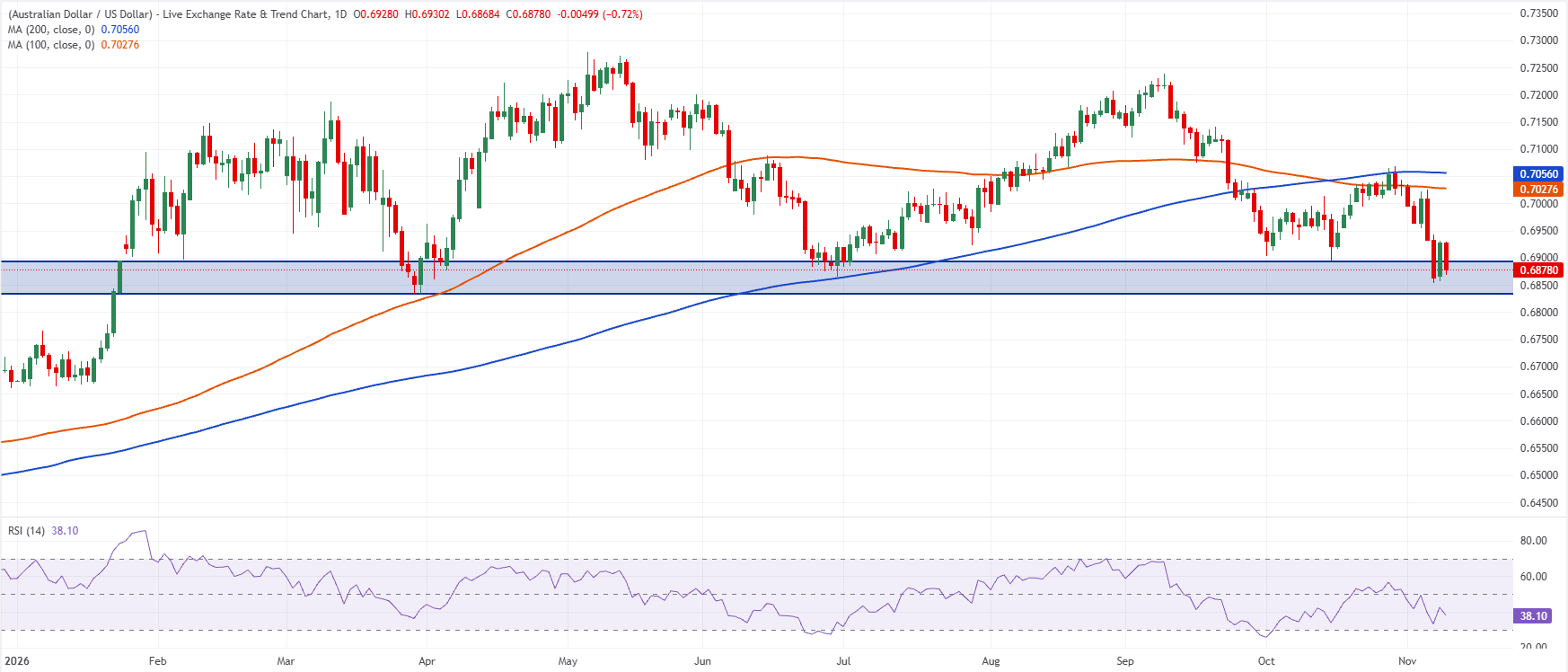
AUD/USD remains under bearish pressure on the daily chart, despite Monday's rebound from the 0.6855 area, which lies just above the March low at 0.6834. The pair is currently attempting to stabilize around 0.6900, with the former support level at 0.6894 acting as an important short-term pivot.
A sustained recovery above this area could encourage further buying interest, potentially opening the door toward the psychological 0.7000 level. Beyond that, the 100-day and 200-day Simple Moving Averages (SMAs), currently located around 0.7028 and 0.7056, respectively, represent significant resistance barriers. A decisive break above these moving averages would be needed to improve the broader technical outlook.
However, the Relative Strength Index (RSI) remains below the neutral 50 level, currently around 38, suggesting that bearish momentum has not completely faded.
On the downside, failure to maintain a foothold above 0.6894 could revive selling pressure, exposing the recent low around 0.6855. A break below this level would bring the March low at 0.6834 back into focus. A decisive move beneath this support could confirm a deeper bearish extension.
For now, AUD/USD remains at a critical crossroads, with the 0.6900 area likely to determine the next directional move as investors await fresh signals from US inflation data.
Author

Ghiles Guezout
FXStreet
Ghiles Guezout is a Market Analyst with a strong background in stock market investments, trading, and cryptocurrencies. He combines fundamental and technical analysis skills to identify market opportunities.