The Australian Dollar has gone from above 0.70 to a 2026 low this month
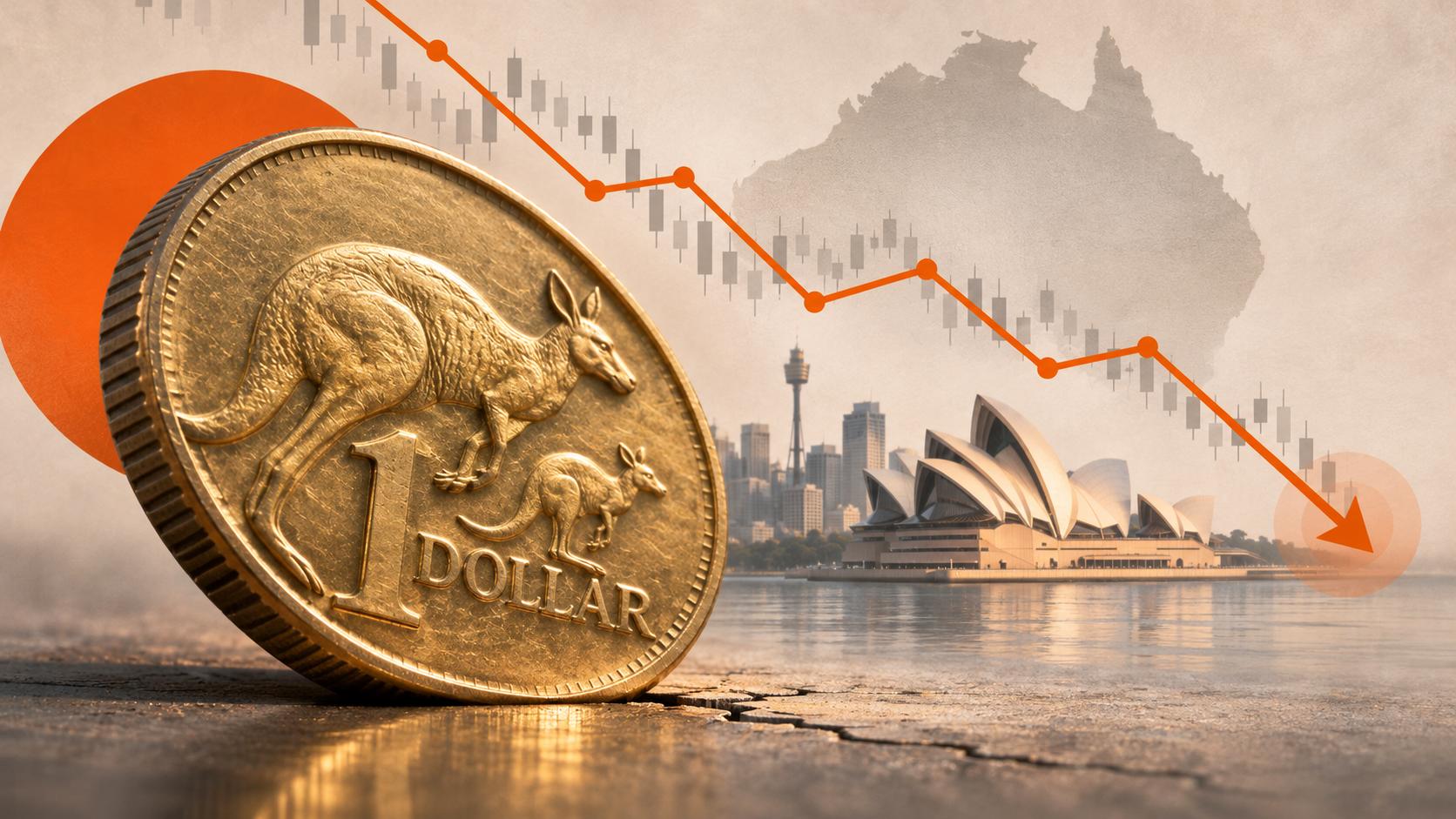

AUD/USD extends its decline on Thursday, falling to a fresh 2026 low of 0.6662 earlier in the day. The Australian Dollar (AUD) remains under significant pressure against the US Dollar (USD), as disappointing Australian employment figures reinforce expectations that the Reserve Bank of Australia (RBA) has reached the end of its monetary tightening cycle.
The Australian currency has lost approximately 4.5% against the Greenback since the beginning of November, making it one of the worst-performing currencies among the Group of Ten (G10). The decline reflects a combination of deteriorating domestic economic conditions, falling commodity prices and renewed strength in the US Dollar.
Australia's labor market deterioration changes the outlook for the RBA
The latest employment report from the Australian Bureau of Statistics (ABS) delivered a significant negative surprise. Australia's Unemployment Rate rose to 4.9% in October, its highest level since June 2021, up from 4.7% in September and above expectations of an unchanged reading. Employment Change fell by 43.5K jobs, sharply contrasting with forecasts of 25K new positions. This follows a revised decline of 36.4K jobs in September, suggesting that the deterioration extends beyond a single disappointing month.
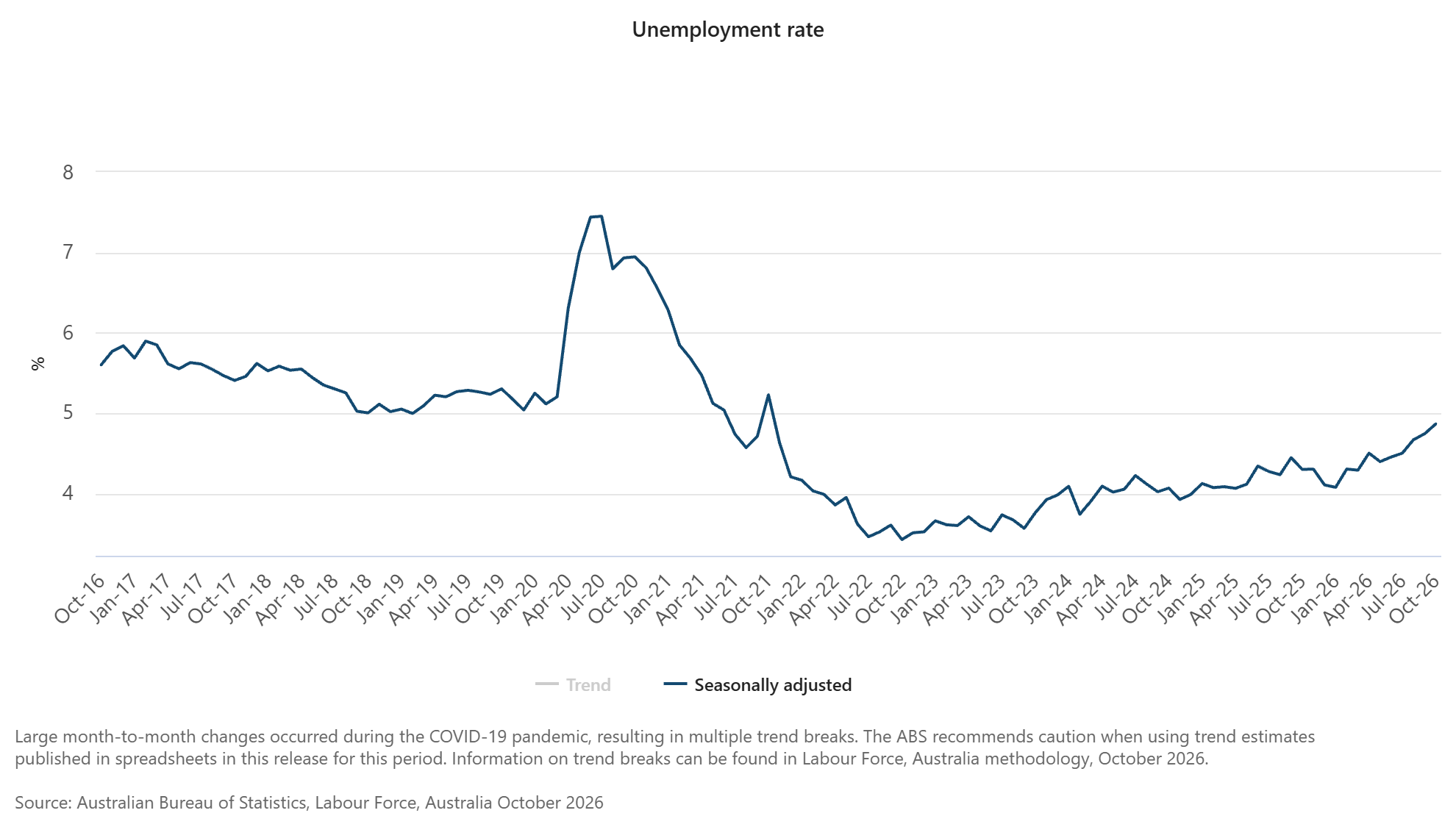
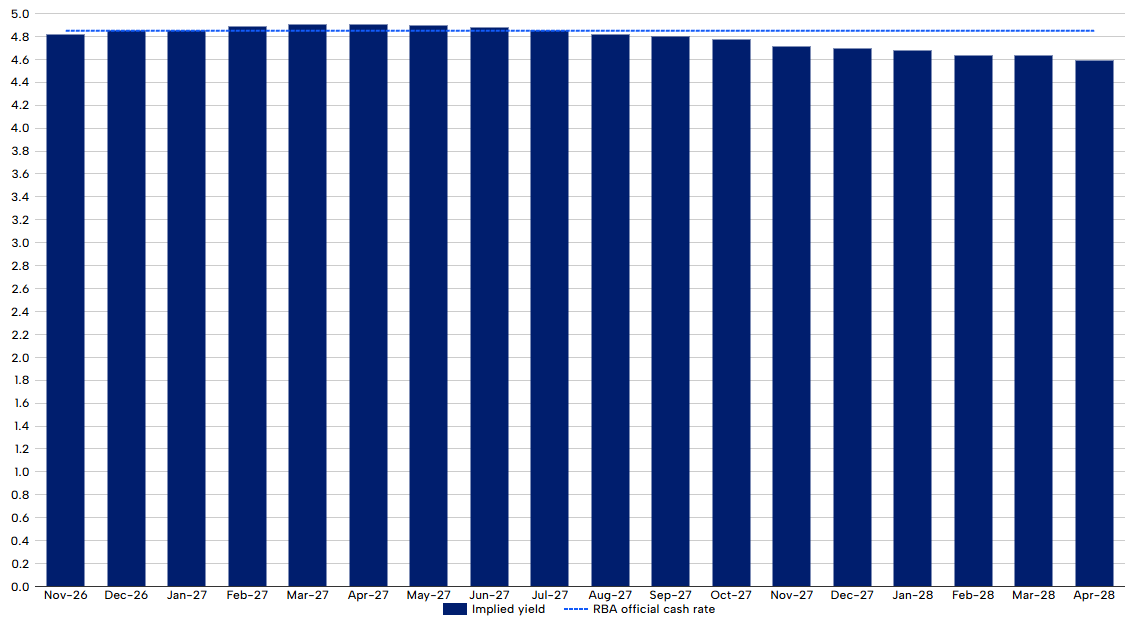
These figures represent a major challenge for the RBA, which has raised interest rates by a cumulative 125 basis points this year to contain inflation. The central bank's policy rate currently stands at 4.85%, its highest level since the global financial crisis of 2008. However, mounting evidence of economic weakness is undermining the case for additional tightening.
Societe Generale emphasizes the significance of the latest employment figures: "The shock decline in Aussie employment in October (-43.5k vs consensus +25k) and a jump in the unemployment rate to 4.9%, a level that the RBA itself had not projected until late 2027, has effectively extinguished the case for further tightening," noted the bank.
Has the RBA reached the end of its tightening cycle?
The deterioration in employment reinforces concerns already evident in the Minutes of the RBA's latest monetary policy meeting. Three policymakers opposed the most recent interest rate increase, warning that restrictive monetary conditions could push the Australian economy toward a sharper slowdown.
Commerzbank highlighted the central bank's increasingly cautious position: "In our view, this suggests that the RBA is likely to be cautious about further rate hikes for now."
Nevertheless, the inflation outlook prevents policymakers from declaring victory over price pressures. Australia's Wage Price Index rose 1.1% QoQ in the third quarter, exceeding expectations of 1%, while annual wage growth accelerated to 3.5% from 3.2%. The central bank therefore faces an increasingly difficult balancing act between persistent inflation and a weakening labor market.
Financial markets now fully price in an initial RBA interest rate cut by August 2027, marking a substantial shift from previous expectations of further tightening.
A hawkish Federal Reserve adds to the Australian Dollar's troubles
The Australian Dollar also suffers from a widening divergence between Australian and US monetary policy expectations. While markets increasingly anticipate an eventual RBA rate cut, the Federal Reserve (Fed) maintains a restrictive stance amid persistent inflationary pressures.
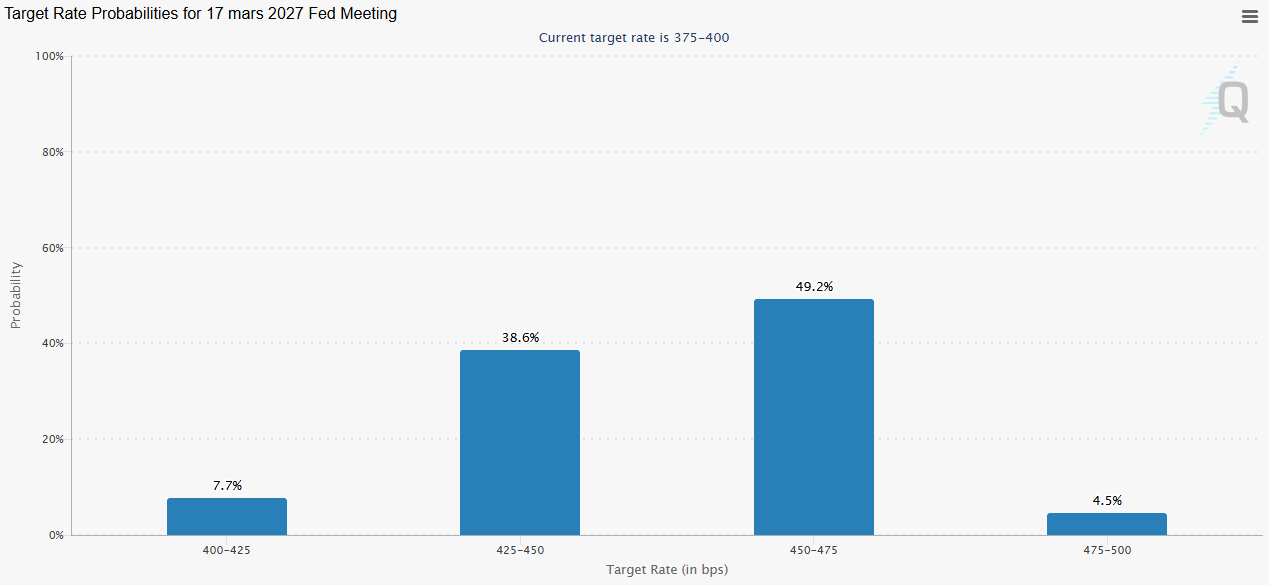
Minutes from the Fed's October meeting revealed that policymakers consider additional interest rate increases potentially necessary to restore price stability, although officials decided to await further economic evidence before acting. Fed Governor Christopher Waller reinforced this hawkish message by suggesting that a 50-basis-point rate increase could be appropriate in December.
According to the CME FedWatch tool, markets are fully pricing in a 25-basis-point interest rate hike in December, while assigning a roughly 75% chance to another increase in January and a 55% chance of a third hike in March.
The prospect of higher US interest rates supports the Greenback by improving the relative attractiveness of USD-denominated assets. At the same time, declining commodity prices, particularly Iron Ore, weigh on the Australian Dollar because of Australia's dependence on raw material exports. Growing concerns surrounding technology stocks and global risk appetite further amplify selling pressure on the risk-sensitive Aussie.
Can the Australian Dollar recover from its 2026 low?
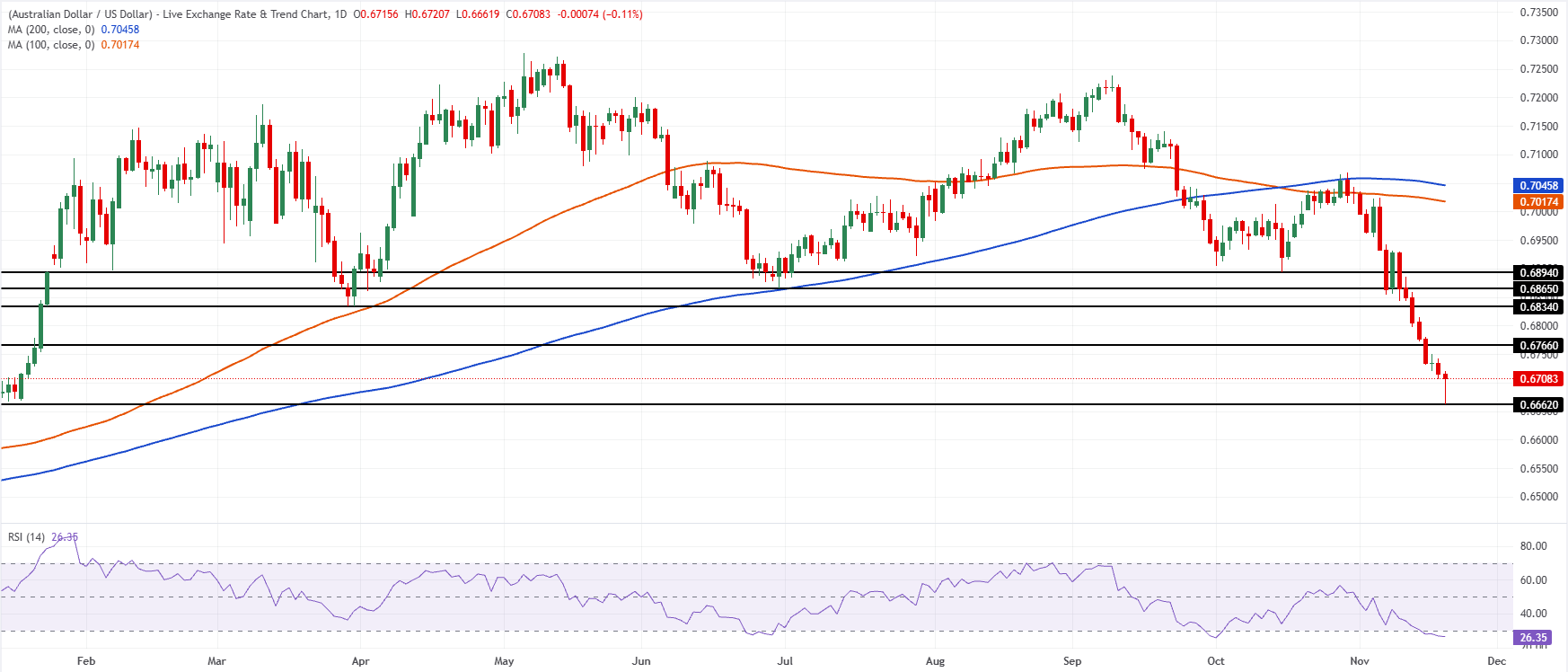
AUD/USD remains firmly bearish on the daily chart, having accelerated its decline below several important support levels. The pair has broken through the 0.6894-0.6834 support zone and subsequently fallen below 0.6766, confirming the strength of the downward momentum.
The pair trades well below its 100-day Simple Moving Average (SMA) at 0.7018 and its 200-day SMA at 0.7046, reinforcing the negative medium-term outlook. The Relative Strength Index (RSI) stands near 26, indicating oversold conditions. Although this could encourage a temporary technical rebound, it does not necessarily signal the end of the bearish trend.
Immediate support is located around 0.6662, corresponding to the fresh yearly low set earlier in the day. A sustained break below this level could expose the psychological 0.6600 level. On the upside, initial resistance emerges at 0.6766, followed by 0.6834 and 0.6865. A recovery above these levels would be necessary to ease the prevailing selling pressure.
For now, the combination of deteriorating Australian economic fundamentals and a hawkish Federal Reserve continues to favor AUD/USD sellers, despite increasingly oversold technical conditions.
Author
Ghiles Guezout
FXStreet
Ghiles Guezout is a Market Analyst with a strong background in stock market investments, trading, and cryptocurrencies. He combines fundamental and technical analysis skills to identify market opportunities.