Survey: Central Bankers plan to keep stacking Gold

Central bank gold reserves have increased by an average of 1,000 tonnes per year over the last four years. That’s double the 500-tonne average during the previous decade, and the trend doesn’t appear to be slowing down.
According to the World Gold Council’s 2026 Central Bank Gold Reserves Survey, a record 45 percent of the 76 respondents indicated they expected their gold holdings to increase over the next year. Only 1 percent of the central bankers surveyed anticipate a decline in gold reserves over the next year.
Last year, 43 percent of the respondents expected to expand their gold holdings.
The World Gold Council called gold sentiment within the central bank community “upbeat.”
“Expectations point to continued gold buying over the next 12 months, reflecting sustained confidence in gold’s strategic role amid evolving geopolitical and macroeconomic dynamics.”
The survey also reflects ongoing de-dollarization, with 74 percent forecasting a “moderate” or “significant” drop in dollar holdings.
When asked how they would pay for this gold-buying spree, half the respondents said they plan to increase gold reserves through domestic gold-purchasing programs in local currency. 38 percent said they would fund gold purchases by selling other existing reserve assets.
African countries have been particularly aggressive in establishing domestic gold-buying programs. For instance, earlier this year, the Ghanaian government announced a scheme to buy 127 tonnes of gold from “artisanal” and small-scale mining (ASM) operations to boost reserves and stem smuggling.
Fifty-three percent of the emerging market central banks included in the survey said that they had domestic gold-buying programs in place, and another 12 percent said they plan to establish such a program.
Central bankers generally agree that global gold reserves will continue to increase, with 84 percent saying they think gold will make up a higher share of reserves five years from now. That was up from 76 percent in last year’s survey.
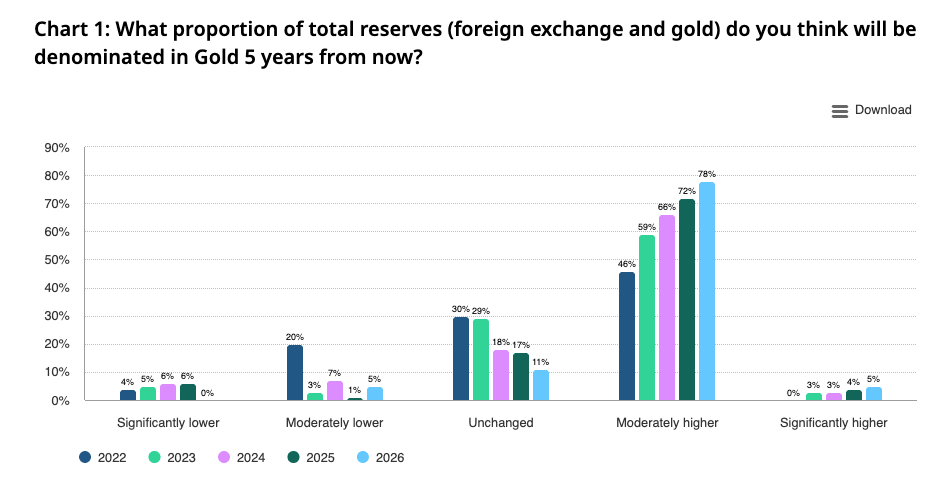
Meanwhile, 74 percent expect the share of dollar reserves to be lower in five years.
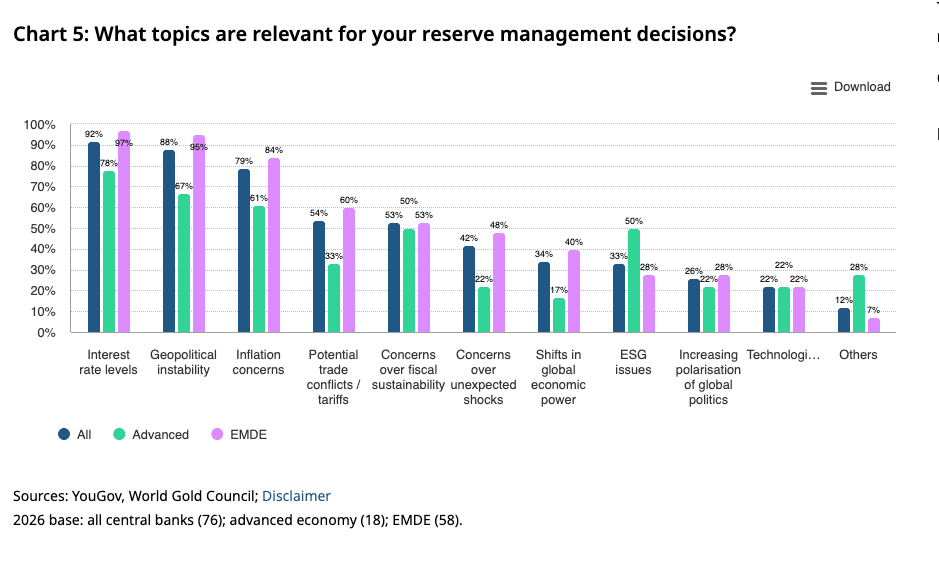
Central bankers responding to the survey ranked interest rate levels and geopolitical instability as key factors driving their reserve management decisions.
90 percent of the survey respondents said gold’s performance during a crisis was a highly relevant factor in their reserve management decisions. 84 percent listed gold’s role as a store of value, and 83 percent mentioned it as a portfolio diversifier.
This was the ninth annual central bank survey. The World Gold Council said positive sentiment toward gold has increased “notably” in that time.
“Optimism about gold’s future role as a reserve asset has grown alongside a desire by respondents to add more gold to their reserves. Central banks increasingly view gold as an active and important strategic asset within their reserve portfolios. Ongoing economic and geopolitical uncertainty continues to weigh on reserve managers, as this year’s findings highlight. Concerns over interest rates, the inflation outlook, and geopolitical uncertainty show that diversification and risk mitigation continue to be key drivers of strategic reserve management decisions.”
To receive free commentary and analysis on the gold and silver markets, click here to be added to the Money Metals news service.
Author

Mike Maharrey
Money Metals Exchange
Mike Maharrey is a journalist and market analyst for MoneyMetals.com with over a decade of experience in precious metals. He holds a BS in accounting from the University of Kentucky and a BA in journalism from the University of South Florida.