 Diana Hill
Online Trading Academy
When I teach, I often jokingly say that we should use our adult children to start our real estate investing career. It’s funny because I got this question last week, so it is perfect timing to answer it for this Lesson’s from the Pros.
Question: “I’m working with my son on buying a condo. He makes a good living and has a down payment but has some issues with his credit. I was told that the property should be in my name only, but my son will live there, pay the mortgage, taxes, insurance and all maintenance. Can he deduct the mortgage and interest if the property is in my name?“
Answer: First, you need to contact your tax professional. With that being said, there is a qualified yes. There are certain rules that, if followed, your son will be in a position to prove that he is eligible to take the deduction.
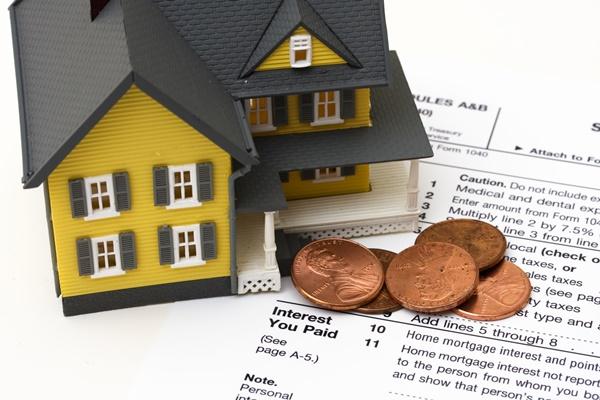
Here is the IRS regulation 1.163:
Interest paid by the taxpayer on a mortgage upon real estate of which he/she is the legal or equitable owner, even though the taxpayers is not directly liable upon the bond or note secured by such mortgage, may be deducted as interest on his indebtedness.
The above regulation along with this ruling back in 2003 (Montoya v IRS decided August 5, 2003) that stated, “…directly liable on the note securing the mortgage on his mother’s house, nor (was) he a legal or equitable owner of the property,” made many feel there was no way to deduct interest unless you were an “equitable owner”. So, what is an “equitable owner”? It is defined as, “ownership by one who does not have legal title.”
In 2015 Tax Court in the case Phan vs. IRS, the court was impressed with the fact that a son’s family had granted him an interest in the property and would allow him to add his name to the title if he paid the property expenses.
So how can you meet the burden of proof of being an “equitable owner”? Here are a few suggestions:
The equitable owner must continuously live in the property. These documents can be used as proof of living in the property: drivers’ license, voter registration, utility bills or anything that has your name and address on it.
The equitable owner and indebted owner should enter into a written agreement. The agreement should spell out that he is fully obligated to make the mortgage payment on a timely basis and that the indebted owner reserves the right to evict the equitable owner should he go into default. The agreement should specifically state that the indebted owner recognized that the equitable owner has interest in the property.
The equitable owner must be responsible for all maintenance and upkeep of the property.
It would be a good idea to be prepared to sign a Quit Claim Deed. This may not need to be recorded.
Hope this answers your question. There are no guarantees, but if you follow these guideline you are more likely to prevail if there becomes an issue with the IRS.
This content is intended to provide educational information only. This information should not be construed as individual or customized legal, tax, financial or investment services. As each individual's situation is unique, a qualified professional should be consulted before making legal, tax, financial and investment decisions. The educational information provided in this article does not comprise any course or a part of any course that may be used as an educational credit for any certification purpose and will not prepare any User to be accredited for any licenses in any industry and will not prepare any User to get a job. Reproduced by permission from OTAcademy.com click here for Terms of Use: https://www.otacademy.com/about/terms
Editors’ Picks

EUR/USD hovers around nine-day EMA above 1.1800
EUR/USD gains ground for the second successive session, trading around 1.1820 during the Asian hours on Monday. The 14-day Relative Strength Index momentum indicator stands at 51 (neutral) after recovering above the midline, indicating stabilizing momentum.

GBP/USD gathers strength above 1.3500 amid tariff confusion
The GBP/USD pair gains traction to around 1.3520 during the early Asian session on Monday. The US Dollar faces some selling pressure against the Cable as tariff uncertainty lingers. Traders will take more cues from the US Producer Price Index report for January, which will be published later on Friday.

USD/JPY: Japanese Yen rises as tariff woes rattle markets
USD/JPY slides to test 154.00 in the Asian trading hours on Monday. The Japanese Yen attracts haven demand amid tariff uncertainty, which weighs negatively on market sentiment and the US Dollar.
Editors’ Picks
EUR/USD hovers around nine-day EMA above 1.1800
EUR/USD gains ground for the second successive session, trading around 1.1820 during the Asian hours on Monday. The 14-day Relative Strength Index momentum indicator stands at 51 (neutral) after recovering above the midline, indicating stabilizing momentum.

Gold climbs to fresh monthly high on trade war fears, geopolitical risks, weaker USD
Gold registered its highest-ever weekly close, above the $5,100 mark on Friday, and gains strong follow-through traction at the start of a new week. This also marks the fourth straight day of a positive move and lifts the commodity beyond the $5,150 level, or a fresh monthly peak, during the Asian session.
GBP/USD gathers strength above 1.3500 amid tariff confusion
The GBP/USD pair gains traction to around 1.3520 during the early Asian session on Monday. The US Dollar faces some selling pressure against the Cable as tariff uncertainty lingers. Traders will take more cues from the US Producer Price Index report for January, which will be published later on Friday.

Cardano braces for impact as US tariff storm brews
Cardano is down 4% at press time on Monday, entering its third consecutive day of decline. Bearish bias in Cardano’s derivatives market positional buildup aligns with rising pressure on the broader cryptocurrencymarket amid US President Donald Trump's reassessment of global tariffs and domestic conflict with the US Supreme Court.

Liberation day take two, the tariff machine just changed gears
Let me caveat this from the outset. What we are watching is first-order mechanics, not the grand macro endgame. This is the market’s immediate reflex to a 15% Trump tariff levy dressed up as judicial drama. The Supreme Court blocked Trump tarrif hammer. The White House came back with a scalpel.
RECOMMENDED LESSONS
Making money in forex is easy if you know how the bankers trade!

I’m often mystified in my educational forex articles why so many traders struggle to make consistent money out of forex trading. The answer has more to do with what they don’t know than what they do know. After working in investment banks for 20 years many of which were as a Chief trader its second knowledge how to extract cash out of the market.
5 Forex News Events You Need To Know

In the fast moving world of currency markets where huge moves can seemingly come from nowhere, it is extremely important for new traders to learn about the various economic indicators and forex news events and releases that shape the markets. Indeed, quickly getting a handle on which data to look out for, what it means, and how to trade it can see new traders quickly become far more profitable and sets up the road to long term success.
Top 10 Chart Patterns Every Trader Should Know

Chart patterns are one of the most effective trading tools for a trader. They are pure price-action, and form on the basis of underlying buying and selling pressure. Chart patterns have a proven track-record, and traders use them to identify continuation or reversal signals, to open positions and identify price targets.
7 Ways to Avoid Forex Scams

The forex industry is recently seeing more and more scams. Here are 7 ways to avoid losing your money in such scams: Forex scams are becoming frequent. Michael Greenberg reports on luxurious expenses, including a submarine bought from the money taken from forex traders. Here’s another report of a forex fraud. So, how can we avoid falling in such forex scams?
What Are the 10 Fatal Mistakes Traders Make
Trading is exciting. Trading is hard. Trading is extremely hard. Some say that it takes more than 10,000 hours to master. Others believe that trading is the way to quick riches. They might be both wrong. What is important to know that no matter how experienced you are, mistakes will be part of the trading process.
The challenge: Timing the market and trader psychology

Successful trading often comes down to timing – entering and exiting trades at the right moments. Yet timing the market is notoriously difficult, largely because human psychology can derail even the best plans. Two powerful emotions in particular – fear and greed – tend to drive trading decisions off course.