RBNZ back at the party table, about to top up the punch bowl?
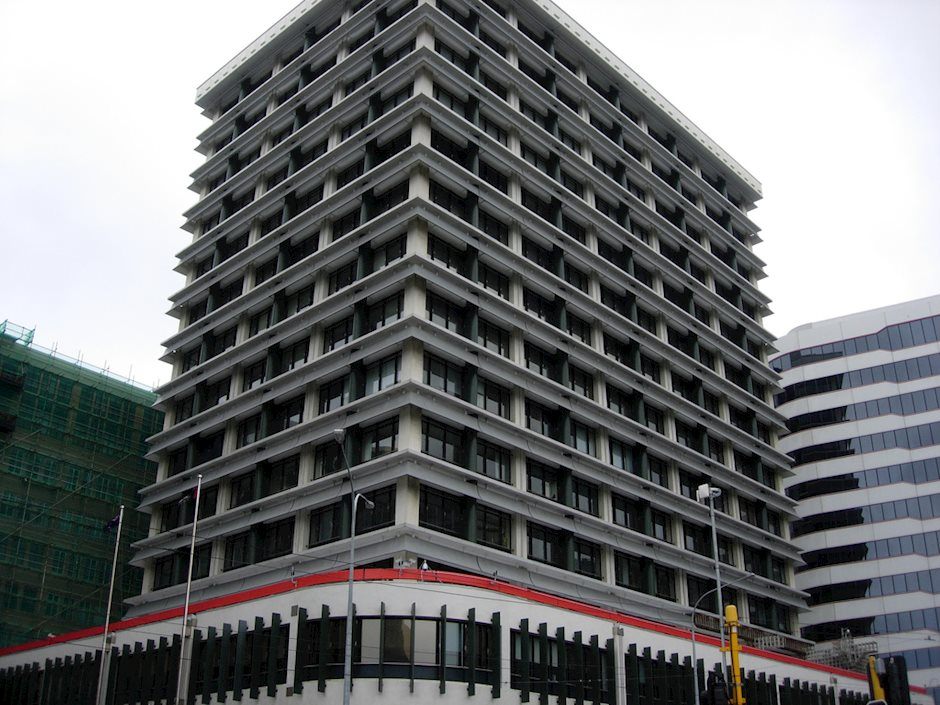

Coming up today, we have the RBNZ meeting.

Source: iStock
While the markets anticipate a rate cut of 25bps, this meeting could see theRBNZ surprise markets, slightly, with a move from the RBNZ of 50bps to the OCR along with a statement that points to further easing to follow making for a potent bowl of punch.
However, what strikes me most at the moment is there seems no end to such policy. Its indeed a worrying situation. With a little analysis done last week, after the BoE surprised markets with more QE than what we had been anticipating, and after the RBA cut interest rates, unnecessarily so in my opinion, I found that Central Banks are going at a pace of purchases higher than ever.
Central Banks spending the most ever on QE

Source: iStock
Even at the depths of the crisis in 2009, Central Banks were not spending as much as they are now which is up to around $200 billion a month on emergency economic stimulus measures. This has become the new norm. Originally, QE was supposed to be a temporary measure to help prop up the targeted economy, but it has got to a stage now that the G20 Central Bankers are having to collude with one another in a coordinated effort as each one representing their own economy can't seem to spin the printing press's wheel slow enough for others to catch up.
"The international dimension of monetary policy is becoming more pertinent, since the common factors affecting central banks are increasing," Mario Draghirecently said, governor of the ECB. "Operating against persistent head-winds arising from abroad has forced central banks to deploy monetary policy with more intensity to deliver their mandates, and that in turn results in higher financial stability risks and spillovers to economic and financial conditions in other jurisdictions," he explained.
While the measures Central Banks have taken can lead to a short termstablization, they do not solve the inherent problem that the global economy is experiencing. Greenspan, the architect of this system that Central Banks have adopted, admitted recently that the economy was experiencing, "Early signs of stagflation," he said on Bloomberg Television. However, earlier in the year, he said, "This is the worst period I recall since I've been in public service. There's nothing like it, including the crisis — remember October the 19th, 1987, when the Dow went down by a record amount, 23 percent? That I thought was the bottom of all potential problems. This has a corrosive effect which is not easy to go away."
What is the cause of the problem and the root issue that confronts us?
This is exactly where the Central Banks are not focused on. The problem is global productivity, or there lack of. More than two thirds of OECD countries have being running at less than 0.5% for five years and this is creating stagnation with money supply rising steadily all over the world, at 6% in the US, and causing desperation everywhere because the only solution is letting the markets take back control and the likes of BoJ don't want to see their currency at, say, 90.00 or even lower.
There is that term of, "Kicking the can down the road", a loser's game
What we need is a huge clear out and if they are too big to fail, then they should not be in existence in the first place and Deutsche Bank comes into mind, down about 95%. But Central Bankers, whose remit is to control the nation's money supply through active duties such as managing interest rates, setting the reserve requirement, and acting as a lender of last resort to the banking sector during times of bank insolvency or financial crisis, are quite frankly punching above their weight. They need to step back and allow the markets to sort things out to a natural equilibrium, no matter how hard that may be initially on the global economy.
Game over

Source: iStock
We are at a tipping point and it is just a matter of time that globalization comes to an end and I'm talking about the EU and EZ now as the catalyst. The euro could cease to become a hard currency overnight while Greece and Italy sit in the middle of the EU as toxic entities. With the Brexit vote, that to me is just the tip of the iceberg because there are other nations who are in fact members of the monetary union and if one of those nations decide to bail out overnight, just like Britain, it will be game over. History of the boom-bust cycles tells us we are headed to something pretty severe and what are the Central Banks going to do when they cut down into negative rates; I mean what then is the next step?
Currency wars
-636064536778448991.jpg&w=1536&q=95)
Source: iStock
Meanwhile, the RBNZ is scheduled to announce the rate decision at 22:00 GMT+1 and then we will take a look at Governor Graeme Wheeler’s statement where I suspect, and given the RBNZ's recent announcements on 21st July, further QE will be talked about as required to ensure the future inflation settles near the middle of the target range. But the real matter at hand is, of course, the level of the Bird, because after all, who really wants inflation in their economy?
-636064537081172602.jpg&w=1536&q=95)
Source: iStock
Analysts at Westpac, on the matter of the Kiwi, who see around a zero chance the RBNZ will remain on hold because its interim economic update clearly signaled its intentions, explained, "To move the NZD significantly lower, the RBNZ would need to lower the interest rate track by around 50bp. In this scenario (a 25% chance we think), NZD/USD would fall by 1c and the 2yr swap rate by around 10bp."
Author
Ross J Burland
FXStreet
Ross J Burland, born in England, UK, is a sportsman at heart. He played Rugby and Judo for his county, Kent and the South East of England Rugby team.