Confessions of a Brex pest
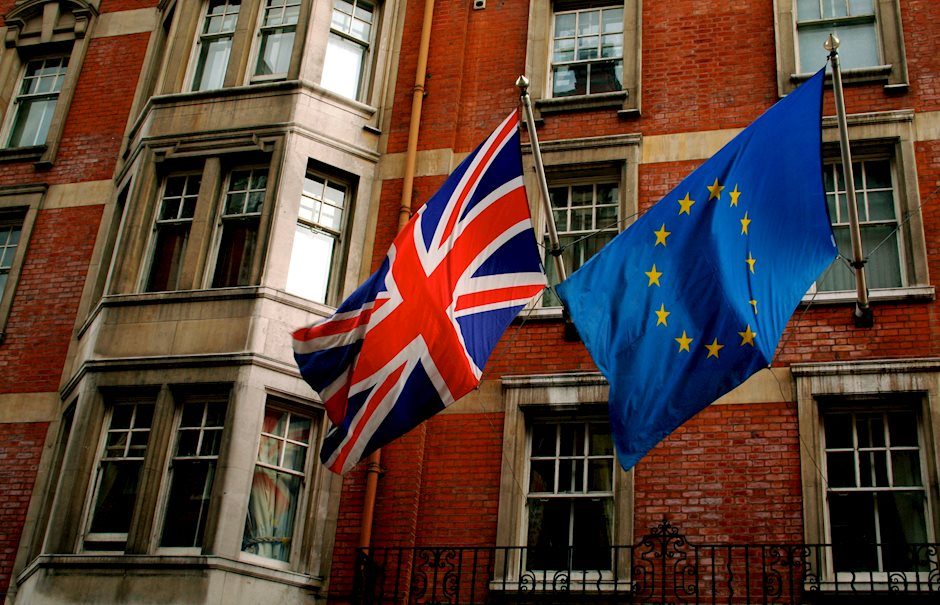

I really am torn on how to vote in the upcoming EU referendum. It has been an excruciating period where the quality of debate has been pitiful and largely unreflective of the world we live in. Much like analysts trying to forecast Chinese economic data, I have had to look at proxy indicators.
To give an example of how far down the rabbit role this whole debate has gone, we have one side the Remain camp, campaigning about the EU being the harbinger of economic stability, prosperity and protection of minority and worker rights, on the other, we have the Leave camp talking about the adverse effects of immigration. This is the coin we toss.
When talking about stability, we are talking about the EU that considers the Eurozone to be its final destination, where youth unemployment is depressingly and persistently high. Where the battered corpse of Greece is used as a human shield to keep market forces from smelling blood of French and Italian debt traps. Where far-right nationalists are on the rise in France, hold power in Poland, and almost took the Presidency in Austria. Where polls across the continent are showing support for exit campaigns. Where an EU nation has teamed up with Russia, Iran and several Gulf states to strip the decriminalization of homosexuality from the UN charter.
What is really meant by stability and protection, is actually not being made an example of by vindictive eurocrats as a message to other potential dissenters. Cameron has previously and frequently stated the conditions (currently present) under which he would campaign for Brexit, but now the opportunity is here under his own instigation, he has changed his mind. The same appears to go for Jeremy Corbyn, Labour leader, who has been staunchly Eurosceptic for his entire career, but changed his mind upon assuming his leadership role.
Meanwhile, in the UK immigration is the battering ram being used in an attempt to storm the establishment ivory towers. Nobody considers that even if the UK were to leave the EU, in order to retain access to the single market, it would likely need to remain an open destination point for the European labour market. Additionally, when you look at the numbers, UK unemployment sits at 5.4%, an oasis of aspiration for your average European country. Economic growth has outpaced the developed world, and the UK experiencing a job creation miracle. These low unemployment and job creation rates are still maintained despite net migration being in the hundreds of thousands.
It is true that increases in EU migration does put pressures on housing and services, and that shouldn't be dismissed, but this can be discounted by comparing the level of property value appreciation in pro Leave and Remain regions. However, it is worth noting that the Leave campaign is a much broader church than Remain appears to be, and immigration is hardly a concern for many. Still, alas, there are uncomfortable truths for the Libertarian Leavers, in that they find themselves championing the same cause as those they would otherwise actively disassociate from.
Additionally, there needs to be an acceptance they there could be economic disruption in the event of an exit. The Treasury published figures estimating a shallow recession of 0.4% lasting through to 2017 before growth resumes. The public needs to reconcile with this fact when making the vote. Brexit is a step into the unknown, and should not be sold as a guaranteed smooth transition.
Bets off or Poll position…
Looking at the betting markets, the implied probability of a Remain vote is back up to 75% after drifting closer to 50/50 a few days earlier. It is also believed that several city institutions have conducted private polls, which may have been a factor in the shift in betting sentiment.
Betting markets have long been as excellent an indicator of General Elections as anything, but referendums do not happen as frequently and can’t be considered to be gospel.
Polls are closer, but the polling failure at the last General Election should be remembered. While they are close now, informed commentators are claiming that Leave should be carrying a 10 point lead into the vote at this stage in order to combat the inevitable last minute swing to status quo. Since the tragic murder of MP Jo Cox by a far right terrorist, momentum has swung back towards Remain.
In summary, Remain should get over the line based on conventional interpretation, but the known unknowns are there and keeping people on their toes until the very end.
Off to market…

The four markets to keep an eye on are the FTSE 100, 10 Year Gilts, GBP/USD and GBP/EUR.
It is important immediately to recognize that commodity stocks heavily dominate UK stock markets, which in turn implies a degree of correlation with Sterling too.
Having plunged in 2015 into 2016 and making lows in February, all three markets have climbed throughout the campaign. Since the referendum was called on February 20th, the FTSE 100 is up some 4%, GBP/USD up close to 2% and GBP/EUR flat.
65% of all FTSE 100 companies have dollar earnings, and so look to be immune from long-term risk outside of the initial shock of a Leave vote. Much has been said about money moving out of sterling assets but I suspect that many people are content to sit out the event and use the resulting volatility in a thin market to get back in an a better price.

Looking to bond markets, UK 10 and 30 year Gilt yields are down at record lows of 1.21% and 2.07% respectively. As a reflection of the turmoil seen in the Eurozone and soaring yields in recent years, this is not the behaviour associated with a major risk event.
Moving to sterling, both GBP/USD and GBP/EUR are performing well, with no signs of downside risk being priced in. Central bank buying is rumored to be taking place all the way down to $1.40, which could give an indication of what to make of sterling collapse forecasts. The higher sterling is heading into the election, I’d estimate the less the risk of a collapse in the event of a Leave vote.
George Soros, scourge of the Old Lady of Threadneedle, recently announced he was coming out of retirement and warned of sterling collapse in the event of Leave. Many will interpret his comments as insincere and talking his own book. Others may consider them to be a double bluff.
Personally, I suspect that the market will be thin due to a lot of people stepping out the market to avoid volatility, which invariably will increase volatility. However, if Leave wins and we do have a push to the downside, stops below 1.38 could get triggered and accelerate a downside move. $1.30 has been floated by a few analysts, but I would expect a sharp retracement, followed by central bank and speculative buying (cough), and major investors jumping back into sterling assets at better prices.
Looking around the world, China is unstable, the US not ready to raise rates, and the ECB appears to have postponed the next Greek crisis until after the UK referendum. GBP has long acted as a safe haven, especially for European capital and there is no real reason why this won’t continue.
$1.5 is still talked about as being fair value for cable, and while optimistic to expect a bullish rally off a Leave vote, I can definitely foresee a round trip to where we presently are once the dramatics subside. In the case of a Remain vote, I think we can expect a limited rally up to around $1.5, before we go back to normal ranging.
As maybe you can tell, I think this is a not as big an event as it might appear to be in the press.
My view…
This referendum has been an ugly but necessary race to the bottom for the UK. There is no way that we could have continued much longer without a referendum and perhaps its better to have present conditions, rather than the cause led by a more radical elements.
I am in favour of staying within a reformed EU, but that is not on offer. I heavily suspect that much as Guy Verhofstadt has indirectly intimated, there will be a renegotiation immediately after a Leave vote, before official exit talks begin. This is very interesting to consider, especially as the Referendum result is not legally binding until ratified by Parliament.
My gut feeling is that the one scenario that is not discussed by both campaigns as it doesn’t match their aims, is the most likely; that a Leave vote instigates serious re-negotiations about Britain’s role in the EU and as a consequence provokes a broader discussion about desperately needed reform of the Eurozone, a ticking time bomb in the global economy that people have become so bored with, they forgot about.
If we do however vote to Remain, I fully expect that upon accepting the status quo, many like I who have reservations about the European project decide to get involved and support deeper integration into the EU and potentially the Eurozone. While this may sound crazy, the project is currently a failure and we cannot accept status quo as a member state and committed partner.
Author
Gus Farrow
Independent Analyst
Gus Farrow, formerly Chief Editor of FXStreet joined the team after several years working in Asset Management in London. He holds a bachelors degree in History, an MSc in Finance and Investment and a qualification in Computational Investment.