I Learned All I Needed to Know About Trading From the Boy Scouts
|Well, maybe not everything. Participating in the Boy Scouts is a rite of passage for many young men. I remember the meetings, the Pine Wood Derbies, Merit Badges, and the camping trips. As a member of the Scouts, I had lot of fun while learning life lessons which I carry with me to this day. Many of you are probably familiar with the Scout motto: Be Prepared.
Being prepared is something we all must do as traders. We do not know whether the markets will go up or down. Sure we can anticipate the most probable direction, but a trader will never be 100% sure. So, how can we protect ourselves against inverse market moves? Simple, be prepared!
Preparing for the markets involves identifying any possible dangers that may confront our positions. I see too many students who are new to the markets, focus too heavily on the possible profits the trade may offer them. Professionals and those who will last long term focus on the risk of the trade and look for all possibilities. The best way to do this is by having a plan prepared for your trade prior to entering it.
In the Online Trading Academy Professional Trader Course as well as the Extended Learning Track, we emphasize the need to have a complete trading plan as well as a plan for every trade you will take. The two plans are a way to remove the emotions from your trading and force you to objectively look at all possibilities in the market. We must create the trading plans before we have an open position so that we do not have a bias or emotion attached to the market.
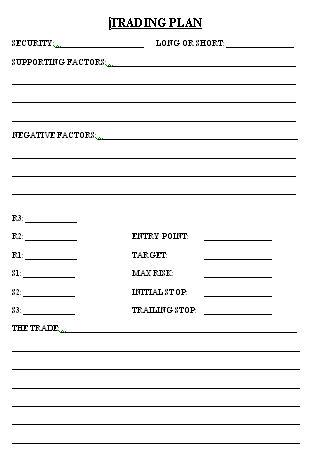
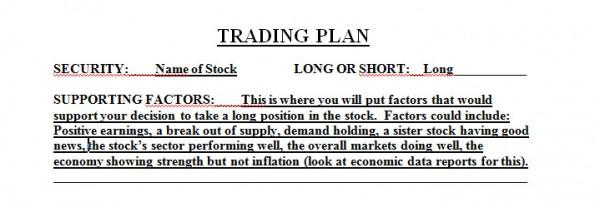
In the first part of the trading plan, the trader should look for reasons as to why this is a suitable trade to enter. Usually this is the easiest section for the trader to complete as we all want to trade and it can be easy for us to rationalize why we should enter. Be careful to make sure they are valid reasons such as supply or demand zones, the trend, and movement of related markets.
Now the hard part begins. The trader needs to start listing the negative factors that may work against the trade. This is where you have to find the dangers that could increase your risk of losing. We don’t want to think about being wrong and typically have a mental block that prevents us from seeing the danger or causes us to rationalize it. Look objectively at the markets and decide if there are dangers. List them to remind you to be aware and prepared for them!

Once you have the factors identified, it is time to write out the plan. Locate supply and demand levels, the desired entry point, target area, and where you will place your stop. The entry, exit and target will be determined by using the tools and tactics you listed in your overall trading business plan. You should then write out your trade. Be specific! Write out your entry and type of order to be used. Detail where and when you will place stops.
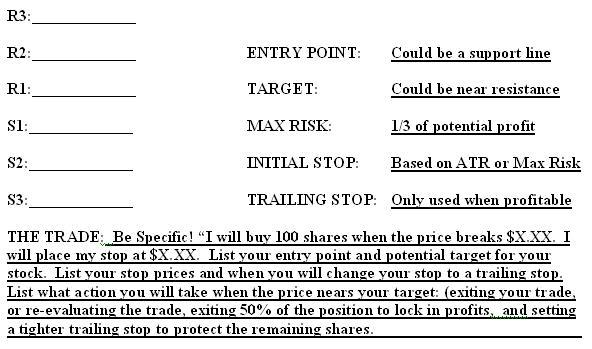
By completing this trade plan, you accomplish several things. You have accountability if you violate the plan and can build discipline. But you also build confidence when you follow your plan and you either make money or lose very little when things don’t work out as you had planned. By preparing the trade plan, you prepare for surprises and will not be shocked into large losses when the market makes a volatile turn.
Information on these pages contains forward-looking statements that involve risks and uncertainties. Markets and instruments profiled on this page are for informational purposes only and should not in any way come across as a recommendation to buy or sell in these assets. You should do your own thorough research before making any investment decisions. FXStreet does not in any way guarantee that this information is free from mistakes, errors, or material misstatements. It also does not guarantee that this information is of a timely nature. Investing in Open Markets involves a great deal of risk, including the loss of all or a portion of your investment, as well as emotional distress. All risks, losses and costs associated with investing, including total loss of principal, are your responsibility. The views and opinions expressed in this article are those of the authors and do not necessarily reflect the official policy or position of FXStreet nor its advertisers.