Sticky UK inflation unlikely to stop a December rate cut

UK inflation has peaked, but the latest data is a tad hawkish for the Bank of England. Food inflation was strong, which is red meat for the hawks. Services inflation rose, once volatile items are stripped out. However, we still expect the Bank to cut rates in December.
UK headline inflation is undoubtedly past the peak, following a smaller household energy price hike than a year earlier. But the dip from 3.8% to 3.6% was shallower than expected, on account of a sharper pick-up in food inflation than we and others had pencilled in. Last month’s fall in food from 5.1% to 4.5% in annual terms looked a bit weird, and October’s rebound to 4.9% confirms that was indeed the case.
Fortunately, evidence from the eurozone – where fresh food inflation is falling – coupled with a levelling off in the newly-reinstated producer price data for food products, suggests inflation at the supermarkets is probably more or less at its peak. We suspect the risk to the Bank of England’s year-end food forecast of 5.3% is to the downside.
Food inflation picked up again in October
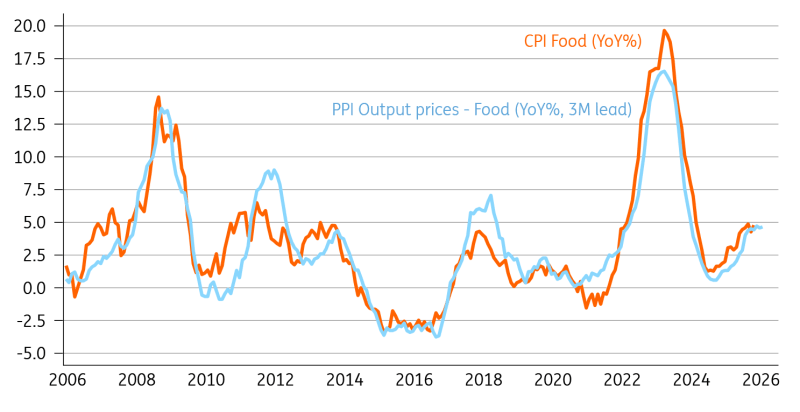
For now, however, the recent rebound is likely to keep concern alive among the Bank’s hawks about the potential impact on inflation expectations. They worry that this could fuel a more persistent bout of price pressure, akin to what we saw two or three years ago.
Elsewhere, services inflation notched lower from 4.7% to 4.5%, but this is principally down to air fares. Once you strip out the volatile and indexed elements, our calculation of the BoE’s preferred “core services” metric actually notched a tad higher in October. The hawks will point to restaurant/café prices, often seen as a bellwether for “persistence” among services categories, where prices increased sharply on the month, potentially linked to the broader food price pressure.
'Core services' inflation nudged slightly higher in October
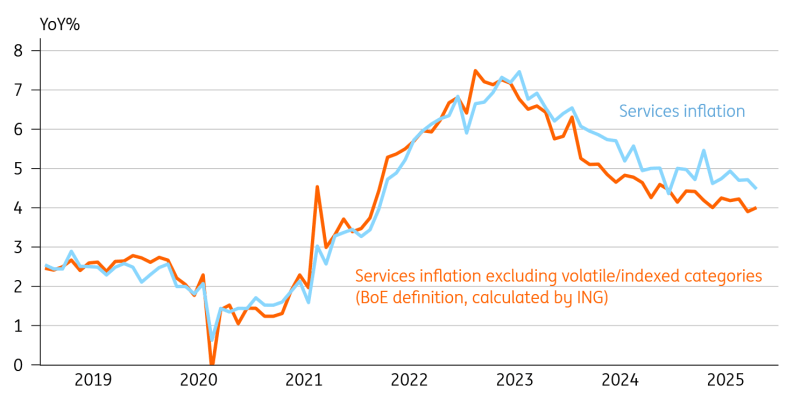
That said, taking a broader view, services is still generally heading in the right direction once you ignore the month-to-month volatility. Remember too that wage growth in the private sector is easing rapidly. We doubt there’s anything that will shake the conviction of the Bank’s doves, who argue immediate easing is necessary to offset potential weakness emanating from the jobs market.
The bottom line here is that there’s unlikely to be anything in this data that will change the minds of many voters on the BoE committee. That means the decision continues to hinge on Governor Andrew Bailey, who is somewhere between the two camps – though given he is more sympathetic to the view of the doves, we think he will still tip the balance in favour of a cut in December.
We doubt the forthcoming Autumn Budget will change that either. While gilt yields have risen following reports that the government has scrapped plans to increase income tax on account of a smaller fiscal hole, we are still probably looking at material tax hikes in 2026. At the margin, that helps build the case for a further loosening in monetary policy.
Read the original analysis: Sticky UK inflation unlikely to stop a December rate cut
Author
James Smith
ING Economic and Financial Analysis
James is a Developed Market economist, with primary responsibility for coverage of the UK economy and the Bank of England. As part of the wider team in London, he also spends time looking at the US economy, the Fed, Brexit and Trump's policies.